Roof Flashing and Leak Tracing: Where Water Really Enters
By Jim Vernon · 5 min read · Last updated
A stain on the ceiling is rarely under the hole in the roof — water travels along rafters before it drips.
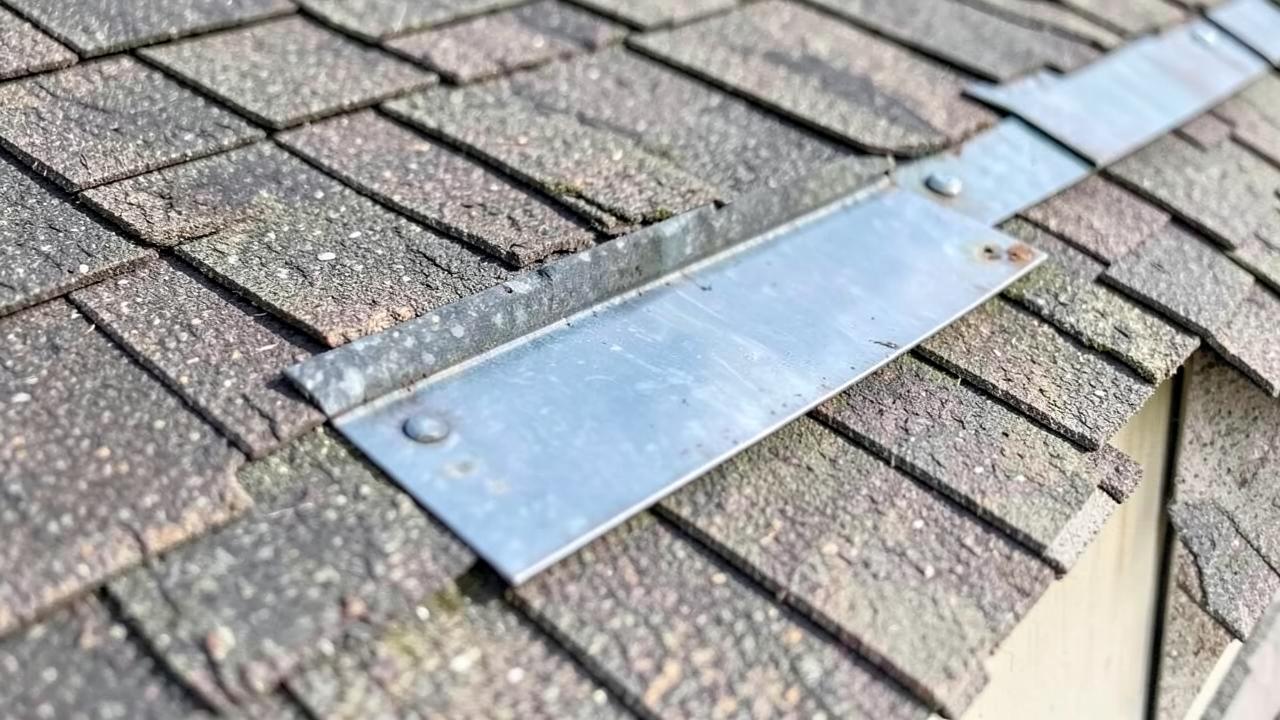
The fastest way to find a roof leak's true source is to trace flashing joints first, not shingles. Flashing — the metal or rubber pieces at valleys, chimneys, skylights, and wall intersections — fails at a rate far higher than field shingles, because it's where two different materials meet and move at different rates. Roughly 9 out of 10 leaks in roofs under 15 years old trace back to a flashing detail rather than worn-out shingle field.
Why does water show up on the ceiling far from the actual hole?
Water entering at a flashing gap runs downhill along the underside of the roof deck or along a rafter until it hits an obstruction — a nail, a joist, insulation — and then drips straight down. A leak at a chimney flashing 8 feet upslope can show up as a stain on a bedroom ceiling on the far wall. Always inspect uphill from any interior stain, following rafters and roof planes, not just the spot directly above the damage.
Which flashing details fail most often?
| Location | Typical failure mode | Expected service life | Repair cost range |
|---|---|---|---|
| Valley (open metal) | Debris damming, corrosion pinholes, ice damage | 20-30 years (steel), 40+ (copper) | $300-$900 per valley |
| Chimney (step + counter flashing) | Mortar joint failure lets counter-flashing pull loose | 15-20 years for sealant, metal lasts longer | $400-$1,200 |
| Skylight | Perimeter sealant cracks, curb flashing corrodes | 10-15 years for seals | $300-$800 per unit |
| Sidewall/headwall (roof meets siding) | Step flashing not woven with each shingle course, siding trapping water | 20+ years if installed correctly | $250-$700 per run |
| Pipe boot (plumbing vent) | Rubber collar splits from UV exposure | 8-12 years | $150-$350 |
How do you trace a leak from the attic side?
- Go into the attic with a flashlight during or right after a rain event, not days later once wood has dried.
- Look for dark water trails, rust streaks on nail tips, or damp insulation rather than pooled water, which may have already run further.
- Follow the highest, driest-looking stain edge upslope — that edge is closer to the actual entry point than the wettest spot.
- Cross-reference the attic location with the exterior roof plane above it using a tape measure from a fixed point like a gable end.
- Once outside, inspect that zone's flashing for gaps, lifted shingle tabs, or sealant that has shrunk and cracked.
What are the warning signs before a leak becomes visible indoors?
- Granule buildup in gutters — a sign shingles are aging and losing their protective surface.
- Sealant at pipe boots or flashing edges that has turned chalky, cracked, or pulled away from the metal.
- Rust streaks running down a chimney's flashing or brick face.
- Shingle tabs that look curled, cupped, or lifted at valley edges after wind events.
- Moss or dark algae streaks concentrated at a specific flashing joint rather than spread evenly across the roof.
When is it a DIY fix versus a roofer's job?
Re-sealing a pipe boot or applying fresh sealant to a small counter-flashing gap is reasonable for a comfortable DIYer with proper roof anchors, and typically costs $15-40 in materials. Anything involving removing and re-weaving step flashing, rebuilding a valley, or working on a pitch steeper than about 6:12 is worth hiring a roofer for — misdiagnosing or poorly resealing a valley often causes a bigger leak than the original problem within a year or two.
How much does a professional leak diagnosis and repair cost?
Most roofers charge $150-350 for a dedicated leak inspection, including a water test if the source isn't obvious, and that fee is often credited toward the repair if you hire the same contractor. Simple flashing repairs, such as replacing a pipe boot or resealing a chimney's counter-flashing, typically run $200-600. More involved repairs, like rebuilding an open valley or reweaving step flashing along a full sidewall, run $600-1,800 depending on roof pitch, height, and material. A water test — running a hose over a suspected section for 15-20 minutes while someone watches the attic — is often the only reliable way to confirm a diagnosis before opening up shingles, since a guess that turns out wrong means paying twice.
Why do so many flashing repairs fail again within a year?
The most common repeat-failure pattern is treating a structural flashing problem as a sealant problem. Sealant bridges a gap temporarily, but if the underlying metal has shifted, corroded through, or was never properly lapped with the shingle courses, movement from thermal cycling reopens the same path within one or two seasons. Chimneys are especially prone to this because masonry and roof framing move independently; a rigid sealant bead across that joint cracks predictably. A second common cause is a repair that fixes the visible symptom at the interior stain's location instead of the true entry point several feet upslope, which means the water keeps entering exactly as before while the patched area looks fine.
Can I just add more roofing cement to a leaking flashing joint?
As a short-term patch, yes, but roofing cement shrinks and cracks within a season or two and is not a permanent fix. The proper repair replaces or re-laps the flashing metal itself; cement should only buy time until that can happen.
How long after a repair should I check for recurring leaks?
Check the attic after the next two or three rain events, ideally including one heavy wind-driven rain, since wind can push water sideways under a marginal repair that would hold up fine in calm rain.
Does a leak always mean the whole roof needs replacing?
No. A flashing leak on an otherwise sound roof is usually a localized repair. Full replacement becomes the better economic choice when granule loss, brittle shingles, and multiple independent leak points appear together, generally past 18-20 years for asphalt shingles.
Run the numbers for your own project
- Roof Pitch and Shingle CalculatorWhat is my roof pitch, and how many shingles do I need?
- Home Maintenance ScheduleWhat should I be doing to my home this month?
- Project Cost EstimatorWhat will this project cost me?
Keep reading
- How Much Paint Do You Actually Need for a Room?The tin says 400 square feet. Your wall says otherwise. Here is the arithmetic that actually holds up.
- DIY or Hire a Pro? A Decision Framework That Is Not About MoneyThe labour saving is real. So is the cost of a job done twice — and of tools you use once.
- Storage for Small Rooms That Does Not Make Them SmallerSmall rooms do not need more storage. They need storage that stops interrupting the eye.