When and How to Repot a Houseplant Without Killing It
By Jim Vernon · 4 min read · Last updated
Most houseplants get repotted too early, into pots too big, at the worst time of year. Here's the fix for all three.
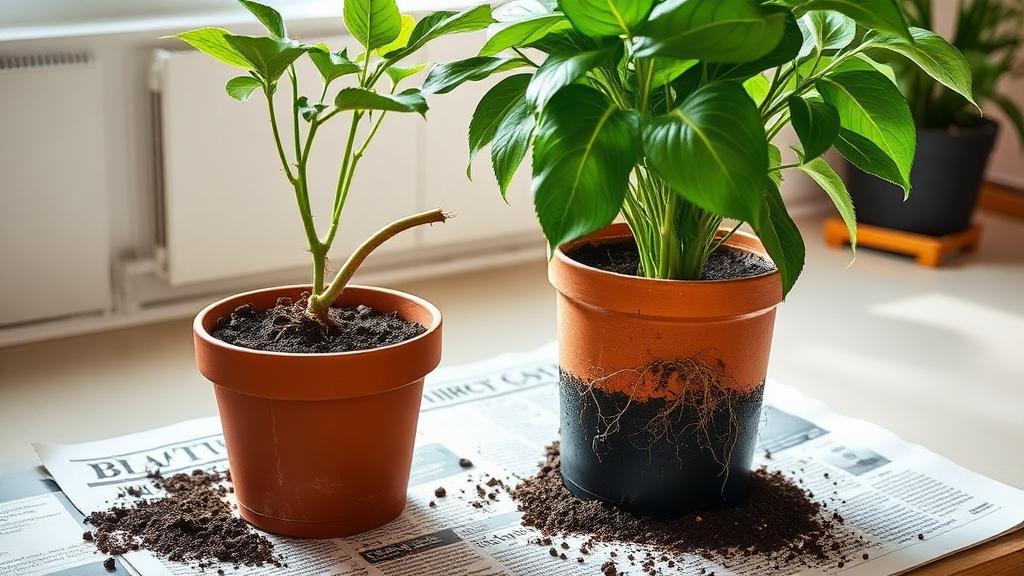
Repotting is one of the few houseplant tasks that can genuinely damage a healthy plant if done at the wrong time or the wrong way. The instinct to 'give it more room' is well-meaning but often backwards — an oversized pot holds excess moist soil around roots the plant isn't using, which is a leading cause of root rot.
Signs a plant actually needs repotting
- Roots visibly circling the inside of the pot or emerging from the drainage hole.
- Water runs straight through without the soil absorbing it, meaning there's more root mass than soil.
- Growth has stalled despite adequate light and normal watering.
- The plant needs watering far more often than it used to, because roots have displaced most of the soil.
- The pot feels lightweight and top-heavy relative to the plant's size.
Sizing the new pot correctly
Go up one pot size, not two or three. A jump from a 6-inch to an 8-inch pot is usually right; a jump to a 12-inch pot leaves a ring of soil around the rootball that stays wet long after the roots have used what they need, inviting rot. As a rule of thumb, the new pot's diameter should be about 2 inches larger than the old one.
Timing matters more than people think
Repot during active growth — typically spring into early summer for most houseplants — when the plant has the energy to recover quickly and grow new roots into the fresh soil. Repotting in the dormant winter months means disturbed roots sit in soil the plant isn't yet driving water through, which is a slower, riskier recovery.
Step by step
- Water the plant a day before repotting; damp soil releases from the pot and root ball far more easily than dry soil.
- Gently squeeze or tap the sides of the old pot and slide the plant out sideways rather than pulling by the stem.
- Loosen circling roots at the outer edge with your fingers; trim any that are mushy, black, or clearly dead.
- Add a layer of fresh potting mix to the new pot's base so the plant sits at the same soil depth it was at before.
- Backfill around the sides, firming gently to remove large air pockets without compacting the mix hard.
- Water thoroughly and place the plant somewhere with bright, indirect light rather than direct sun for the first week or two while roots settle.
| Mistake | Why it hurts the plant |
|---|---|
| Jumping several pot sizes at once | Excess wet soil around unused roots leads to rot |
| Repotting a wilted, stressed plant | Adds a second stressor on top of an already weakened root system |
| Packing soil down hard | Removes the air pockets roots need to breathe |
| Reusing old, depleted potting mix | Fails to give roots the aeration and nutrients fresh mix provides |
A potting mix that actually drains
Bagged "all-purpose" potting soil straight from the store is often too dense and moisture-retentive for most houseplants once packed into a pot with limited airflow. A general-purpose aroid mix — roughly 2 parts standard potting soil or coco coir, 1 part perlite, and 1 part orchid bark — drains faster and lets more oxygen reach the roots. For succulents and cacti, go coarser still: about 1 part potting soil to 1 part perlite or pumice, with little to no bark. Mixing your own from bagged perlite ($8-12) and bark ($10-15) costs more upfront than a single bag of soil but stretches across many repottings.
Aftercare
Hold off on fertilizer for four to six weeks after repotting; fresh potting mix usually contains enough nutrients to cover that period, and feeding stressed roots too soon can burn them. Some leaf droop or a pause in new growth for a week or two is normal and not a sign of failure.
A worked sizing example
A pothos currently in a 6-inch pot with roots circling the bottom should move to roughly an 8-inch pot, not a 10- or 12-inch one. That 2-inch jump in diameter adds around 30-40% more soil volume — enough room for a year or two of new growth without leaving a wide ring of soil the roots can't reach yet. Jumping straight to a 12-inch pot instead would more than triple the soil volume, and most of that extra soil would stay damp for days after the roots nearby have already used what they need.
Common mistakes
- Repotting immediately after bringing a new plant home, before it has adjusted to its new environment.
- Choosing a decorative pot with no drainage hole and no plan for an inner nursery pot.
- Burying the stem deeper than it was previously planted, which can encourage rot at the base.
- Repotting a plant that's actively stressed from pests or disease, adding transplant shock on top of an existing problem.
- Assuming bigger pots always mean less frequent repotting is better — going too big just trades one maintenance problem for a rot risk.
Can I repot a plant that's currently flowering?
It's better to wait until flowering finishes if possible, since repotting redirects the plant's energy toward root recovery rather than blooms. If roots are severely bound, repot anyway — root health takes priority.
Do I need to replace all the old soil?
No. Gently loosening and removing the loose soil at the root ball's edges is enough; you don't need to bare-root the plant unless you're treating root rot.
How often do houseplants generally need repotting?
Fast growers like pothos or spider plants may need it every one to two years; slow growers like snake plants or ZZ plants can go three to five years between repottings.
Run the numbers for your own project
- Plant Watering CalculatorHow often and how much should I water this plant?
Keep reading
- How Much Paint Do You Actually Need for a Room?The tin says 400 square feet. Your wall says otherwise. Here is the arithmetic that actually holds up.
- DIY or Hire a Pro? A Decision Framework That Is Not About MoneyThe labour saving is real. So is the cost of a job done twice — and of tools you use once.
- Storage for Small Rooms That Does Not Make Them SmallerSmall rooms do not need more storage. They need storage that stops interrupting the eye.