Removing Wallpaper Without Wrecking the Drywall Underneath
By Jim Vernon · 4 min read · Last updated
Most wallpaper removal damage happens from scraping too hard, not from the paper itself resisting removal.
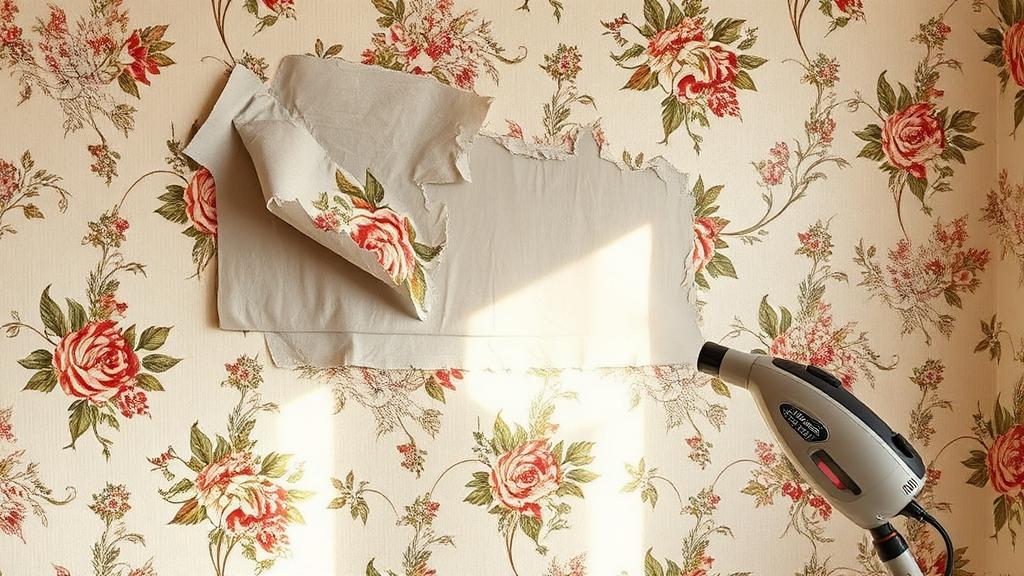
Wallpaper removal is slow, wet, and repetitive by nature — trying to speed it up with aggressive scraping is what gouges the drywall paper underneath and creates far more repair work than the wallpaper removal itself.
Identify the wallpaper type first
| Type | How to tell | Removal approach |
|---|---|---|
| Strippable | Corner peels back cleanly by hand | Peel dry, often no water needed |
| Peelable (two-layer) | Top vinyl layer peels off; paper backing remains | Peel top layer, then wet the backing paper to remove |
| Traditional pasted paper | Does not peel at all at a test corner | Score, soak, scrape |
| Vinyl-coated / non-porous | Water beads on the surface without soaking in | Score to let water reach the paste underneath |
Score before soaking on non-porous paper
A wallpaper scoring tool creates tiny perforations that let water or removal solution reach the paste layer underneath a vinyl-coated surface that would otherwise repel liquid entirely. Work in manageable sections rather than scoring the whole wall at once, since the soaking step needs to follow quickly after scoring.
Soak with the right solution
- Warm water alone works on many older, less synthetic wallpaper pastes.
- A commercial wallpaper removal solution, or a mix of warm water and fabric softener (a well-known trick that breaks down paste effectively), speeds up stubborn adhesive.
- A steamer is worth renting for large rooms or multiple layers of old paper, since it delivers heat and moisture more consistently than a spray bottle.
- Score the section if it is non-porous.
- Apply removal solution generously with a sponge or garden sprayer, and let it sit 10-15 minutes to penetrate.
- Test a small area with a wide putty knife — the paper should lift with light pressure, not require force.
- Scrape gently at a shallow angle, re-wetting any area that resists rather than pushing harder with the scraper.
- Wash the wall with clean water afterward to remove paste residue, which otherwise interferes with new paint or paper adhesion.
Assessing the wall after removal
Once the paper is off and the wall has dried, check for any areas where the drywall face paper tore away, leaving a fuzzy or rough patch — these need a skim coat of joint compound before painting. Also check for old glue residue left as a slightly shiny or tacky film, which needs a wash with warm water and a degreasing cleaner or it will show through new paint as a difference in sheen.
Priming before repainting or repapering
Worked example: a dining room with two layers of old paper
A dining room with a vinyl-coated pattern layered directly over an older, traditional paper underneath is common in older homes. Scoring and soaking removes the top vinyl layer relatively fast, often 20-30 minutes per wall section, but the traditional paper underneath needs its own soak-and-scrape pass since it bonds differently. Budget a full day for an average-sized room with two layers, plus another half day for wall repair, washing, and priming before repainting.
- Common mistake: assuming one soak-and-scrape pass removes both layers of a double-papered wall.
- Common mistake: scraping dry patches with more pressure instead of re-wetting them, which is what tears the drywall paper.
- Common mistake: skipping the wash-down step after removal, leaving paste residue that shows through new paint as an odd sheen.
Priming before repainting or repapering
A wall that previously had wallpaper benefits from a dedicated wallpaper-removal primer/sealer, which locks down any remaining paste residue that washing could not fully remove and gives new paint an even surface to bond to. Skipping this step is a common reason paste residue bleeds through new paint months later as a faint discoloration.
Is fabric softener actually effective for removing wallpaper paste?
Yes, it is a genuinely useful trick — the softening agents help break down old wallpaper paste, especially combined with warm water and enough soak time.
How do I know if I damaged the drywall while scraping?
Torn, fuzzy, or rough patches where the smooth drywall paper is missing indicate damage that needs a light skim coat of joint compound before painting.
Can I paint directly over wallpaper instead of removing it?
It is possible on a strippable paper in very good condition, but seams, bubbles, and future removal difficulty usually make full removal worth the extra time.
Can I paint directly over wallpaper instead of removing it?
It is possible on a strippable paper in very good condition, but seams, bubbles, and future removal difficulty usually make full removal worth the extra time.
How long does a full room of wallpaper removal usually take?
A single layer of strippable paper in an average room can take a few hours; two layers of traditional pasted paper can stretch to a full day or more, plus wall repair time.
Is renting a wallpaper steamer worth it for one room?
For a single small room, a spray solution is usually sufficient; a steamer earns its rental cost on larger rooms or multiple layers of stubborn traditional paper.
Run the numbers for your own project
- Wallpaper CalculatorHow many rolls of wallpaper do I need?
- Drywall CalculatorHow many sheets of drywall do I need?
- Paint CalculatorHow much paint do I need for this room?
Keep reading
- How Much Paint Do You Actually Need for a Room?The tin says 400 square feet. Your wall says otherwise. Here is the arithmetic that actually holds up.
- DIY or Hire a Pro? A Decision Framework That Is Not About MoneyThe labour saving is real. So is the cost of a job done twice — and of tools you use once.
- Storage for Small Rooms That Does Not Make Them SmallerSmall rooms do not need more storage. They need storage that stops interrupting the eye.