How Do You Take Houseplant Cuttings That Actually Root?
By Jim Vernon · 4 min read · Last updated
The single most common reason a cutting rots instead of roots is leaving leaves submerged in water, where they decay and foul the whole jar.
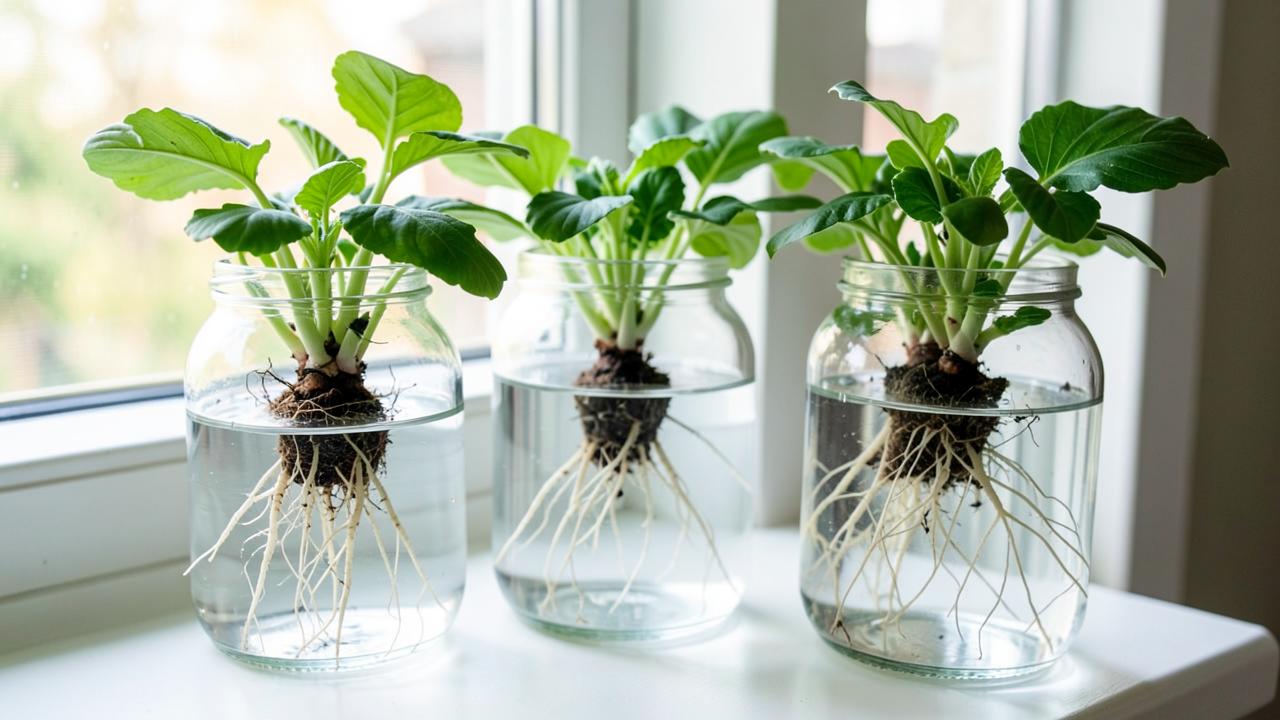
Most houseplant cuttings root successfully within 2 to 6 weeks when you cut a 4-6 inch stem section just below a leaf node, remove the lower leaves, and place it in water or moist propagation mix in bright, indirect light at room temperature. The node — the small bump where a leaf attaches — is where new roots form, so a cutting without a node included below the cut line won't root at all.
Which plants root easily, and which are harder?
| Plant | Method | Typical time to root |
|---|---|---|
| Pothos | Water or moist mix | 1-3 weeks |
| Philodendron | Water or moist mix | 2-4 weeks |
| Pilea (Chinese money plant) | Water, from offsets or stem | 2-3 weeks |
| Snake plant (leaf cutting) | Moist mix, no rooting hormone needed | 4-8 weeks |
| Fiddle leaf fig | Water, needs a node and warmth | 4-8 weeks, less reliable |
| Succulents (leaf cutting) | Dry callus first, then dry soil | 2-6 weeks |
What's the step-by-step for a standard stem cutting?
- Choose a healthy stem with at least one node and two to three leaves, cutting 4-6 inches long just below a node with clean, sharp scissors.
- Remove any leaves that would sit below the waterline or soil surface, since submerged leaves rot and foul the water.
- Place the cutting in a clear glass of room-temperature water, or directly into moist propagation mix (equal parts perlite and peat or coco coir).
- Set it in bright, indirect light — direct sun can scorch a rootless cutting before it can support the stress.
- Change water every 3-5 days if rooting in water, and once roots reach an inch or two long, pot into soil.
Water propagation versus soil propagation: which is better?
Water propagation lets you watch root development directly and works well for plants like pothos and philodendron that root reliably in water, but roots grown in water are adapted to that environment and need a gradual transition period after potting in soil, sometimes wilting briefly. Rooting directly in a moist propagation mix skips that transition and often produces a sturdier root system for eventual potting, though you lose the ability to monitor progress visually.
Why do some cuttings rot instead of rooting?
Rot usually traces back to one of three causes: leaves left submerged and decaying in the water, a cut made through the stem rather than cleanly below a node, or insufficient light and airflow allowing fungal growth in overly moist mix. Using clean scissors, removing all submerged foliage, and keeping the propagation area at room temperature with some air circulation prevents most rot.
When should you move a water-rooted cutting to soil?
Wait until roots reach at least 1 to 2 inches long before potting into soil; moving too early, while roots are still short white nubs, often leads to transplant shock because the fragile new roots haven't developed enough to take up water on their own from soil. Pot into a small container with fresh, well-draining mix and keep the soil consistently moist (not soggy) for the first two weeks while the roots adjust.
What conditions speed up or slow down rooting time?
Warmth matters more than most people expect — cuttings root fastest between 70 and 75°F, and a cool windowsill in winter can stretch rooting time by several extra weeks compared to a warm kitchen counter. A humidity dome or loosely tented plastic bag over a soil-propagated cutting raises humidity around the leaves and reduces water loss while roots are still too small to supply much moisture, often cutting rooting time noticeably for finicky plants like fiddle leaf figs. Bright, indirect light drives energy for root growth, but direct sun on a leafy, rootless cutting does more harm than good by increasing water loss beyond what the plant can replace.
Can you take cuttings from a plant that's currently stressed or sick?
Take cuttings only from healthy, actively growing sections of a plant; a cutting taken from a plant that's wilting from underwatering, showing pest damage, or recovering from root rot rarely roots successfully, since it lacks the stored energy reserves to grow new roots while also fighting whatever stress the parent plant is under. If you want to propagate a struggling plant as a backup before it declines further, choose the healthiest-looking stem available and expect a lower success rate than from a fully healthy plant.
Can you propagate a cutting without a node?
No — a stem cutting needs at least one node included below the cut point, since that's where root cells form. A leafy stem section with no node attached will not root regardless of how it's treated.
Why do my cuttings grow roots but never grow new leaves?
This usually means the cutting was moved to soil too early, before the root system was developed enough to support new top growth, or the new pot's light and water conditions were significantly different from where the cutting rooted. Give it several more weeks in stable conditions before assuming it's failed.
Do all houseplants propagate from stem cuttings?
No — some, like snake plants and succulents, propagate better from leaf cuttings, and others, like most orchids, don't propagate from cuttings at all and require division or specialized techniques instead. Check the specific plant's propagation method before assuming a stem cutting will work.
Run the numbers for your own project
- Houseplant Light MatcherWhich houseplants suit this window?
- Plant Watering CalculatorHow often and how much should I water this plant?
Keep reading
- How Much Paint Do You Actually Need for a Room?The tin says 400 square feet. Your wall says otherwise. Here is the arithmetic that actually holds up.
- DIY or Hire a Pro? A Decision Framework That Is Not About MoneyThe labour saving is real. So is the cost of a job done twice — and of tools you use once.
- Storage for Small Rooms That Does Not Make Them SmallerSmall rooms do not need more storage. They need storage that stops interrupting the eye.