Preventing Frozen Pipes: What Works and What's Just Folklore
By Jim Vernon · 5 min read · Last updated
Frozen pipes rarely burst from the ice itself — they burst from the pressure trapped between the ice and a closed faucet.
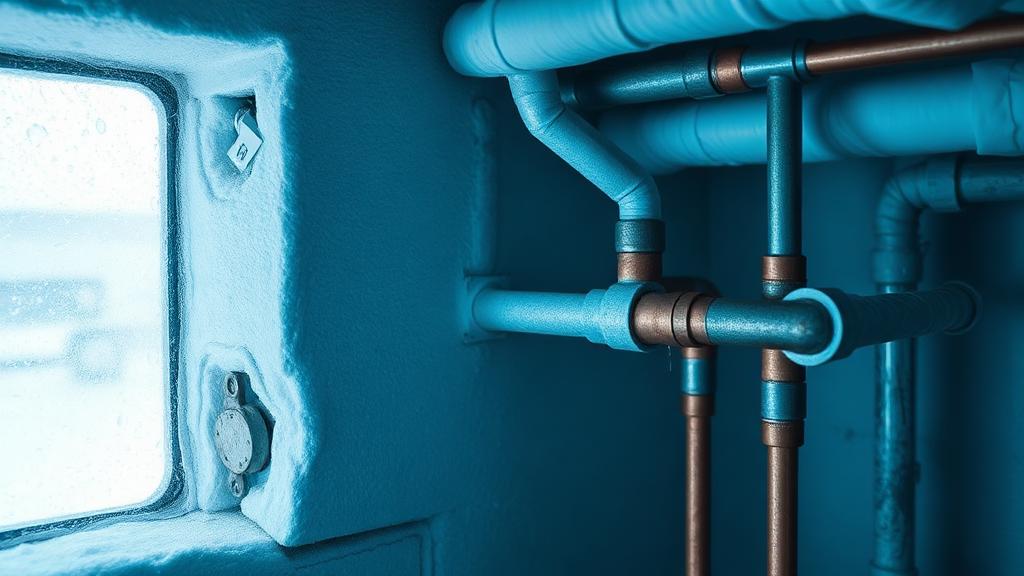
Pipes freeze in predictable places: unheated crawl spaces, uninsulated exterior walls, attics, and garages. A little preparation before a hard freeze prevents the vast majority of frozen-pipe damage, which is otherwise one of the most expensive common home insurance claims.
Why pipes actually burst
Ice forming inside a pipe doesn't usually burst the pipe at the ice itself. As water freezes and expands, it increases pressure in the sealed section of pipe between the ice blockage and a closed faucet downstream — that trapped, pressurized water is what ruptures the pipe, often at a point some distance from the ice itself.
Identify the vulnerable pipes in your home
- Pipes running through unheated crawl spaces or basements.
- Pipes in exterior walls, especially on the side of the house that gets the most wind.
- Supply lines to outdoor spigots and hose bibs.
- Pipes in an attic or over an unheated garage.
- Any pipe run that was added later and routed through a non-standard, less-insulated path.
Before the cold snap arrives
- Disconnect and drain garden hoses, and shut off and drain interior valves feeding outdoor spigots if your home has them.
- Wrap exposed pipes in unheated areas with foam pipe insulation sleeves or heat tape rated for the purpose.
- Seal air leaks near pipe runs — gaps around dryer vents, cable entry points, and foundation penetrations let cold air reach pipes directly.
- Know where your main water shutoff valve is before you need it in an emergency.
During an extreme cold snap
- Open cabinet doors under sinks on exterior walls so warm room air can reach the pipes.
- Let faucets served by vulnerable pipes drip slightly — moving water is much less likely to freeze than still water, and a small trickle also relieves pressure buildup if freezing starts anyway.
- Keep the thermostat set to the same temperature day and night rather than setting back overnight, and keep it set even if you're away.
- For a home that will be unoccupied through a cold spell, don't set the heat below roughly 55°F (13°C).
| Situation | Risk level | Priority action |
|---|---|---|
| Occupied home, normal heating | Low | Drip vulnerable faucets during hard freezes |
| Vacant home, heat left on | Moderate | Keep thermostat above 55°F, check on it if possible |
| Vacant home, heat off or unreliable | High | Shut off main water supply and drain the system |
| Uninsulated crawl space in an old home | High | Insulate pipes and consider heat tape before winter |
If you suspect a pipe is already frozen
Turn on the nearest faucet fed by that pipe so it can drip as it thaws and relieve pressure, then apply gentle heat to the suspected frozen section with a hair dryer, heating pad, or towels soaked in hot water, working from the faucet end toward the blockage. If you can't locate the frozen section, or water doesn't return after a reasonable thawing effort, call a licensed plumber before the situation escalates into a burst pipe.
If a pipe has already burst
Shut off the main water supply immediately, then the electricity to any affected area if water is near outlets or fixtures, and call a plumber. This is not a situation to wait out — even a small burst can release many gallons per minute.
A worked example: how fast a burst pipe releases water
A typical 1/2-inch supply line at normal household pressure can release somewhere in the range of 10-15 gallons per minute when fully burst — meaning a burst that goes unnoticed for even 20 minutes while you locate the main shutoff can release over 200 gallons. That single number is the practical case for knowing your shutoff valve's location before winter arrives, not after.
- Common mistake: assuming a heated home can never freeze pipes, when a single unheated closet, garage wall, or crawl space run can still freeze even with the furnace running normally.
- Common mistake: closing off supply to an outdoor spigot but forgetting to drain the section between the shutoff and the spigot itself.
- Common mistake: using an open flame to thaw a pipe, which risks igniting nearby wood framing or old insulation.
- Common mistake: waiting until a hard freeze warning is already in effect to buy pipe insulation or heat tape, when supplies often sell out locally during a cold snap.
- Common mistake: setting the thermostat back overnight during a hard freeze the same way you would on a normal night.
At what temperature do pipes actually start freezing?
Pipe freezing risk rises sharply once outdoor temperatures drop into the low 20s°F (roughly -6°C) and below, especially with wind, though poorly insulated pipes can freeze at higher temperatures during a sustained cold snap.
Does letting a faucet drip really waste much water?
A slow drip uses a small, bounded amount of water compared to the cost of repairing a burst pipe and the water damage that follows — it's a reasonable trade during an actual hard freeze warning, not something to do all winter by default.
Should I turn off my water heater if I leave the house heat off?
If you're draining the plumbing system for an extended vacancy in freezing conditions, yes — an electric water heater with no water in the tank can be damaged if power stays on, so shut off both the water and power to it as part of the winterizing process, or ask a plumber to do this properly.
Are heat tape and pipe insulation sleeves the same thing?
No — insulation sleeves slow heat loss but add no heat of their own, while heat tape (also called heat cable) actively warms the pipe. Very cold, exposed pipe runs often need heat tape under the insulation, not insulation alone.
Can freezing damage PEX pipe the same way it damages copper?
PEX has more flexibility and some tolerance for expansion, which reduces but doesn't eliminate freeze-related failure risk. Fittings and connection points are still vulnerable, so the same precautions apply regardless of pipe material.
Run the numbers for your own project
- Home Air Quality and Ventilation CalculatorDoes my home get enough fresh air ventilation?
- Project Cost EstimatorWhat will this project cost me?
Keep reading
- How Much Paint Do You Actually Need for a Room?The tin says 400 square feet. Your wall says otherwise. Here is the arithmetic that actually holds up.
- DIY or Hire a Pro? A Decision Framework That Is Not About MoneyThe labour saving is real. So is the cost of a job done twice — and of tools you use once.
- Storage for Small Rooms That Does Not Make Them SmallerSmall rooms do not need more storage. They need storage that stops interrupting the eye.