Pressure Washing Without Damage: PSI, Tips, and Distance by Surface
By Jim Vernon · 5 min read · Last updated
Most pressure washer damage isn't from using too powerful a machine — it's from using the wrong tip too close.
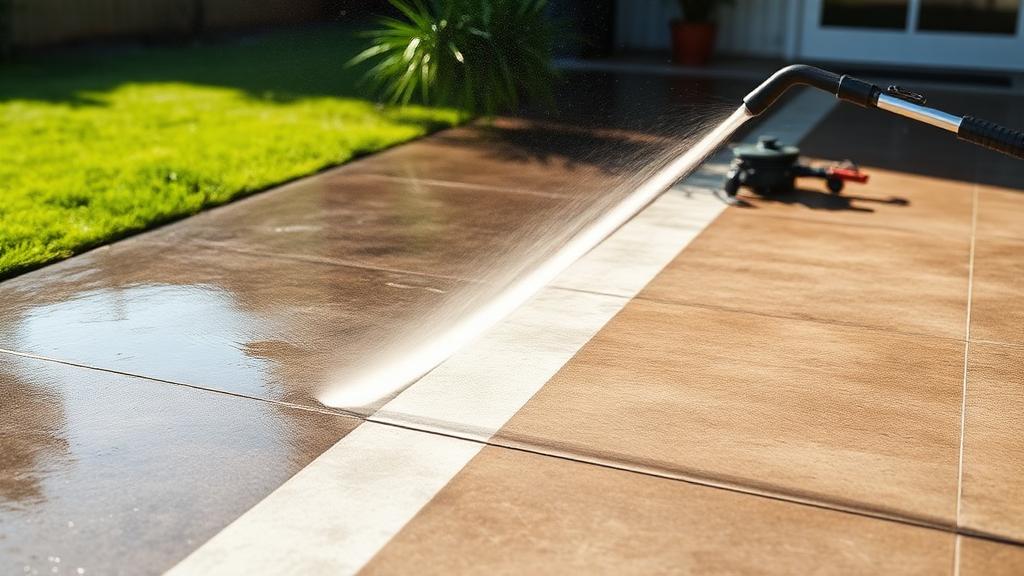
A pressure washer is a controllable tool, not a blunt one, but most home damage happens because people use the narrowest, most aggressive nozzle at close range on every surface, the way they'd use a garden hose. Match the tip and distance to the material and the risk of damage mostly disappears.
Nozzle tips, in order of aggressiveness
| Tip color | Spray angle | Typical use |
|---|---|---|
| Red | 0° | Never for home surfaces — pinpoint pressure, cuts wood and etches concrete |
| Yellow | 15° | Stripping paint, tough concrete stains, from a safe distance |
| Green | 25° | General cleaning: siding, decks, driveways |
| White | 40° | Delicate surfaces: cars, screens, softer wood |
| Black | 65° | Soap application only, low pressure |
Maintaining the machine itself
- Flush the pump with clean water after using any detergent to prevent internal buildup and corrosion.
- Store the machine somewhere it won't freeze -- trapped water in the pump can crack it during a hard freeze.
- Check O-rings and quick-connect fittings periodically, since worn seals are a common source of leaks and pressure loss.
Seasonal timing for exterior washing
Spring is the most common time to pressure wash siding and decks, clearing winter grime before painting or staining season. Fall washing before winter can also help remove pollen and algae buildup before it sets in over a damp, cold season, though extreme cold complicates drying time and sealant application afterward.
Can pressure washing replace scrubbing for tough mildew stains on decks?
Usually not on its own -- a chlorine or oxygen-bleach based deck cleaner applied first, then rinsed at moderate pressure, removes mildew more thoroughly than pressure alone.
PSI and distance by surface
- Vinyl or aluminum siding: 1,200-1,700 PSI, 25° tip, 12-18 inches away, spraying at a slight downward angle to avoid forcing water behind panels.
- Wood decks and fences: 500-1,200 PSI, 25° or 40° tip, held at a consistent distance and moved steadily to avoid gouging.
- Concrete driveways: 3,000-4,000 PSI, 15° or 25° tip, closer distance tolerated since concrete is more durable.
- Brick and masonry: 2,000-3,000 PSI, wider tip, avoiding old or crumbling mortar joints which can be blasted out.
- Roof shingles: pressure washing is not recommended at all — use a soft wash (low pressure, cleaning solution) instead.
Technique that prevents streaking and gouging
- Test on an inconspicuous area first at your intended settings.
- Keep the wand moving in overlapping passes rather than lingering on one spot.
- Work top to bottom on vertical surfaces so dirty runoff doesn't dry on already-cleaned sections.
- Keep the nozzle at a consistent distance and angle throughout a pass — inconsistent distance is what causes visible streaking on siding and decks.
Where pressure washing is the wrong tool entirely
Old or soft mortar, stucco with hairline cracks, window seals, and asphalt roof shingles are all better served by hand scrubbing or soft washing. The cost of a pressure washer mistake on these surfaces is usually much higher than the time saved.
What PSI pressure washer should I buy for general home use?
A 1,500-2,000 PSI electric or light gas unit covers most home jobs — siding, decks, patio furniture, cars. Save higher-PSI gas units for concrete-heavy properties.
Can pressure washing force water into my walls?
Yes, if aimed directly at seams, vents, or window edges at close range and high pressure. Angle the spray downward and keep distance from these openings.
A worked example: siding gone wrong
A red 0° tip at 3,000 PSI held six inches from vinyl siding can punch through the panel or force water behind it in seconds -- the same job done correctly with a green 25° tip at 1,500 PSI from 15 inches away, moving steadily, cleans just as effectively without the risk. The difference is entirely in tip and distance, not the size of the machine.
Common mistakes
- Starting too close and working outward instead of testing distance first on a hidden section.
- Using a narrow tip on soft materials like wood or vinyl to finish faster.
- Spraying upward under siding or roof edges, which drives water into places it shouldn't go.
- Skipping the soap/pre-treatment step and relying on pressure alone to lift ground-in dirt or mildew.
Is gas or electric better for home use?
Electric units are quieter, lighter, and adequate for siding, decks, and cars. Gas units deliver higher sustained pressure, useful mainly for large concrete areas.
Detergents and chemical add-ons
Most pressure washer detergents are designed to be applied at low pressure through a black or soap-injection tip, left to dwell for several minutes, then rinsed at working pressure. Applying detergent and immediately blasting it off at high pressure skips the part that actually loosens dirt and mildew, so the cleaning result suffers even with a powerful machine.
Protecting nearby plants and surfaces
- Wet down nearby plants before applying detergent, and rinse them afterward -- many cleaning solutions are mildly harsh on foliage.
- Cover electrical outlets, light fixtures, and vents with painter's tape or plastic before washing nearby siding.
- Close windows and doors fully; water can be forced through unsealed gaps under pressure.
How do I clean mildew stains that pressure alone won't remove?
Apply a mildew-specific detergent at low pressure, let it dwell 5-10 minutes per the label, scrub stubborn spots by hand, then rinse -- pressure alone often just spreads mildew spores rather than killing them.
Do I need a surface cleaner attachment?
For flat concrete like driveways and patios, yes -- it distributes pressure evenly and prevents the streaking a wand alone tends to leave.
GPM matters as much as PSI
Pressure (PSI) measures force, but flow rate (gallons per minute, GPM) determines how fast that pressure actually clears dirt off a surface — the two multiplied together roughly describe a machine's real cleaning power. Electric units typically deliver 1.3-2 GPM, adequate for siding, decks, and cars. Gas units often run 2-4 GPM, which is why they clear large concrete areas faster even at similar PSI. A high-PSI, low-GPM unit can still take a long time on a big driveway.
Run the numbers for your own project
- Project Cost EstimatorWhat will this project cost me?
- Deck and Fence Material CalculatorHow much timber does my deck or fence need?
Keep reading
- How Much Paint Do You Actually Need for a Room?The tin says 400 square feet. Your wall says otherwise. Here is the arithmetic that actually holds up.
- DIY or Hire a Pro? A Decision Framework That Is Not About MoneyThe labour saving is real. So is the cost of a job done twice — and of tools you use once.
- Storage for Small Rooms That Does Not Make Them SmallerSmall rooms do not need more storage. They need storage that stops interrupting the eye.