Pre-Winter Roof and Chimney Checks That Catch Real Problems
By Jim Vernon · 4 min read · Last updated
A $150 chimney sweep in October is cheaper than a chimney fire, and cheaper than most people assume.
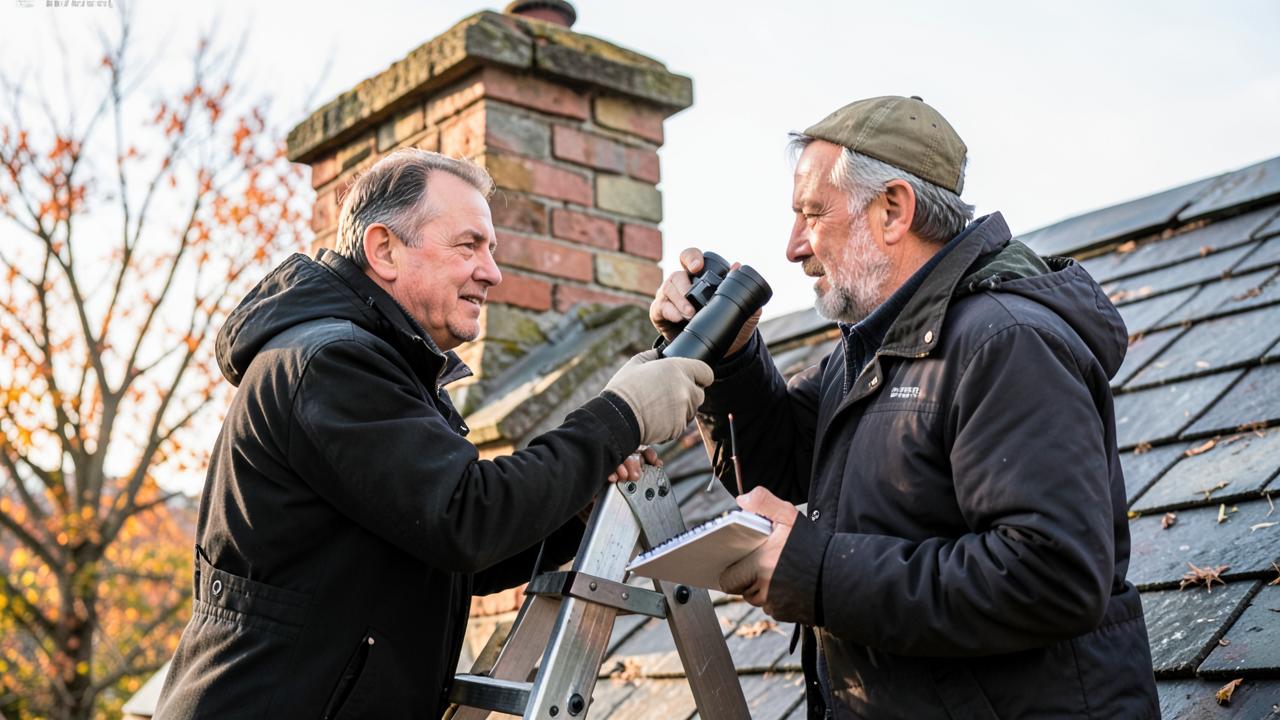
Pre-winter roof and chimney checks should cover shingle condition, flashing, gutter attachment, attic ventilation and insulation, and — for anyone using a wood-burning fireplace or stove — a chimney sweep to remove creosote buildup. Most of this is safely done from the ground with binoculars or from inside the attic; getting on the roof itself is where a professional often makes more sense.
What roof problems can you actually spot from the ground?
- Missing, curled, or cracked shingles, visible with binoculars from multiple angles around the house.
- Granules collecting in gutters or at downspout outlets, a sign of shingle wear even before visible curling.
- Sagging rooflines or valleys, which can indicate structural or long-term water damage issues.
- Rusted or lifted flashing around chimneys, vent pipes, and skylights — flashing failure is one of the most common leak sources.
- Moss or algae streaking, which holds moisture against shingles and shortens their life even if it isn't causing an active leak yet.
What should you check in the attic before winter?
Look for daylight coming through the roof deck, damp or compressed insulation (a sign of an existing slow leak), and confirm soffit and ridge vents aren't blocked by insulation, since poor attic ventilation contributes directly to ice dam formation by letting heat escape unevenly and melt snow that then refreezes at the colder eaves. Insulation should generally be 12-15 inches deep for R-38 to R-49 performance in most cold-climate homes — a tape measure across the joists gives a quick check.
| Check | Where | DIY or pro? |
|---|---|---|
| Visual shingle/flashing scan | Ground level with binoculars | DIY |
| Attic daylight/insulation check | Attic access | DIY |
| Gutter attachment and slope | Ladder at eave height | DIY with caution, or pro |
| Walking the roof surface | On the roof | Pro recommended, especially steep or high roofs |
| Chimney flue and creosote inspection | Chimney interior | Pro (certified chimney sweep) |
| Flashing repair or shingle replacement | On the roof | Pro unless minor and easily accessible |
Why does a chimney need professional attention before winter?
Wood-burning fireplaces and stoves deposit creosote — a flammable byproduct of combustion — inside the flue with every use, and enough buildup can ignite in a chimney fire that reaches 2,000°F, often unnoticed until it's already damaged the flue liner or spread to the roof structure. The National Fire Protection Association recommends annual chimney inspection for any solid-fuel-burning appliance, and a certified sweep ($150-300 typically) clears creosote and checks the flue liner, damper, and cap for damage.
How much does a full pre-winter roof and chimney inspection cost?
| Service | Typical cost |
|---|---|
| Professional roof inspection | $100-300 (often free with a repair estimate) |
| Chimney sweep and inspection | $150-300 |
| Minor flashing repair | $150-500 |
| Gutter re-fastening or minor repair | $100-400 |
| Attic insulation top-up (if needed) | $1.50-3.50 per sq ft |
What warning signs mean you shouldn't wait until spring?
- Active water stains on ceilings, especially ones that grow after a rain event.
- Visible daylight through the roof deck from inside the attic.
- A chimney with a strong sooty smell, visible creosote flakes in the firebox, or a flue that hasn't been swept in over a year of regular use.
- Shingles that are cracking, curling, or missing across more than a small, isolated patch.
How long does a professional roof inspection take and what does it cover?
A typical professional roof inspection takes 30-60 minutes for an average single-family home and covers shingle condition, flashing around every penetration, gutter attachment, ventilation, and often a look inside the attic for daylight or moisture. Many roofing companies offer this free as part of a repair estimate, though an independent inspection with a written report (useful for insurance or home sale purposes) typically runs $100-300. Ask specifically whether the inspector got on the roof or assessed it from the ground and ladder only, since a ground assessment can miss subtler issues like lifted nail heads or early granule loss on the far slope.
What's the typical lifespan of common roofing materials?
| Material | Typical lifespan | Pre-winter check priority |
|---|---|---|
| 3-tab asphalt shingles | 15-20 years | High after year 12-15 |
| Architectural (dimensional) shingles | 25-30 years | Moderate; inspect annually after year 20 |
| Metal roofing | 40-70 years | Low, but check fastener seals yearly |
| Wood shakes | 20-30 years | High; more prone to moisture and pest damage |
| Clay or concrete tile | 50+ years | Moderate; check for cracked or slipped tiles |
Knowing where a roof sits in this lifespan changes how seriously to take small pre-winter findings. A few curled shingles on a 6-year-old architectural roof are likely an isolated defect worth a spot repair, while the same finding on an 18-year-old asphalt roof is often an early signal that the whole field of shingles is nearing the end of its service life and a full replacement should be budgeted for in the next few years rather than patched repeatedly.
How often does a roof actually need a full professional inspection?
Every 2-3 years for most asphalt shingle roofs under 15 years old, and annually for roofs over 15-20 years old or after any major storm. A quick DIY ground-level visual check makes sense every fall regardless of the roof's age.
Can I sweep my own chimney to save money?
It's possible with the right brushes and rods, but a proper inspection also checks for cracked flue tiles, damaged crowns, and creosote glazing that a DIY sweep can miss. Given the fire risk, most homeowners get more value from a certified sweep's trained eye than the roughly $150-200 saved by doing it themselves.
What's the connection between gutters and ice dams?
Clogged or poorly sloped gutters don't cause ice dams directly, but they compound the problem by giving meltwater nowhere to go once an ice dam forms higher on the roof, backing water up further under shingles. Clean, properly sloped gutters are a secondary but real defense alongside attic ventilation and insulation.
Run the numbers for your own project
- Roof Pitch and Shingle CalculatorWhat is my roof pitch, and how many shingles do I need?
- Gutter and Downspout CalculatorHow much gutter and how many downspouts does my roof need?
- Home Maintenance ScheduleWhat should I be doing to my home this month?
Keep reading
- How Much Paint Do You Actually Need for a Room?The tin says 400 square feet. Your wall says otherwise. Here is the arithmetic that actually holds up.
- DIY or Hire a Pro? A Decision Framework That Is Not About MoneyThe labour saving is real. So is the cost of a job done twice — and of tools you use once.
- Storage for Small Rooms That Does Not Make Them SmallerSmall rooms do not need more storage. They need storage that stops interrupting the eye.