Painting Kitchen Cabinets That Actually Hold Up
By Jim Vernon · 4 min read · Last updated
Cabinet doors get touched, bumped, and wiped down daily. A wall paint job on cabinets fails for exactly that reason.
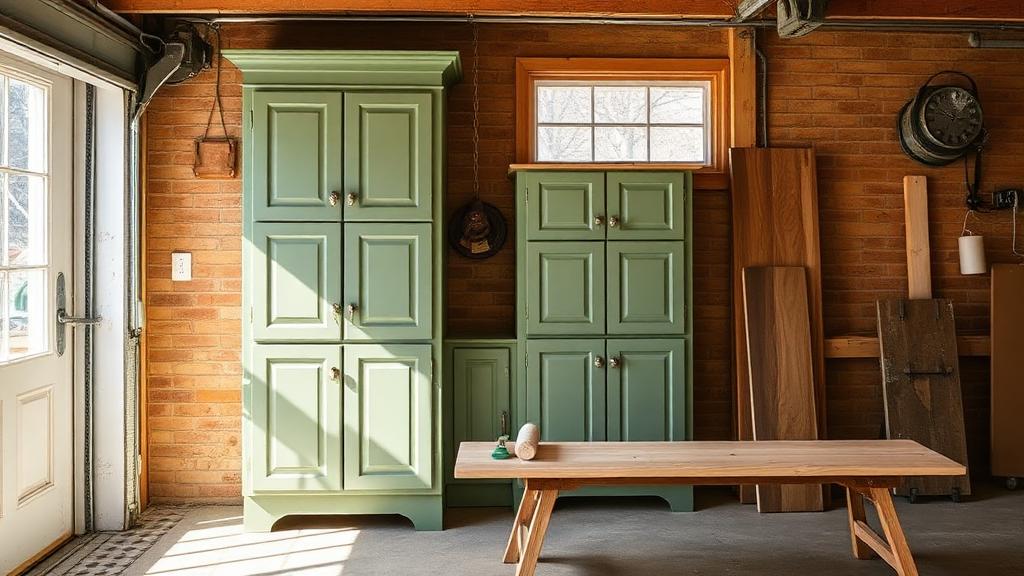
Cabinet paint takes more abuse per square foot than almost any other painted surface in a home, which is why a rushed cabinet job chips at the corners within a season while the same paint on a wall lasts a decade. The difference is almost entirely in prep and the type of paint used, not the painter's skill with a brush.
Cleaning and degreasing come before sanding
Kitchen cabinets accumulate a thin film of cooking grease that is often invisible but stops paint from bonding no matter how well it is sanded afterward. A degreasing cleaner or a solution of warm water and dish soap, followed by a clean water rinse and full drying, is a required first step, not an optional one.
Sand for adhesion, not for removing the old finish
A 220-grit sanding is usually enough to scuff a glossy factory finish so new paint has something to grip — full stripping is rarely necessary unless the old finish is failing or peeling. Wipe away dust with a tack cloth before moving on.
Doors and drawers come off
- Remove all doors, drawer fronts, and hardware, labelling each with painter's tape and a number that matches its opening.
- Fill any dents or gouges with wood filler, sand flush once dry.
- Clean and degrease again after sanding, since sanding dust mixes with any residual grease.
Primer choice matters as much as paint choice
A bonding primer designed for slick or previously varnished surfaces is what allows new paint to adhere to cabinets that were originally finished with a factory lacquer or oil-based coating. Skipping a proper bonding primer and going straight to paint is the single most common reason cabinet paint peels in sheets rather than chipping in small spots.
| Paint type | Durability | Dry/cure time | Best application |
|---|---|---|---|
| Cabinet-specific enamel (waterborne) | High | 1-2 hrs dry, 2-3 weeks full cure | Brush or spray |
| Alkyd/oil enamel | Very high | 6-8 hrs dry, 2-4 weeks full cure | Brush, slower but very smooth |
| Standard wall paint | Low | 1 hr dry | Not recommended for cabinets |
| Chalk-style furniture paint | Low-Medium without topcoat | Fast dry | Needs a protective topcoat |
Spray versus brush
A sprayer, even a basic HVLP unit, gives the smoothest factory-like finish and is worth renting for a whole-kitchen project. A quality synthetic bristle brush combined with a foam roller for flat panel faces is a reasonable substitute and avoids overspray concerns in an occupied home, at some cost to the glassy finish a sprayer gives.
Reassembly and hardware
Worked example: a 20-door kitchen
A kitchen with 20 doors and drawer fronts, painted with a cabinet-specific waterborne enamel, typically needs two full days of active work spread across a longer calendar window: half a day for cleaning, sanding, and labelling; half a day for priming with dry time between coats; a full day for two topcoats, again with dry time between; then a wait of two to three weeks before hanging doors back on with full-force daily use. Rushing that final wait is the most common reason a fresh cabinet job shows sticking or peeling within the first month.
- Common mistake: skipping the degreasing step because the cabinets 'look' clean.
- Common mistake: using a standard wall paint or a chalk-style paint without a protective topcoat on high-touch cabinet doors.
- Common mistake: rehanging doors and using the kitchen normally before the paint has fully cured, not just dried to the touch.
- Common mistake: not labelling doors and drawer fronts before removal, leading to mismatched hinges or misaligned holes on reassembly.
Reassembly and hardware
Reinstall hardware and rehang doors only after the full cure time has passed, and consider new hinges or soft-close hardware at this point since the doors are already off — it is a natural moment to make that small upgrade without extra labour.
Do I really need to remove the doors, or can I paint them in place?
Removing them gives far better coverage on edges and lets you lay them flat, which avoids drips and gives a more even coat. It is extra setup time that pays off in the final finish.
How long before I can use the cabinets normally?
Light use is fine after a day or two, but avoid heavy contact, stacking, or closing doors firmly for the full cure period listed on the paint can, often 2-4 weeks.
Is a bonding primer necessary on unfinished wood cabinets?
Less critical than on slick factory finishes, but still recommended for even coverage and to seal any tannin bleed from certain wood species.
Is a bonding primer necessary on unfinished wood cabinets?
Less critical than on slick factory finishes, but still recommended for even coverage and to seal any tannin bleed from certain wood species.
Can I paint laminate or thermofoil cabinets?
Yes, with a bonding primer specifically rated for slick, non-porous surfaces — regular primer will not adhere well and can peel in sheets within weeks.
Is spraying really worth renting equipment for a single kitchen?
For a whole kitchen, most people find the smoother, more even finish worth the rental cost and setup time; for just a few doors, brushing is usually simpler.
Run the numbers for your own project
- Paint CalculatorHow much paint do I need for this room?
- Project Cost EstimatorWhat will this project cost me?
Keep reading
- How Much Paint Do You Actually Need for a Room?The tin says 400 square feet. Your wall says otherwise. Here is the arithmetic that actually holds up.
- DIY or Hire a Pro? A Decision Framework That Is Not About MoneyThe labour saving is real. So is the cost of a job done twice — and of tools you use once.
- Storage for Small Rooms That Does Not Make Them SmallerSmall rooms do not need more storage. They need storage that stops interrupting the eye.