Outdoor Lighting Design: Layering Light Instead of Just Adding Fixtures
By Jim Vernon · 4 min read · Last updated
Most outdoor lighting fails not from bad fixtures but from having only one layer of light instead of three.
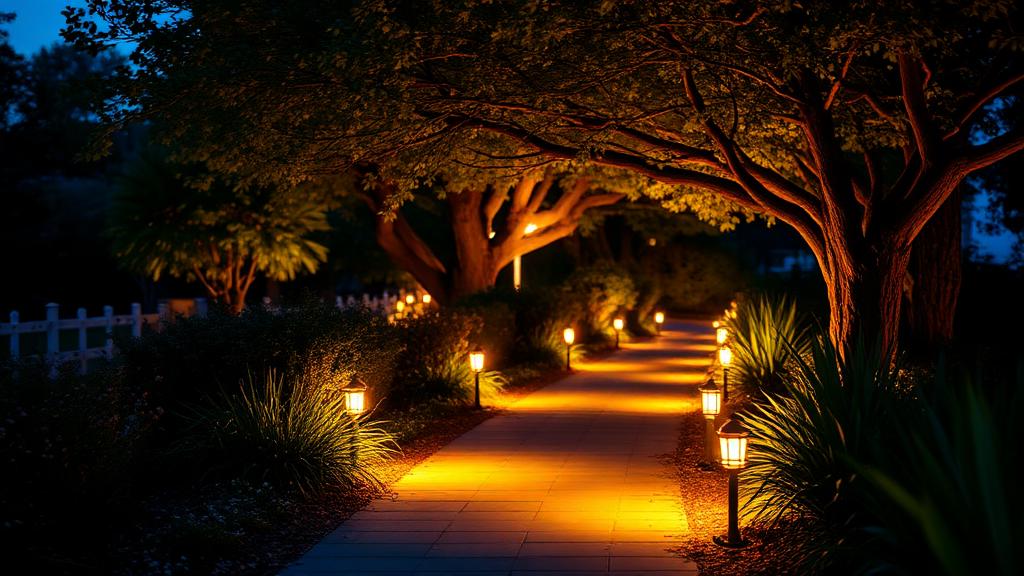
Indoor lighting design separates ambient, task, and accent light. Outdoor lighting benefits from the same layering — path lighting for safety, accent lighting for features, and security lighting for coverage — rather than one uniform layer of floodlights or string lights doing all three jobs badly.
The three layers
- Path and safety lighting: low, downward-facing fixtures along walkways, steps, and driveway edges — the goal is visible footing, not bright illumination.
- Accent lighting: uplighting on trees, architectural features, or specimen plants, using narrow-beam fixtures to draw the eye without lighting the whole yard.
- Security lighting: motion-activated floodlights at entry points and dark corners, generally the brightest layer and the only one that should be triggered rather than always-on.
Smart controls and automation
Smart plugs, app-controlled transformers, and photocell sensors let different lighting zones run on independent schedules -- security lighting triggered by motion all night, accent lighting on a timer that turns off at a set hour, and path lighting synced to dusk. This layered control mirrors the layered fixture design and avoids running every zone at the same schedule by default.
Seasonal adjustments
- Reposition uplights as deciduous trees leaf out or drop leaves, since the same fixture angle reads very differently bare versus full canopy.
- Check buried low-voltage cable each spring for any frost heave that may have exposed a run.
- Add or adjust holiday lighting circuits separately from the permanent landscape system to avoid overloading a single transformer.
How much does a typical low-voltage landscape lighting system cost to install?
It varies widely with fixture count and quality, but a modest DIY system with a dozen fixtures is a fraction of the cost of a professionally designed and installed whole-property system with a smart transformer and dozens of fixtures.
Low-voltage versus line-voltage
| System | Voltage | Installation | Best for |
|---|---|---|---|
| Low-voltage | 12V (via transformer) | DIY-friendly, shallow burial, no conduit required | Path, accent, most residential landscape lighting |
| Line-voltage | 120V | Requires conduit, often licensed electrician | Security floodlights, permanent structural lighting |
| Solar | N/A (battery-charged) | No wiring at all | Supplemental path lighting, low-priority areas |
Fixture placement principles
- Space path lights 8-10 feet apart rather than lining every few feet — overlit paths look like a runway, not a garden.
- Aim uplights at a slight angle rather than straight up, to avoid glare directly into the fixture.
- Keep transformers and wiring away from sprinkler heads and areas that flood.
- Grade the light warmer (2700-3000K) for garden and path fixtures; cooler light reads more institutional outdoors.
Common mistakes
- Over-lighting: too many fixtures at even brightness flattens the yard instead of creating depth.
- Uplighting every tree instead of two or three focal specimens.
- Mounting security lights too high, which spreads light thin instead of covering the intended zone.
- Ignoring dark-sky considerations — shielded, downward-facing fixtures reduce glare and light pollution for neighbors.
Do I need a permit for outdoor lighting?
Low-voltage landscape lighting typically doesn't require a permit. Line-voltage work, especially anything tied into the home's electrical panel, often does — check local code before running new circuits.
How many watts do I need for a low-voltage system?
Add up the wattage of all planned fixtures and choose a transformer rated at least 20% above that total to allow headroom and avoid running it at full capacity constantly.
A worked example: sizing a transformer
A plan with ten 5-watt path lights and four 7-watt uplights totals 78 watts. Adding the recommended 20% headroom points to a transformer rated around 95-100 watts rather than one sized right at 78, which would run at full capacity constantly and shorten its working life.
Common mistakes
- Running every fixture at full brightness instead of dimming path lights relative to accents.
- Forgetting to plan for seasonal changes, like deciduous trees losing leaves and changing how uplighting reads in winter.
- Mixing warm and cool color temperatures across the yard, which looks disjointed at night.
- Placing motion-security lights where they'll be triggered constantly by street traffic or pets, causing neighbors to tune them out.
Should path lights face up or down?
Down, in nearly all cases -- downward-facing fixtures light the walking surface without shining directly into anyone's eyes.
Wiring and transformer placement
Run low-voltage cable in a shallow trench, typically 3-6 inches deep, and mount the transformer on an exterior wall near a GFCI outlet, ideally under an eave for weather protection. Group fixtures on separate cable runs from the transformer by zone -- path lights on one run, accents on another -- so a single wire fault doesn't take down the whole system and each zone can be adjusted independently.
Bulb type and efficiency
- LED fixtures use a fraction of the wattage of older halogen landscape lights and last many times longer, which matters most for buried or hard-to-reach fixtures.
- Warmer color temperatures (2700-3000K) generally read as more natural outdoors than daylight-toned bulbs.
- Check that replacement bulbs match the fixture's base and voltage before buying in bulk.
Can I add landscape lighting in stages instead of all at once?
Yes -- installing a slightly oversized transformer up front and running extra capped cable runs to future zones makes it easy to add fixtures later without redoing the whole system.
How do I keep landscape lighting from washing out at dusk versus full dark?
Use a photocell or timer rather than manual switching, and check the layout at both dusk and full dark before finalizing fixture placement, since brightness reads very differently at each.
Run the numbers for your own project
- Garden Fence and Trellis CalculatorHow many posts and rails does my fence or trellis need?
- Project Cost EstimatorWhat will this project cost me?
Keep reading
- How Much Paint Do You Actually Need for a Room?The tin says 400 square feet. Your wall says otherwise. Here is the arithmetic that actually holds up.
- Choosing a Fence: Material, Height, and the Rules Nobody ReadsA fence is a twenty-year decision made in an afternoon. Here is what actually differs between the options.
- Flooring Underlayment: What It Does and When You Can Skip ItUnderlayment is the layer nobody sees and the one most likely to cause a callback if it is skipped or mismatched.