Interior Door Adjustment: Fixing Sticking, Sagging, and Slamming
By Jim Vernon · 4 min read · Last updated
Most sticking doors need a screwdriver, not a plane. Try the cheap fix before the destructive one.
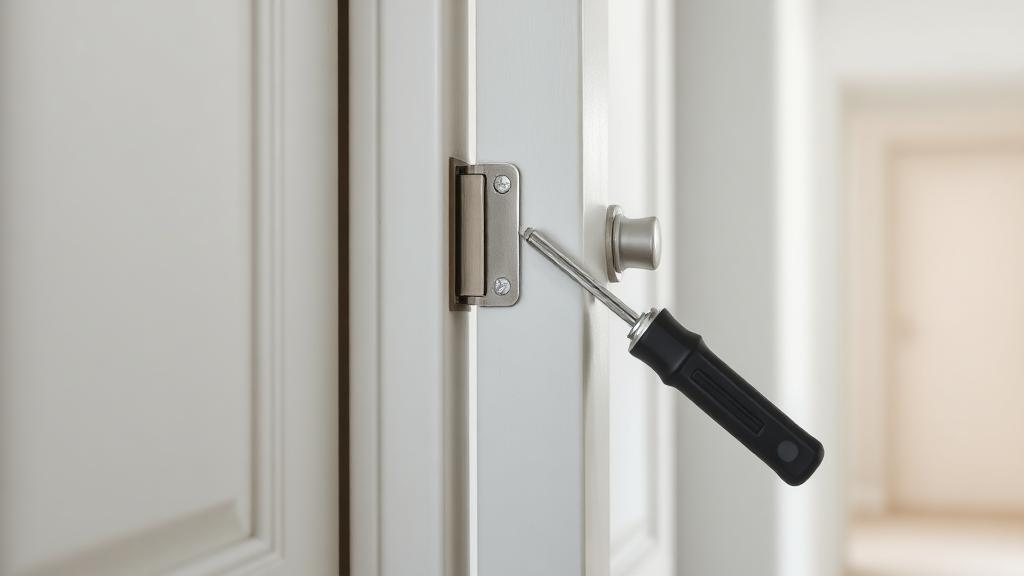
Doors that stick, drag on the frame, or will not latch are usually a hinge or hardware issue rather than a sizing problem, and the fixes are ordered roughly from least to most invasive for a reason — most doors never need the last one.
Diagnose before touching anything
- Door drags along the top or bottom on one side only: usually a loose or worn hinge letting the door sag.
- Door will not latch, or the latch catches on the strike plate: usually a strike plate or latch alignment issue, not a sizing problem.
- Door rubs evenly along its full length on one edge: this is the case where the door itself may actually need planing.
- Door slams or will not stay open: hinge tension or an out-of-level frame.
Fix loose hinges first
- Check each hinge screw for looseness by hand; tighten any that turn freely.
- If a screw hole is stripped and will not tighten, remove the screw, insert a wood matchstick or golf tee with glue into the hole, snap it flush, let it dry, and re-drive the screw into fresh wood.
- If the door sags noticeably, replace the top hinge's screws with longer 3-inch screws that reach into the framing stud behind the jamb, not just the jamb itself — this is the single most effective sag fix.
Fix latch and strike plate alignment second
If the door closes but does not latch, or latches with force, the strike plate on the frame likely needs to move slightly rather than the door needing any material removed. Loosen the strike plate screws, shift the plate up, down, or sideways by a small amount to align with the latch, and if needed, use a file to slightly enlarge the strike plate opening rather than moving the plate itself for small misalignments.
Planing is the last resort
Only plane a door if it drags evenly along a full edge with no hinge or strike issue present, which usually means seasonal wood swelling or an actual manufacturing size mismatch. Mark the rubbing area with chalk, close the door gently to transfer a mark, remove the door from its hinges, and plane only the marked high spots in thin passes, checking fit often rather than removing too much at once.
| Symptom | Likely cause | Fix order |
|---|---|---|
| Door sags, drags on one corner | Loose top hinge | Tighten or replace with long screws |
| Won't latch | Strike plate misaligned | Adjust or file strike plate |
| Rubs evenly along one edge | Swelling or size mismatch | Plane in thin passes |
| Slams shut on its own | Frame or hinge out of plumb | Check hinge tension, shim frame if needed |
Humidity-related sticking often needs no permanent fix
Worked example: a bedroom door dragging at the bottom corner
A door that drags along the floor at the latch-side bottom corner, with the top hinge screws feeling slightly loose, is a textbook sag case. Replacing just the top hinge's two screws closest to the door edge with 3-inch screws that reach the framing stud, rather than replacing all six screws across three hinges, is usually enough to lift the corner clear of the floor. This is a 10-minute fix with a screwdriver, no removal of the door required.
- Common mistake: planing a door before checking hinge tightness, permanently removing wood that wasn't the actual problem.
- Common mistake: replacing all hinge screws with long screws when only the top hinge is actually loose, which can pull the frame out of alignment elsewhere.
- Common mistake: forcing a stuck latch shut repeatedly instead of adjusting the strike plate, which eventually cracks the plate or the surrounding trim.
Humidity-related sticking often needs no permanent fix
Wood doors swell slightly in humid months and shrink back in dry ones. If a door only sticks for a few weeks a year in the same season, planing it to fit that season means it will be loose the rest of the year — a light sanding of the high-friction edge, rather than a full plane, is usually the more proportionate fix.
Should I plane a door before checking the hinges?
No — check and tighten hinges first. Planing removes material permanently, while a hinge adjustment is reversible and fixes the majority of sticking doors.
Why does my door only stick in summer?
Humidity causes wood to swell slightly. This is normal seasonal movement and rarely needs a permanent fix like planing unless it is severe.
Can I fix a sagging door without removing it from the frame?
Yes — the long-screw hinge fix and strike plate adjustments can both be done with the door still hanging on its hinges.
Can I fix a sagging door without removing it from the frame?
Yes — the long-screw hinge fix and strike plate adjustments can both be done with the door still hanging on its hinges.
How do I know which hinge is causing a sag?
Usually the top hinge, since it bears the most leverage from the door's weight. Check it first before assuming a lower hinge or the frame itself is the issue.
My door swings open or closed on its own — is that a hinge problem?
Yes, typically an out-of-plumb frame or hinges set slightly off from true vertical. Checking the frame with a level and shimming behind the hinge leaves can correct it.
Run the numbers for your own project
- Project Cost EstimatorWhat will this project cost me?
Keep reading
- How Much Paint Do You Actually Need for a Room?The tin says 400 square feet. Your wall says otherwise. Here is the arithmetic that actually holds up.
- DIY or Hire a Pro? A Decision Framework That Is Not About MoneyThe labour saving is real. So is the cost of a job done twice — and of tools you use once.
- Storage for Small Rooms That Does Not Make Them SmallerSmall rooms do not need more storage. They need storage that stops interrupting the eye.