HVAC Sizing and Short Cycling: Why Bigger Isn't Better
By Jim Vernon · 5 min read · Last updated
An oversized system heats or cools the air fast and then quits — which feels powerful but performs poorly.
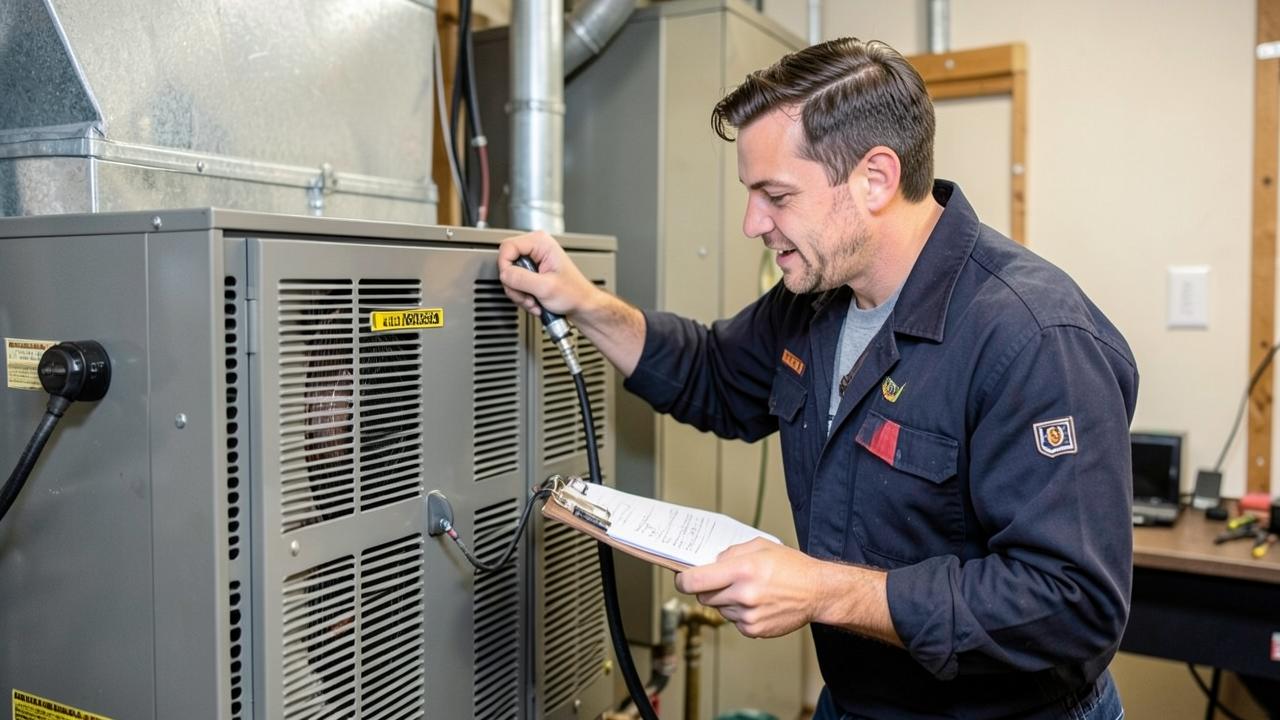
Short cycling happens when a furnace or AC turns on, satisfies the thermostat within a few minutes, and shuts off — repeating every 5-10 minutes instead of running steady 15-20 minute cycles. It's almost always caused by an oversized unit, and it wastes energy, wears out components faster, and leaves humidity and temperature uneven across rooms. Correct sizing, based on a real heat-loss/gain calculation rather than a rule of thumb, fixes it at the source.
Why does an oversized system actually perform worse?
A furnace or AC has a fixed startup and shutdown penalty: several minutes of ramp-up before it reaches efficient operation, and residual cooling/heating capacity in the ducts after shutoff that overshoots the setpoint. An oversized unit reaches the thermostat's target so fast that it never runs long enough to ride past that startup penalty, so its effective seasonal efficiency drops even though its rated efficiency (AFUE or SEER2) looks fine on paper. For air conditioners specifically, short cycles also mean the coil never runs long enough to pull meaningful moisture out of the air, so an oversized AC can leave a house cold but clammy.
How much oversizing is common, and why does it happen?
| Sizing method | Typical result | Problem |
|---|---|---|
| Rule of thumb (sq ft × factor) | Often 25-50% oversized | Ignores insulation, windows, orientation, air leakage |
| Matching old equipment's tonnage | Perpetuates original oversizing | Old systems were rarely sized correctly either |
| ACCA Manual J load calculation | Sized to actual heat loss/gain | Requires 30-60 min of contractor time, sometimes an extra $150-300 fee |
| Contractor 'when in doubt, go bigger' | Can be 30%+ oversized | Avoids callbacks on hot days at the cost of efficiency and comfort |
What are the signs your system is oversized or short cycling?
- Cycles under 10 minutes long, especially on mild days, checked with a simple stopwatch at the thermostat.
- Big temperature swings between rooms — the room with the thermostat feels fine while others lag several degrees.
- AC keeps the house cool but humidity stays above 55-60%, feeling clammy despite a low thermostat reading.
- Noticeably loud startup noise or a strong blast of air followed by quick shutoff.
- Higher-than-expected utility bills despite a recently replaced, supposedly efficient system.
How is correct sizing actually calculated?
An ACCA Manual J calculation accounts for your home's square footage, insulation R-values, window area and orientation, air leakage rate, ceiling height, and local design temperatures to compute actual BTU/h heat loss (winter) and heat gain (summer). This is different from square footage rules of thumb because two identically sized houses with different insulation and window quality can have a 40% difference in real heating/cooling load. Ask any contractor bidding a replacement to show you the Manual J output, not just a recommended tonnage — a legitimate contractor will have this and can walk you through it in five minutes.
What can you do if you're stuck with an oversized system?
- Ask your contractor about a two-stage or variable-speed model at replacement time — these modulate output instead of only running at 100% or 0%, largely eliminating short cycling even if sizing isn't perfect.
- In the meantime, extend cycle length by setting a wider thermostat differential (many smart thermostats allow adjusting this in settings) so the system doesn't kick on for every 0.5°F drift.
- Improve the building envelope — air sealing and insulation upgrades lower the actual load, which can make an oversized system behave closer to correctly sized.
- Have a technician check refrigerant charge and airflow (CFM per ton) on an AC; incorrect charge on an already-oversized unit compounds the humidity problem.
How does short cycling affect equipment lifespan and warranty?
Every start-stop cycle stresses the compressor, inducer motor, and electrical contactors more than steady-state running does, since inrush current at startup runs several times higher than running current. A furnace or AC that short cycles for years typically shows component failures 3-5 years earlier than a correctly sized, steadily running system, and some manufacturers' extended warranties specifically exclude damage attributable to documented oversizing found during a service call. Replacing a failed capacitor or contactor every year or two on an otherwise young system is a common symptom worth investigating rather than treating as bad luck.
What does a Manual J load calculation cost, and is it worth insisting on?
- Standalone Manual J calculation from an independent energy consultant: $200-400, useful as a second opinion before a major replacement.
- Manual J bundled into a contractor's replacement quote: often included or $100-150 added, worth confirming it's a real calculation and not a rule-of-thumb estimate presented as one.
- Free 'load calculations' offered by some contractors are sometimes just square-footage rules of thumb relabeled — ask to see the actual worksheet with your home's insulation and window inputs listed.
- A proper Manual J takes into account local design temperatures, so the same house gets a different BTU/h number in Minneapolis than in Atlanta, which a rule of thumb cannot replicate.
Is a shorter cycle always bad?
Not automatically — mild spring and fall days naturally produce shorter cycles even on a correctly sized system. The concern is cycles consistently under 8-10 minutes during peak summer or winter conditions, which points to real oversizing rather than normal mild-weather behavior.
Can a too-small system also cause problems?
Yes, though it's less common. An undersized system runs continuously without reaching setpoint on extreme days, which isn't short cycling but does mean the house never quite reaches target temperature during a heat wave or cold snap.
Does a two-stage system solve oversizing on its own?
It significantly reduces the symptoms by running at a lower output stage most of the time, but it doesn't replace a proper Manual J load calculation — pairing modulating equipment with a reasonably accurate size gives the best combination of comfort and efficiency.
Run the numbers for your own project
- AC and Heater BTU CalculatorHow many BTUs do I need to heat or cool this room?
- Home Maintenance ScheduleWhat should I be doing to my home this month?
Keep reading
- How Much Paint Do You Actually Need for a Room?The tin says 400 square feet. Your wall says otherwise. Here is the arithmetic that actually holds up.
- DIY or Hire a Pro? A Decision Framework That Is Not About MoneyThe labour saving is real. So is the cost of a job done twice — and of tools you use once.
- Storage for Small Rooms That Does Not Make Them SmallerSmall rooms do not need more storage. They need storage that stops interrupting the eye.