HVAC Filters and Airflow: What MERV Ratings Actually Mean
By Jim Vernon · 4 min read · Last updated
A higher MERV rating isn't automatically better — it can choke airflow in a system that wasn't designed for it.
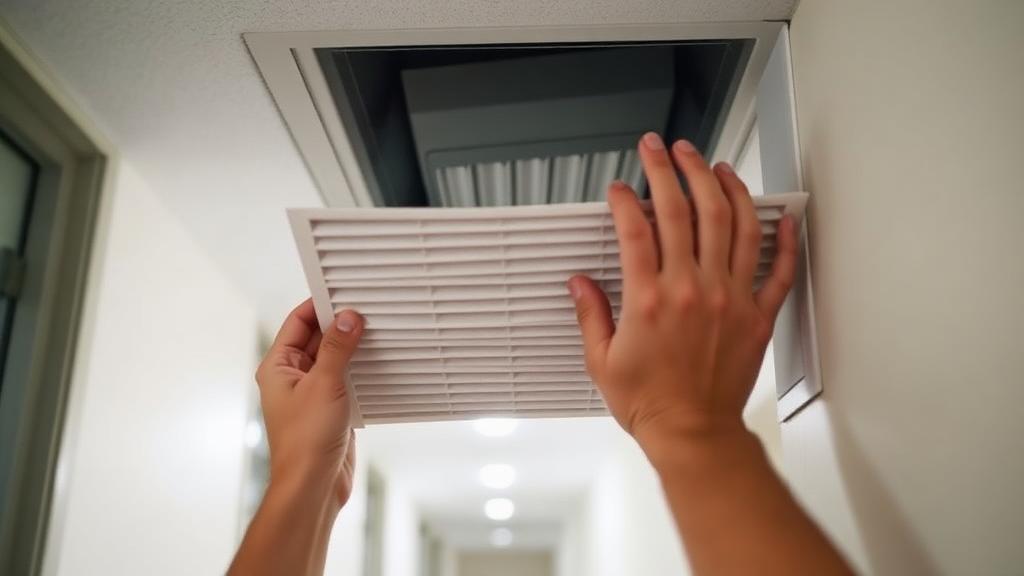
The filter is the cheapest, most-overlooked part of an HVAC system, and a clogged one is a leading cause of frozen evaporator coils, short-cycling, and reduced equipment life. Choosing the right filter is a balance between filtration quality and how much airflow resistance your specific system can tolerate.
What MERV actually measures
MERV (Minimum Efficiency Reporting Value) rates how well a filter captures particles of various sizes, on a scale generally running from 1 to 16 for residential use (higher commercial and HEPA-grade ratings exist but aren't used in standard residential systems). Higher MERV means finer filtration, but it also means denser material that resists airflow more.
| MERV rating | Captures | Typical use |
|---|---|---|
| 1-4 | Large particles: dust, lint, pollen | Minimum-cost fiberglass filters |
| 5-8 | Mold spores, pet dander, dust mite debris | Standard residential filters |
| 9-12 | Fine dust, smoke, most pollen | Better residential filters; good balance |
| 13-16 | Bacteria, fine smoke particles | High-efficiency; verify system can handle the pressure drop |
Change interval depends on more than the calendar
- Standard 1-inch fiberglass or pleated filters: every 1-3 months.
- Thicker 4-5 inch media filters (common with a fresh-air return or media cabinet): every 6-12 months.
- Homes with pets, allergy sufferers, or ongoing construction/renovation nearby: check monthly regardless of filter type.
- Vacation or low-occupancy homes: check on move-in/out rather than a strict schedule.
Signs airflow is already restricted
A system straining against a clogged filter often shows symptoms before anyone thinks to check the filter itself: weaker airflow from vents, longer run times to reach the set temperature, ice visible on the outdoor unit's refrigerant lines or the indoor coil, or a musty smell when the system starts up. Any of these is worth a filter check as a first, free troubleshooting step before calling for service.
Filter size and fit matter as much as rating
A filter that's the wrong size or installed with gaps around the frame lets unfiltered air bypass it entirely, which defeats the purpose regardless of MERV rating. Measure the filter slot directly rather than trusting the size printed on the old filter, since return grilles and filter racks vary even within similar-looking systems.
Beyond the filter: airflow balance across rooms
Uneven temperatures between rooms are often a duct balancing issue rather than a filter or equipment problem — closed or blocked supply registers, undersized return ducts, or dampers left in the wrong position from a previous season. Fully closing vents in unused rooms to 'save energy' can actually increase system pressure and reduce overall efficiency; partially closing is generally safer than fully closing.
A worked example: matching filter to system rating
A furnace rated for a maximum static pressure suited to MERV 8-11 filters, fitted instead with a MERV 16 filter, can see airflow drop by a large enough margin to trigger icing on the coil within a single cooling season. Swapping back to a MERV 11 pleated filter of the correct size typically restores normal airflow immediately, at no cost beyond the filter itself — proof that the fix is often about matching the rating to the equipment, not chasing the highest number available.
- Common mistake: buying the highest available MERV rating assuming it's simply better air quality, without checking system compatibility.
- Common mistake: forgetting to check filter orientation (airflow direction arrows) when installing, which reduces effectiveness even with the right filter.
- Common mistake: leaving a filter in well past its interval because it still looks fine to the eye — resistance can rise before visible dirt appears.
- Common mistake: not measuring the actual filter slot and instead reordering by memory, ending up with a filter that doesn't seat properly.
- Common mistake: closing supply vents fully in unused rooms to save energy, which increases system pressure and can worsen airflow problems elsewhere.
A simple filter-check routine
- Locate the filter slot and note the printed size, then measure it directly to confirm.
- Check the filter monthly for the first season to learn how quickly it loads in your specific home.
- Hold the filter up to a light source — if you can't see light through it, replace it regardless of the calendar.
- Confirm your system's maximum recommended MERV rating before buying a higher-rated replacement.
- Set a recurring reminder based on what you learn, rather than guessing at an interval.
Is a more expensive filter always better for air quality?
Only if your system can handle the added airflow resistance. Beyond your system's rated MERV ceiling, a pricier filter can reduce both comfort and equipment lifespan while adding little practical air-quality benefit.
Can a dirty filter actually damage the system?
Yes. Severely restricted airflow can freeze the evaporator coil in cooling mode and cause the compressor or blower motor to work harder and fail sooner, and in furnaces it can trigger a high-limit safety shutoff repeatedly.
Do washable filters work as well as disposable ones?
Washable filters are typically lower MERV (often 1-4) and require diligent, thorough cleaning to stay effective — many perform worse than a mid-range disposable pleated filter if cleaning is inconsistent.
Will a clogged filter make my energy bill go up?
Yes — restricted airflow forces the blower motor to work harder and can extend run times to reach the set temperature, both of which raise energy use even before any equipment damage occurs.
Do smart or app-connected filter sensors actually help?
Pressure-sensing filter monitors can be more accurate than a flat calendar schedule, since they respond to actual airflow resistance rather than an estimated interval, which is useful in homes with pets or high dust loads.
Run the numbers for your own project
- Home Air Quality and Ventilation CalculatorDoes my home get enough fresh air ventilation?
- AC and Heater BTU CalculatorHow many BTUs do I need to heat or cool this room?
Keep reading
- How Much Paint Do You Actually Need for a Room?The tin says 400 square feet. Your wall says otherwise. Here is the arithmetic that actually holds up.
- DIY or Hire a Pro? A Decision Framework That Is Not About MoneyThe labour saving is real. So is the cost of a job done twice — and of tools you use once.
- Storage for Small Rooms That Does Not Make Them SmallerSmall rooms do not need more storage. They need storage that stops interrupting the eye.