Humidity Control: The Range That Actually Protects Your Home
By Jim Vernon · 5 min read · Last updated
Both too dry and too damp cause real, separate damage — the target is a fairly narrow band, not just 'less humid.'
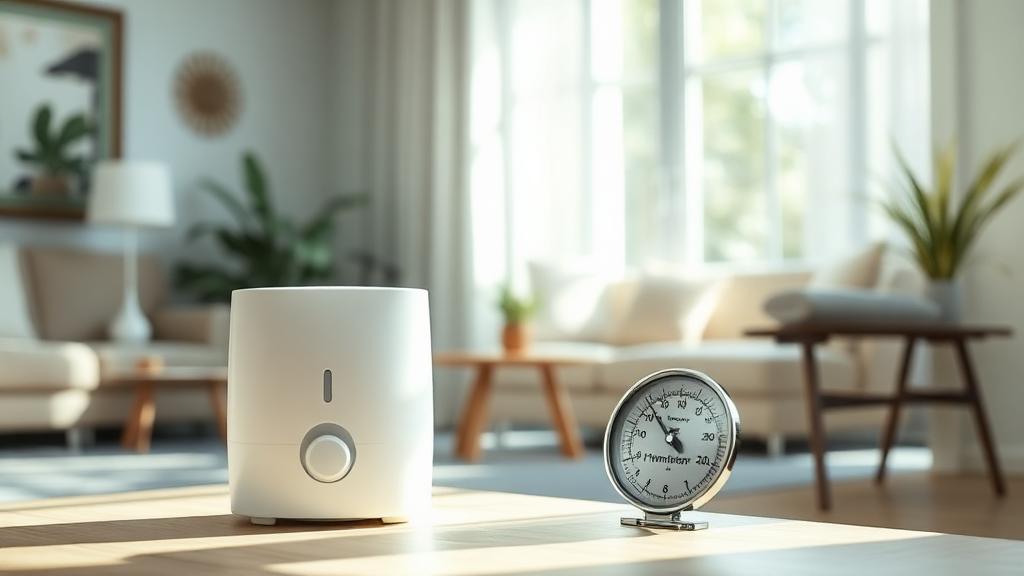
Relative humidity outside the 30-50% range causes different problems depending on which direction it goes. Too low, and static, dry skin, cracked wood furniture, and irritated sinuses follow. Too high, and mold, dust mites, and condensation-related damage follow. Most home comfort and durability advice on humidity is really about staying inside that band.
Why the range matters
| Relative humidity | Common effects |
|---|---|
| Below 30% | Static shocks, dry skin and sinuses, cracking in wood furniture and flooring, worsened respiratory irritation |
| 30-50% | Generally comfortable and low-risk for mold, dust mites, and material damage |
| 50-60% | Musty odors possible, dust mite populations rise, condensation risk on cool surfaces increases |
| Above 60% | Active mold growth risk on organic surfaces, condensation on windows and cold pipes, structural moisture damage over time |
Winter: usually too dry
Heating systems don't add moisture, and cold outdoor air holds very little water vapor to begin with, so heated indoor air in winter often drops well below 30% relative humidity without intervention. A humidifier — whole-house furnace-mounted or portable — is the direct fix, but there's a ceiling: pushing humidity too high in winter causes condensation on cold window glass and, worse, inside exterior wall cavities where it isn't visible.
Summer: usually too humid, or humid despite AC
Air conditioning removes some humidity as a byproduct of cooling, but an oversized AC unit cools the air quickly without running long enough to remove much moisture, leaving a space cold but still clammy. A dehumidifier — portable or integrated with the HVAC system — addresses this directly, and is often the missing piece in basements, which run more humid than the rest of the house regardless of season due to ground moisture and cooler surface temperatures.
Practical steps by area of the home
- Bathrooms: run the exhaust fan during and 15-20 minutes after showers to clear moisture before it spreads to the rest of the house.
- Kitchens: use the range hood when boiling or steaming, a significant and often ignored moisture source.
- Basements: a dedicated dehumidifier with a drain hose or pump, run continuously in humid seasons, is usually more effective than a portable AC unit alone.
- Whole house: an inexpensive hygrometer in a central living space gives a real number instead of guessing, and costs far less than the equipment it helps you size correctly.
Sizing humidifiers and dehumidifiers
Both are commonly sized by square footage and, for dehumidifiers, by how damp the space already is — a 'very damp, sweating walls' basement needs meaningfully more dehumidifying capacity per square foot than a slightly musty one. Undersized equipment runs constantly without ever reaching target humidity; oversized equipment short-cycles and wastes energy without fully drying the air between cycles.
When humidity issues point to something bigger
Persistently high humidity that doesn't respond to a properly sized dehumidifier can point to a bulk water source — a foundation leak, poor grading directing rainwater toward the house, or a plumbing leak inside a wall. If a dehumidifier is running constantly and humidity still won't drop, it's worth investigating water intrusion rather than buying a bigger unit.
A worked example: sizing a basement dehumidifier
A 1,000 square foot basement that's noticeably damp with a musty smell (moderately damp condition, not standing water) generally needs a unit rated for roughly 50-70 pints per day. Undersizing to a 30-pint unit for the same space means it runs constantly and still may not reach the 30-50% target, while a properly sized unit cycles normally and holds the target range.
- Buy an inexpensive hygrometer and place it in the room you're concerned about for a few days to get a real baseline reading.
- Compare the reading against the 30-50% target range and note which direction (too dry or too damp) and by how much.
- Address ventilation basics first — bathroom and kitchen exhaust fans used consistently, since these are free.
- Size a humidifier or dehumidifier to the square footage and dampness level of the specific room, not the whole house, unless using a whole-house unit tied to the HVAC system.
- Recheck the hygrometer reading after a week of running the new equipment and adjust the setting rather than assuming it's correct out of the box.
- Common mistake: judging humidity by feel alone instead of a cheap hygrometer, which is easy to misjudge in either direction.
- Common mistake: running a dehumidifier without a way to drain it automatically, leading to it shutting off once the reservoir fills while no one's home.
- Common mistake: setting a whole-house humidifier too high in winter, causing window condensation and hidden moisture in wall cavities.
- Common mistake: assuming central air conditioning alone will control basement humidity, when basements often need dedicated dehumidification regardless of the upstairs AC.
- Common mistake: treating a musty smell as purely a humidity problem when it can also indicate an actual water leak that needs fixing at the source.
What humidity level actually stops mold growth?
Mold generally needs sustained relative humidity above roughly 60% (and a food source, which most household organic materials provide) to establish and spread. Keeping indoor humidity at or below 50% removes one of the conditions it needs.
Can a houseplant collection meaningfully raise indoor humidity?
A large, densely planted room can nudge humidity up slightly through transpiration, but the effect is small compared to a humidifier and won't reliably fix a dry-winter-air problem on its own.
Is it normal for a basement to always feel more humid than upstairs?
Somewhat — basements run cooler and are closer to ground moisture, so relative humidity there is often naturally higher. That said, persistent dampness or a musty smell is still worth addressing with a dehumidifier and a check for water intrusion.
How quickly should a hygrometer reading change after adjusting a humidifier or dehumidifier?
Expect a noticeable shift within a day in a single room, though a whole house with a central system can take several days to stabilize at a new setting, especially in a large or poorly sealed home.
Run the numbers for your own project
- Home Air Quality and Ventilation CalculatorDoes my home get enough fresh air ventilation?
- AC and Heater BTU CalculatorHow many BTUs do I need to heat or cool this room?
Keep reading
- How Much Paint Do You Actually Need for a Room?The tin says 400 square feet. Your wall says otherwise. Here is the arithmetic that actually holds up.
- DIY or Hire a Pro? A Decision Framework That Is Not About MoneyThe labour saving is real. So is the cost of a job done twice — and of tools you use once.
- Storage for Small Rooms That Does Not Make Them SmallerSmall rooms do not need more storage. They need storage that stops interrupting the eye.