Humidity Control by Season: Comfortable Air Year-Round
By Jim Vernon · 5 min read · Last updated
The humidity level that prevents winter static shock is not the same one that prevents summer window condensation.
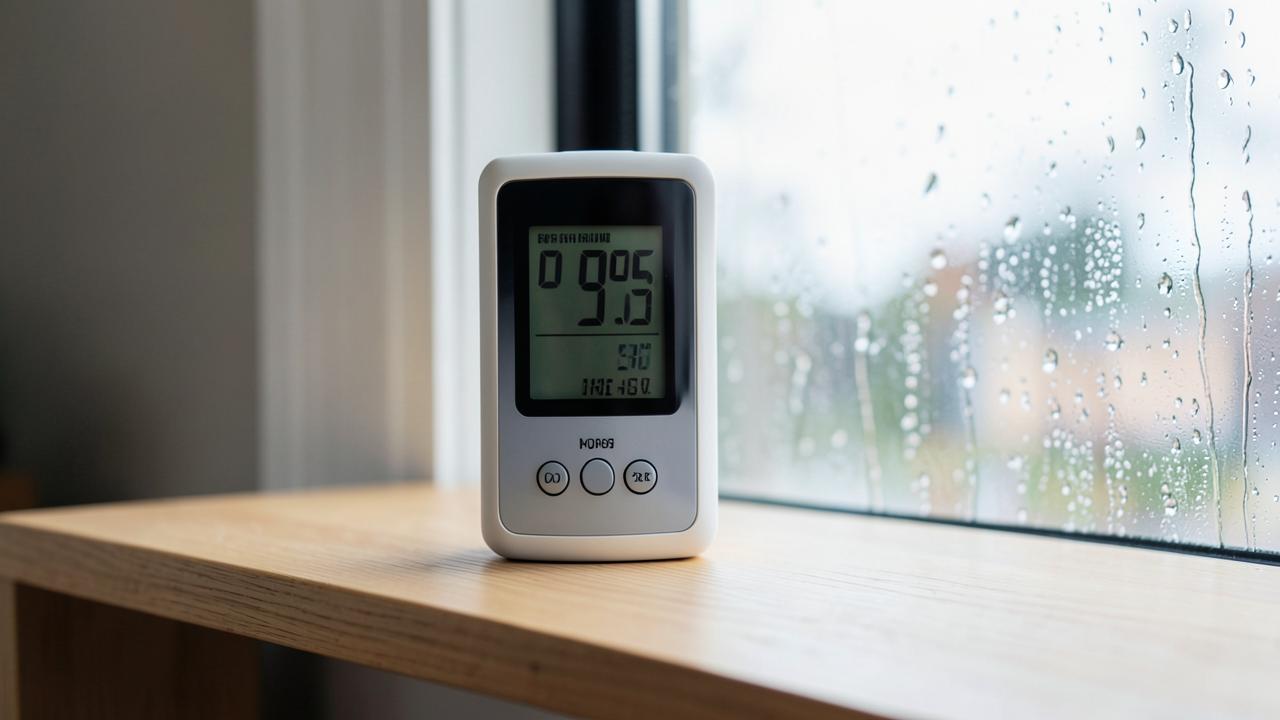
Target roughly 30-40% relative humidity indoors in winter and 40-50% in summer; going much lower causes static shock, dry skin, and cracked woodwork, while going higher risks window condensation in winter or a clammy, mold-prone house in summer. The right target actually shifts with outdoor temperature because window condensation depends on the gap between indoor humidity and outdoor cold, not on indoor humidity alone.
Why does the ideal humidity target change with the seasons?
In winter, cold outdoor temperatures make windows and other cold surfaces the coldest points in the house, and warm indoor air holding too much moisture condenses on contact with them — the colder it is outside, the lower your indoor humidity needs to be to avoid that condensation. In summer, the concern flips: outdoor air is already humid in most climates, air conditioning naturally removes moisture as it cools, and the risk becomes indoor humidity creeping too high when AC use is light (mild days, well-insulated houses) rather than window condensation.
| Outdoor temperature (winter) | Max recommended indoor RH to avoid window condensation | Notes |
|---|---|---|
| 20°F to 40°F | 35-40% | Low condensation risk on double-pane windows |
| 0°F to 20°F | 25-30% | Single-pane or poorly insulated windows need the lower end |
| Below 0°F | 15-25% | Very cold snaps require aggressive humidity reduction to protect windows |
| Any temperature, summer AC season | 40-50% | Higher end feels muggy; lower end risks static and dryness if over-dehumidified |
How do you actually raise or lower indoor humidity?
- Winter, too dry: a whole-house humidifier integrated with the furnace ($400-1,200 installed) or portable room humidifiers ($30-150) sized to the room or house.
- Winter, condensation on windows: lower humidifier setting first; if condensation persists, the windows themselves may be underinsulated (single-pane or failed double-pane seals) and need a longer-term fix.
- Summer, too humid: a dedicated dehumidifier (see sizing details below), improved AC dehumidification by ensuring correct refrigerant charge and airflow, or a whole-house dehumidifier tied into ductwork ($1,500-2,800 installed).
- Bathroom and kitchen sources: exhaust fans vented outside (not into the attic) run during and 15-20 minutes after showers and cooking to remove moisture at the source before it spreads through the house.
How do you measure humidity accurately?
A basic digital hygrometer costs $10-20 and is accurate enough for home use; place it away from direct sources of moisture (bathrooms, kitchens) and away from exterior walls or windows to get a representative reading of the main living space. Check it in at least two locations — a basement and an upstairs bedroom, for example — since humidity can vary significantly by level in a house, especially with a damp basement or crawlspace below.
How does home tightness affect your humidity strategy?
A newer, tightly air-sealed home holds onto humidity generated indoors (cooking, showering, breathing, houseplants) much more than a leaky older home that naturally exchanges air with outside. This means tightly sealed homes are more likely to need active dehumidification or humidification depending on season and are also better candidates for continuous mechanical ventilation (an ERV or HRV) that manages moisture as a byproduct of exchanging stale air for fresh air year-round.
- Identify your season and outdoor temperature range to set a target from the table above.
- Measure current humidity in 2-3 locations with an inexpensive hygrometer.
- Address moisture at the source first — vent fans, fix leaks, run range hoods — before adding equipment.
- Add humidification or dehumidification equipment sized to the actual gap between measured and target humidity.
- Re-check weekly for the first month of a new season, since heating and cooling equipment usage changes indoor humidity as outdoor conditions shift.
How does humidity interact with perceived temperature and thermostat settings?
Relative humidity changes how warm or cool a given temperature feels: high humidity in summer makes 78°F feel noticeably warmer because sweat evaporates more slowly, while low humidity in winter makes 68°F feel cooler than the thermometer suggests because dry air increases the rate of moisture loss (and perceived chill) from skin. This means correcting humidity to the recommended range can let you raise a summer AC setpoint a degree or two, or lower a winter heating setpoint slightly, without a loss of comfort — a secondary energy savings on top of the direct comfort and health benefits of proper humidity control.
What long-term damage can chronic humidity imbalance cause?
- Sustained high indoor humidity (above 60%) supports dust mite populations and mold growth on cool surfaces like exterior-wall closets and window frames.
- Sustained low indoor humidity (below 25%) dries out wood furniture, flooring, and musical instruments, sometimes causing visible gaps, cracking, or warping over a heating season.
- Humidity swings that repeat every winter without correction accelerate wear on wood floors and trim faster than a single bad season would.
- Chronic condensation on single-pane or older double-pane windows can eventually rot wood sashes and sills, turning a humidity problem into a window replacement problem.
Why do my windows fog up only on the coldest nights?
Window surface temperature drops with outdoor temperature, and condensation happens when that surface temperature falls below the dew point of your indoor air. On milder nights the glass stays warm enough to avoid it; on the coldest nights it doesn't, even if your indoor humidity hasn't changed.
Can too little humidity actually damage my house?
Yes — wood flooring, trim, and furniture can shrink, crack, and develop gaps when indoor air drops much below 25-30% RH for extended periods, particularly in winter with a forced-air furnace running constantly without added humidification.
Is a whole-house humidifier or dehumidifier better than portable units?
Whole-house units integrated with ductwork treat the entire home evenly and require less manual refilling or emptying, but cost more upfront. Portable units are cheaper and more flexible for treating one or two problem rooms, but need regular maintenance and don't scale well to a whole house.
Run the numbers for your own project
- Home Air Quality and Ventilation CalculatorDoes my home get enough fresh air ventilation?
- Home Maintenance ScheduleWhat should I be doing to my home this month?
Keep reading
- How Much Paint Do You Actually Need for a Room?The tin says 400 square feet. Your wall says otherwise. Here is the arithmetic that actually holds up.
- DIY or Hire a Pro? A Decision Framework That Is Not About MoneyThe labour saving is real. So is the cost of a job done twice — and of tools you use once.
- Storage for Small Rooms That Does Not Make Them SmallerSmall rooms do not need more storage. They need storage that stops interrupting the eye.