How Do You Choose a Kitchen Sink and Faucet?
By Jim Vernon · 4 min read · Last updated
A gorgeous farmhouse sink is a daily frustration if your faucet can't reach the back corner.
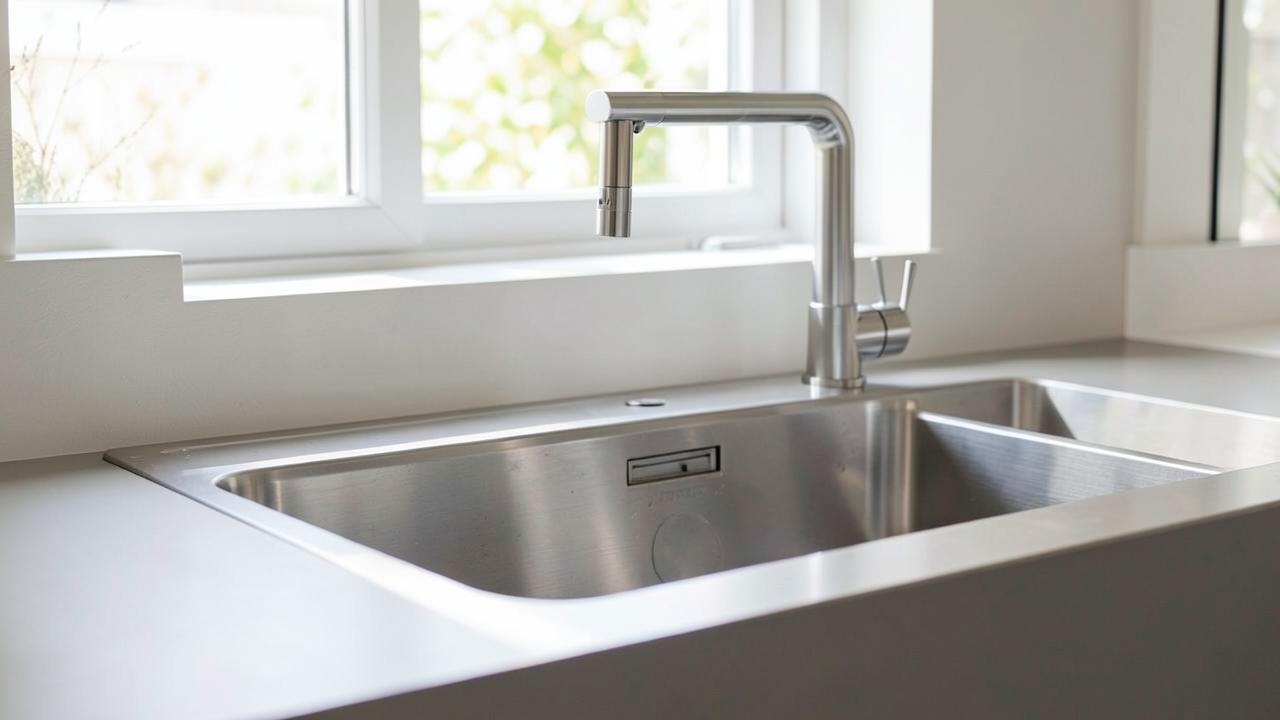
Choose a kitchen sink based on your cabinet width and how you wash dishes: a single large bowl suits big pots and modern dishwasher-heavy households, while a divided double bowl suits hand-washing and separating tasks. Then choose a faucet with enough reach and height to clear the sink's back wall and any large pots, and a handle type that matches how often your hands are messy while cooking.
What sink materials are available and how do they compare?
| Material | Cost range (30-33 in) | Durability | Noise/maintenance |
|---|---|---|---|
| Stainless steel (16-18 gauge) | $150-$500 | Very durable, dents possible in thin gauge | Can be noisy without undercoating; scratches show on satin finish |
| Fireclay | $400-$1,200 | Extremely durable, chip-resistant glaze | Quiet, heavy, needs reinforced cabinet support |
| Granite composite | $250-$700 | Very durable, scratch and stain resistant | Quiet, dark colors show hard water spots |
| Cast iron with enamel | $300-$900 | Durable but enamel can chip | Quiet, very heavy |
| Copper | $400-$1,500 | Durable, develops patina over time | Needs periodic wax maintenance to control patina |
Single bowl, double bowl, or workstation, which fits your routine?
A single large bowl, typically 30-33 inches wide, is the better choice if you run a dishwasher for daily dishes and mainly need the sink for soaking pans, rinsing produce, and filling large pots. A 60/40 or 50/50 double bowl still makes sense if you hand-wash frequently and want to separate soapy water from rinsing, or if you don't own a dishwasher. Workstation sinks add integrated ledges for cutting boards, colanders, and drying racks and work well in kitchens where the sink doubles as prep space.
How do you pick faucet reach and height?
Measure from the center of the sink drain to the back wall or backsplash; the faucet spout needs enough reach to center over the drain, not just clear the back edge, which usually means 8-10 inches of reach for a standard 22-inch-deep sink. Height matters too: a spout with at least 8 inches of clearance under it lets a stockpot fit beneath for filling, which standard low-arc faucets often can't manage.
- High-arc/gooseneck faucets: best pot clearance, but splash more if the arc height is much taller than your sink depth needs.
- Pull-down faucets: spray head pulls straight down, good for deep single-bowl sinks.
- Pull-out faucets: spray head pulls out toward you, better for shallower or wider sinks.
- Single-handle: fastest for one-handed adjustment with messy or full hands.
- Touchless/sensor faucets: convenient for raw meat and dough prep, add $150-$350 over a standard single-handle model, and need occasional battery or transformer maintenance.
What does a full sink and faucet swap cost installed?
A straightforward like-for-like sink and faucet swap with existing plumbing connections runs $250-$600 in labor if you hire a plumber, plus $150-$1,200 for the sink and $100-$500 for the faucet depending on material and features. Moving the sink location or upgrading to a farmhouse apron-front sink that requires cabinet modification adds $500-$2,000 in carpentry and plumbing work.
What weight and support issues come with heavier sink materials?
Fireclay, cast iron, and natural stone sinks can weigh 40-100 pounds empty and considerably more full of water and dishes, which standard particleboard cabinet bases were never designed to carry long-term without sagging. Before installing a heavy sink, confirm the base cabinet has a plywood or solid-wood support deck rather than thin particleboard, and add cross-bracing or dedicated support legs for farmhouse and apron-front styles, since these sinks bear their own weight on the cabinet face rather than hanging from countertop clips. Skipping this reinforcement is a common cause of a sagging cabinet floor or a cracked countertop seam within a few years.
How do you match a faucet finish to other kitchen hardware?
Mixing metal finishes in a kitchen is common and generally fine visually as long as one finish clearly dominates; pick either the faucet or the cabinet hardware as the primary metal and let the other appear in smaller doses like a light fixture or appliance handles. Matte black and brushed nickel are currently the most requested finishes and tend to hide water spots better than polished chrome or unlacquered brass, which show mineral deposits and fingerprints more readily in daily use near a sink, and both usually need wiping down more often to keep their original finish looking clean.
Is an undermount or drop-in sink better for a kitchen?
Undermount sinks look cleaner and let you wipe crumbs straight off the counter into the sink, but they require a solid countertop material like stone that can support the mounting clips. Drop-in sinks work with any countertop material, including laminate, and are easier and cheaper to install or replace.
How many holes does a standard kitchen faucet setup need?
A typical single-handle kitchen faucet needs one hole for the faucet body, plus additional holes for a soap dispenser, side spray, or air gap if desired, so most kitchen sinks or countertops come pre-drilled with 3 or 4 holes total.
Does a garbage disposal affect sink choice?
Yes, a garbage disposal needs a standard drain flange opening, generally fits any sink material, but adds weight, so make sure the sink base cabinet and mounting clips or cutout are rated to support the combined weight of the sink, disposal, and full basin of water.
What causes a new faucet to have low water pressure?
Most often it's a clogged aerator screen from sediment during installation, or the wrong flow-rate cartridge; both are quick fixes. Less commonly it's a supply line that wasn't fully opened after installation or a shared pressure issue elsewhere in the home's plumbing.
Run the numbers for your own project
- Water Heater Size CalculatorWhat size water heater does my household need?
- Project Cost EstimatorWhat will this project cost me?
- Kitchen Cabinet Layout PlannerHow many cabinets fit my kitchen wall?
Keep reading
- How Much Paint Do You Actually Need for a Room?The tin says 400 square feet. Your wall says otherwise. Here is the arithmetic that actually holds up.
- DIY or Hire a Pro? A Decision Framework That Is Not About MoneyThe labour saving is real. So is the cost of a job done twice — and of tools you use once.
- Storage for Small Rooms That Does Not Make Them SmallerSmall rooms do not need more storage. They need storage that stops interrupting the eye.