How Much Should You Budget to Paint a 2,000-Square-Foot House in 2026?
By Jim Vernon · 8 min read · Last updated
A fresh coat of paint hides a multitude of sins, but the final invoice can easily expose a lack of planning.
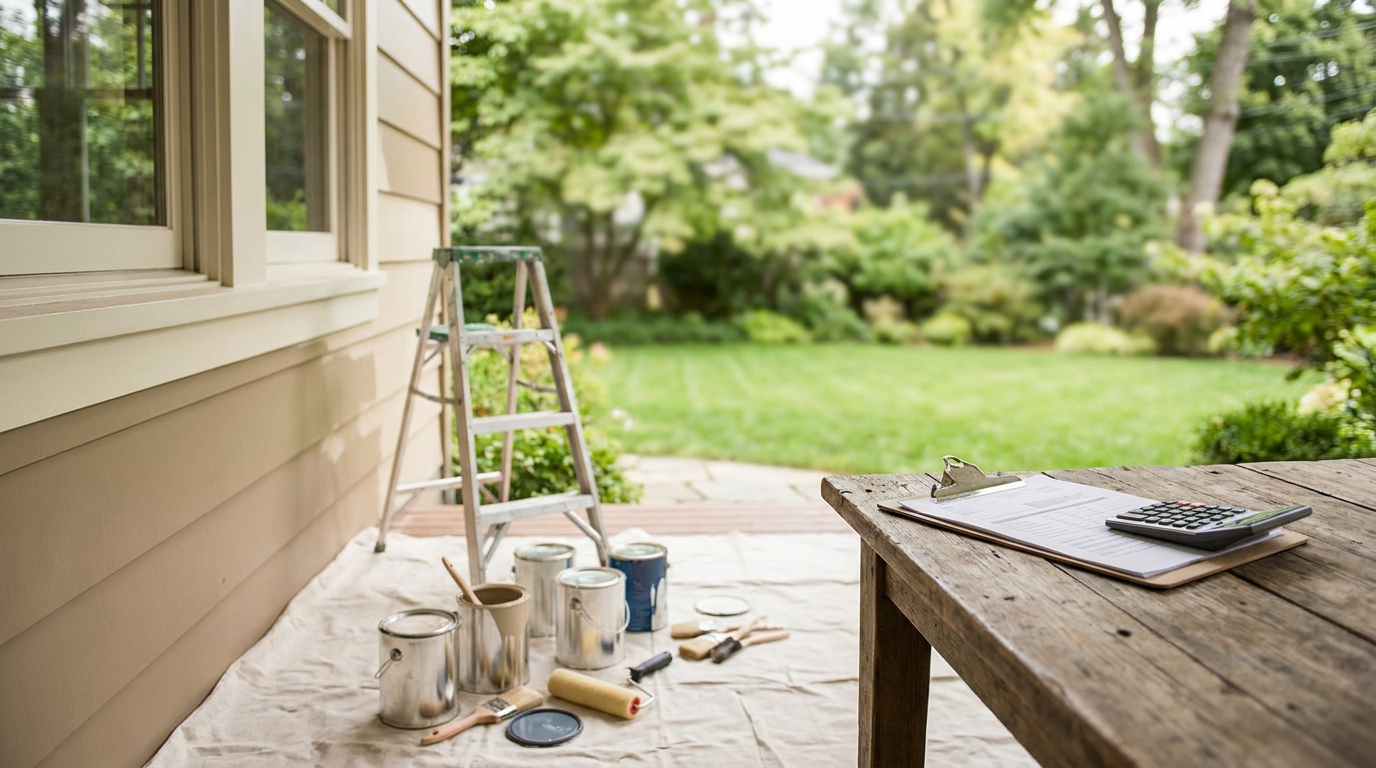
Painting the interior of a standard 2,000-square-foot (185-square-meter) house in 2026 costs between $5,500 and $8,200 for a professional job, while a full exterior repaint runs $6,000 to $9,500. Doing the work yourself drops the cost to roughly $800 to $1,500 for interior materials and $1,200 to $2,000 for exterior supplies. These baseline figures assume two coats of mid-tier acrylic latex paint, standard prep work, and typical eight-foot (2.4-meter) ceilings. The final invoice shifts dramatically based on your home's exterior cladding, the amount of detailed interior trim, regional labor rates, and the condition of the underlying drywall or wood siding. Proper budgeting requires looking past the price on a gallon of paint to understand the heavy labor burden of professional preparation.
- Labor accounts for 75 to 80 percent of a professional painting invoice in 2026, with average rates hovering between $60 and $85 per hour.
- Exterior costs vary heavily by material; porous stucco requires up to 50 percent more paint than smooth fiber cement siding.
- DIY repaints save thousands but require 80 to 120 hours of labor for a standard 2,000-square-foot home, excluding initial setup and prep time.
- Failing to properly sand or degloss old oil-based trim before applying modern latex paint is the most common reason DIY paint jobs peel within a year.
What drives the cost of an interior house painting estimate?
When contractors quote an interior paint job, they do not base it directly on your home's floor space. Instead, they calculate the total wall and ceiling surface area. For a standard 2,000-square-foot (185-square-meter) floor plan, you typically have around 6,000 square feet (557 square meters) of paintable wall space. Ceiling heights significantly inflate this number. Moving from standard eight-foot (2.4-meter) ceilings to vaulted 12-foot (3.6-meter) ceilings increases the required paint and labor by roughly 30 percent. In 2026, premium interior acrylic latex paint costs between $45 and $75 per gallon (3.8 liters), and one gallon covers about 400 square feet (37 square meters) with a single coat. You will need two coats for a durable, uniform finish.
Beyond raw square footage, the complexity of your interior trim heavily dictates the final price. Flat drywall is fast and easy to roll, but baseboards, crown molding, wainscoting, and window casings require meticulous brushwork, caulking, and taping. Painters typically charge $2.00 to $4.00 per linear foot in 2026 for trim painting. If your 2,000-square-foot home features intricate six-panel doors and extensive crown molding in every room, expect the trim work alone to add $1,200 to $1,800 to your professional quote.
How does exterior siding material change the total painting price?
The type of siding on your home dramatically impacts both material consumption and labor hours. Smooth fiber cement board is the easiest to paint, taking standard acrylic well and requiring minimal scraping. Wood clapboard, particularly on older homes, often demands extensive scraping, sanding, and spot-priming, driving exterior labor costs to the higher end of the $9,500 average. Porous materials like stucco present a different challenge. Stucco requires specialized elastomeric paint that bridges hairline cracks, which costs $55 to $85 per gallon. Because stucco acts like a sponge, it requires 30 to 50 percent more paint volume to achieve full coverage compared to smooth wood.
A critical judgement call separates professional painters from beginners when dealing with vinyl siding. Beginners often approach vinyl with a purely aesthetic mindset, choosing trendy dark greens or charcoals. This leads to a catastrophic failure: dark paint absorbs intense solar heat, causing the underlying vinyl to physically warp, buckle, and permanently detach from the house. A professional painter always checks the paint's Light Reflectance Value (LRV) before applying it to plastics. Pros know that vinyl siding requires a specialized vinyl-safe formula with an LRV of 55 or higher to reflect enough sunlight and prevent the plastic from melting in the summer heat.
What is the true line-item breakdown for a professional painter?
Understanding a $7,500 interior painting quote requires breaking down the contractor's overhead. In 2026, labor accounts for roughly 75 to 80 percent of the total bill. A crew of three professional painters will take about four days to prep, prime, and paint a 2,000-square-foot interior. At an average loaded labor rate of $65 per hour, the labor alone totals $6,240. The materials portion makes up the remaining 20 to 25 percent.
The material budget is not just paint. For a job this size, you will need roughly 15 gallons (56 liters) of high-quality wall paint and 5 gallons (19 liters) of trim paint, totaling about $1,100. The remaining budget goes to sundries: heavy-duty canvas drop cloths, painter's tape, joint compound for drywall repair, caulking, and specialized primers. When you hire a professional, you are also paying for their liability insurance, worker's compensation, and the wear and tear on specialized equipment like HEPA sanders and airless sprayers.
Where do regional weather and labor markets impact painting costs?
National averages hide massive regional price swings. In high-cost-of-living coastal metros like Boston or Seattle, hourly labor rates for experienced, insured painters easily exceed $90 to $110 per hour in 2026, pushing a whole-house interior job past $10,000. Conversely, in lower-cost rural markets in the Midwest or South, non-union labor rates drop to $45 to $55 per hour, keeping the same job closer to $5,000.
Regional weather constraints also dictate when exterior painting can physically occur, impacting peak season pricing. In USDA Zones 3 and 4, the exterior painting window closes rapidly by late September. Standard exterior acrylics require ambient and surface temperatures to remain above 50°F (10°C) for at least 24 hours to cure properly. If temperatures drop to freezing before the paint dries, the acrylic binders shatter, resulting in immediate cracking and total coating failure. Contractors in these zones charge premium rates during the short summer window because their schedule is artificially compressed by the climate.
What are the hidden painting costs most homeowners forget?
The largest hidden cost in any whole-house repaint is lead-based paint mitigation. If your home was built before 1978, federal law requires contractors to use EPA-certified Lead Renovation, Repair and Painting (RRP) practices. This involves specialized plastic containment, HEPA vacuums, and intensive cleanup protocols that easily add 20 to 30 percent, or $1,500 to $3,000, to an exterior job. Even for DIYers, testing for lead and buying the proper protective respirators and disposal bags adds unbudgeted expense.
Another frequently overlooked expense is accessibility equipment and structural repair. If your home has a steeply pitched roof with 30-foot (9-meter) gables, painters must rent heavy scaffolding or articulated boom lifts, which cost $300 to $500 per day in 2026. Furthermore, painting quotes rarely include carpentry. If the painters discover rotted wood fascia boards or water-damaged window sills during their prep work, those must be replaced by a carpenter before the paint goes on, adding hundreds of dollars in change orders.
Should you DIY or hire a pro for a whole-house repaint?
Choosing to paint a 2,000-square-foot house yourself is a massive exchange of time for money. While you can purchase contractor-grade paint and sundries for around $1,200, the labor investment is staggering. An experienced DIYer working efficiently will still need 80 to 120 hours to properly move furniture, mask floors, patch drywall, sand trim, and apply two coats of paint to an entire house. If you can only work weekends, a whole-house interior repaint will comfortably consume two months of your life.
A common and costly failure mode for DIY interior painters is skipping the deglossing phase when transitioning trim colors. Beginners frequently brush water-based latex paint directly over older oil-based semi-gloss trim without sanding or priming. Because the new paint cannot grip the slick, oily surface, it will begin to peel off in large, rubbery sheets within six to twelve months. To avoid this, always scuff-sand glossy surfaces with 120-grit paper, clean with a degreaser, and apply a high-adhesion urethane or shellac-based bonding primer before laying down your topcoat.
How do professional painters approach exterior prep differently than beginners?
The longevity of an exterior paint job is entirely dictated by the preparation phase. Beginners typically grab a pressure washer, blast the siding on Saturday morning, and start painting by Saturday afternoon. This traps moisture directly beneath the new coating. When the sun heats the house the following week, the trapped water turns to vapor, expanding and blowing the fresh paint right off the wood in massive blisters.
Professional painters rely on strict moisture management. After washing a house, pros use a handheld moisture meter on wood siding and trim. They will not apply a drop of primer or paint until the wood's internal moisture content reads consistently below 15 percent. Depending on the weather and humidity, this drying phase can take four to seven days. Additionally, pros do not use caulk to fill holes in exterior wood; they use two-part exterior wood epoxies that won't shrink or pull away during seasonal temperature swings.
| Project Scope | DIY Cost (Materials Only) | Professional Cost (Labor + Materials) |
|---|---|---|
| Interior Walls & Ceilings (Standard Height) | $800 - $1,200 | $5,500 - $8,200 |
| Interior Trim & Doors | $200 - $400 | $1,200 - $2,500 |
| Exterior Smooth Siding (Vinyl / Fiber Cement) | $1,000 - $1,500 | $6,000 - $8,000 |
| Exterior Porous or Textured Siding (Stucco / Wood) | $1,200 - $2,000 | $7,500 - $9,500 |
Frequently asked questions
How much paint do I need for a 2,000-square-foot house?
For the interior, assuming 6,000 square feet (557 square meters) of wall space, you will need approximately 15 gallons (56 liters) of paint per coat. For two coats, budget for 30 gallons (113 liters) of wall paint, plus 3 to 5 gallons (11 to 19 liters) of trim and door paint.
Does painting a house increase its appraisal value?
Yes. An exterior and interior repaint is one of the highest ROI projects available, routinely yielding a 100 to 105 percent return on investment at resale. More importantly, neutral, fresh paint drastically reduces a home's days on the market by improving overall marketability.
How long does a professional exterior paint job last?
When properly prepped and applied, a 2026 acrylic exterior paint job on wood siding will last 5 to 7 years before requiring maintenance. On more stable, less porous surfaces like fiber cement or vinyl, a high-quality paint job can last 10 to 12 years.
Keep reading
- How Much Paint Do You Actually Need for a Room?The tin says 400 square feet. Your wall says otherwise. Here is the arithmetic that actually holds up.
- DIY or Hire a Pro? A Decision Framework That Is Not About MoneyThe labour saving is real. So is the cost of a job done twice — and of tools you use once.
- Storage for Small Rooms That Does Not Make Them SmallerSmall rooms do not need more storage. They need storage that stops interrupting the eye.