How Much Does It Actually Cost to Repaint a Whole House in 2026?
By Jim Vernon · 7 min read · Last updated
Slapping a fresh coat of paint on a home is the fastest way to transform it, but the final bill can easily sneak past the five-figure mark if you do not know exactly what you are paying for.
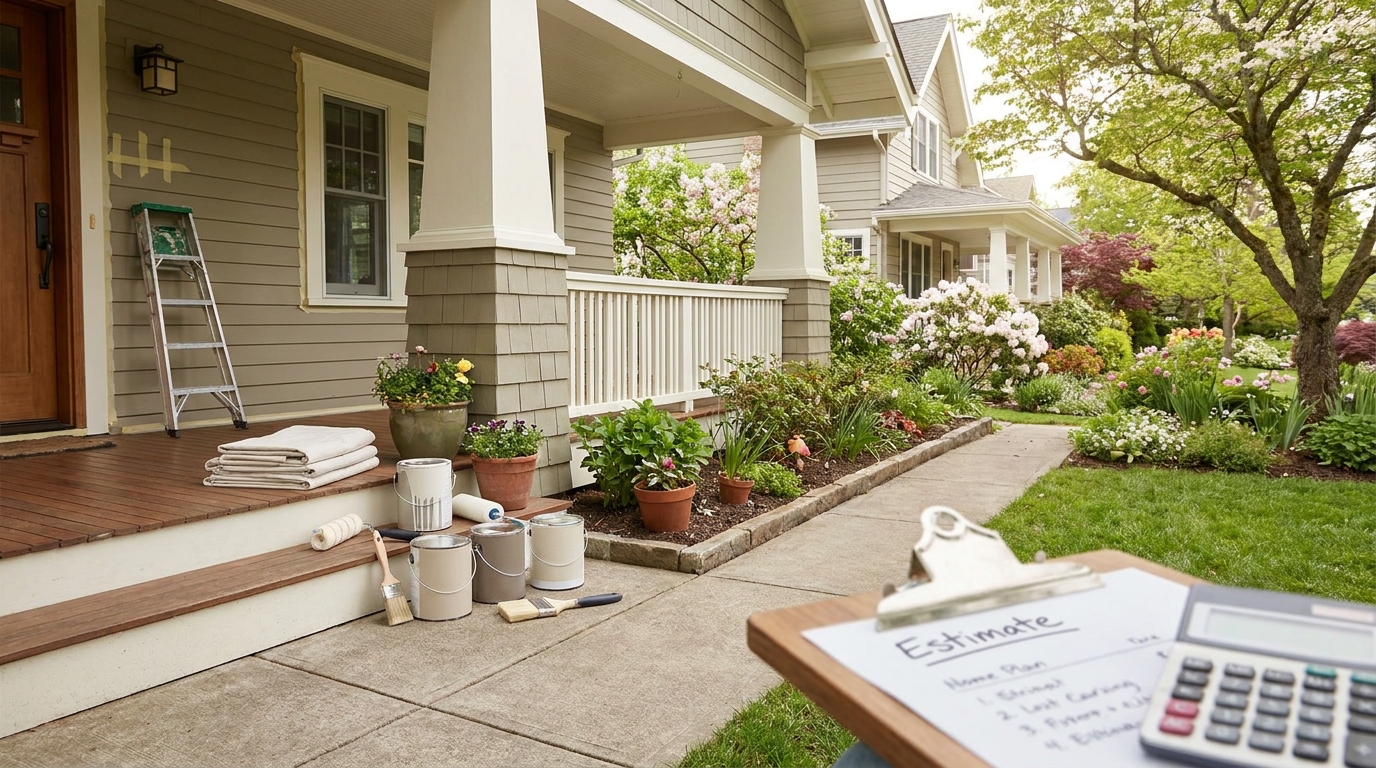
To hire a professional in 2026, expect to pay between $6,500 and $12,000 to repaint the interior of a standard 2,000-square-foot (185-square-meter) home, and $5,000 to $9,500 for the exterior. If you tackle the job yourself, material costs for that same house will run you between $1,200 and $2,500. Professional quotes break down to roughly $3.50 to $6.00 per square foot of floor space for interiors, and $2.50 to $4.75 per square foot of siding for exteriors. Your final price depends heavily on prep work, ceiling height, trim detail, and your regional labor market. Understanding how contractors build their quotes allows you to spot inflated bids and decide which parts of the project you can handle yourself.
- Interior professional painting costs average $3.50 to $6.00 per square foot of floor space in 2026.
- Labor accounts for 75 to 85 percent of a professional painting quote.
- Doing it yourself saves thousands but requires up to 100 man-hours for a standard-sized home.
- Hidden prep issues like rotted wood or lead paint testing can inflate budgets by 20 percent or more.
What are the exact line-item costs for an interior paint job?
For a 2,000-square-foot (185-square-meter) interior, paint and primer will cost between $600 and $1,100. In 2026, premium interior acrylic latex paint runs $55 to $90 per gallon, and a house this size typically requires 15 to 20 gallons for two solid coats. If you are painting over dark walls or new drywall, you will also need five to ten gallons of PVA or stain-blocking primer. Consumables like drop cloths, roller covers, mud, and tape add another $200 to $400.
If you are hiring out, labor is the heavyweight, taking up 75 to 85 percent of the bill. A three-person professional crew will take three to five days to prep, prime, and paint, charging between $4,500 and $9,000 for their time. Contractors also bake in a 15 to 20 percent markup on materials to cover procurement and overhead. When reviewing a quote, ensure the contractor lists the specific brand and tier of paint they intend to use, as swapping a $90 gallon for a $30 gallon is a common way shady operators pad their margins.
How much does exterior painting cost per square foot?
Exterior jobs are priced based on the total surface area of your siding, typically running $2.50 to $4.75 per square foot. The material of your home drastically impacts this figure. Vinyl siding is smooth and takes paint easily, sitting at the lower end of the cost spectrum. Stucco and heavily textured brick are porous, requiring up to 30 percent more paint and thicker nap rollers, pushing costs toward the top end. Wood siding often requires extensive scraping and sanding before a single drop of primer is applied.
If your home has a second story, contractors will add $500 to $1,000 to the bill to cover the time and risk of setting up scaffolding or operating a boom lift. Multi-story homes also require specialized safety harnesses and liability insurance premiums, which are passed directly to the homeowner in the final estimate.
What hidden prep costs ruin a painting budget?
The biggest budget killers happen before the paint cans are even opened. For exterior work, rotted fascia boards or soft window sills must be replaced before painting, because painting over wet, rotted wood guarantees immediate failure. On the interior, drywall repair from water damage, popped nails, or old wallpaper removal can add hundreds of dollars to a whole-house quote. Furthermore, if your home was built before 1978, federal law requires lead-safe work practices which demand strict containment protocols.
- Replacing rotted fascia boards and window sills costs $70 to $120 per linear foot.
- Patching drywall water damage or popping nails adds $500 to $1,500 to a whole-house quote.
- EPA-certified lead-safe remediation for homes built before 1978 adds 15 to 25 percent to labor costs.
What is the true cost difference between DIY and hiring a pro?
The financial gap between DIY and hiring a pro is massive, but the time commitment is equally vast. DIY material costs for a full interior top out around $1,500, compared to a professional bill of $8,000. Beyond just painting, DIYers routinely underestimate the sheer physical exhaustion of moving furniture, removing outlet covers, taping baseboards, and laying drop cloths. A skilled three-person crew completes the job in 4 days, equaling roughly 96 man-hours of highly efficient work. A homeowner working weekends will often take a full month to prep and paint the same space.
When tackling exteriors, DIYers must also factor in equipment rentals. Renting a commercial airless sprayer costs $100 to $150 per day, and a rolling scaffold tower runs $150 per week. If you value your weekend time at even $25 an hour, the true cost of DIY quickly approaches the professional price tag once you factor in the weeks of lost free time.
How do regional labor rates swing the final price?
Painting is highly labor-intensive, making your local economy the biggest wildcard in your quote. In 2026, non-union painting crews in the South and Midwest typically bill their time at $45 to $65 per hour. In high-cost-of-living areas like the Pacific Northwest, New York, or Southern California, those rates jump to $80 to $115 per hour. This regional swing means an identical 2,000-square-foot (185-square-meter) house could cost $6,500 to paint in Ohio but push past $11,000 in Seattle.
Furthermore, the season you book your project affects the rate. If you demand a mid-summer exterior paint job when crews are at maximum capacity, contractors will charge a premium. Booking an interior job in January or February, when exterior work is frozen and crews are desperate for indoor hours, can often secure a 10 to 15 percent discount. Always get at least three local quotes to establish the baseline for your specific zip code.
Why do pros quote higher for trim, doors, and ceilings?
Contractors break out trim, doors, and ceilings because they require specialized techniques and different paint formulations. Ceilings demand ultra-flat paint to hide drywall seams and require covering every inch of flooring below. Doors and trim require durable semi-gloss or satin enamels that take longer to dry and show brush strokes easily if applied poorly.
Here is a judgment call a pro makes differently from a beginner: Beginners spend hours and hundreds of dollars applying blue painter's tape to every edge of baseboard and window casing, only to have paint inevitably bleed underneath. A seasoned pro skips the tape on most trim, relying instead on a high-quality 2.5-inch (6.4-centimeter) angled sash brush and a steady hand to cut in directly. This drastically speeds up the job and yields a much sharper line. Because of this meticulous brushwork, pros charge $2 to $4 per linear foot for trim.
How do you avoid the most common exterior paint failure?
The most common failure mode for exterior painting is premature blistering and peeling, often happening within 12 months of the job. This occurs when paint is applied over wet wood or during inappropriate weather conditions, trapping moisture beneath the new film. As the sun beats down on the siding, the trapped moisture turns to vapor, expanding and tearing the paint completely off the wood.
To avoid this, never paint wood with a moisture content above 15 percent. You can verify this easily yourself. Additionally, monitor the weather closely. Paint must be applied and allowed to cure in a very specific temperature window. Painting in direct, scorching sunlight bakes the paint before it can bond, while applying it too close to a freezing night prevents the acrylic binders from coalescing properly.
- Verify wood moisture is below 15 percent using a $30 pin-type moisture meter before priming.
- Only apply paint when ambient temperatures are strictly between 50 and 85 degrees Fahrenheit (10 to 29 degrees Celsius).
| Expense Category | DIY Cost Estimate | Professional Quote Estimate |
|---|---|---|
| Premium Paint & Primer | $600 - $900 | $750 - $1,100 (Billed to Client) |
| Tools & Sprayer Rental | $300 - $500 | Included in Labor/Overhead |
| Prep Materials (Tape, Drop Cloths) | $150 - $250 | $200 - $300 (Billed to Client) |
| Labor & Overhead | $0 (Your Time) | $5,000 - $8,500 |
| Total Estimated Cost | $1,050 - $1,650 | $6,500 - $12,000 |
Frequently asked questions
Does the price go up if I change from a dark to a light color?
Yes. Transitioning from a dark wall to a bright white or pastel usually requires a dedicated coat of high-hide stain-blocking primer, plus two topcoats. This adds up to 30 percent more material and an extra day of labor.
Do I need to pay a pro upfront for a whole-house repaint?
Never pay the full amount upfront. The industry standard in 2026 is a 10 to 25 percent deposit to secure your spot on the schedule and purchase initial materials. The balance should only be paid after a final walkthrough where you approve the completed work.
How long does it take a professional crew to paint a house?
For a standard three-person crew, repainting the entire interior of a 2,000-square-foot (185-square-meter) house takes three to five days. An exterior job of the same size takes four to six days, heavily dependent on weather conditions and prep required.
Can exterior painting be done in the winter?
Generally, no. Most modern exterior latex paints require surface and air temperatures to remain above 50 degrees Fahrenheit (10 degrees Celsius) during application and for at least 36 hours of curing. Specialized cold-weather paints exist, but they still fail if moisture levels are too high.
Keep reading
- How Much Paint Do You Actually Need for a Room?The tin says 400 square feet. Your wall says otherwise. Here is the arithmetic that actually holds up.
- DIY or Hire a Pro? A Decision Framework That Is Not About MoneyThe labour saving is real. So is the cost of a job done twice — and of tools you use once.
- Storage for Small Rooms That Does Not Make Them SmallerSmall rooms do not need more storage. They need storage that stops interrupting the eye.