How Much Bathroom Ventilation Stops Mold?
By Jim Vernon · 4 min read · Last updated
Peeling paint and a musty smell in the bathroom usually mean the fan is undersized or vented into the attic instead of outside.
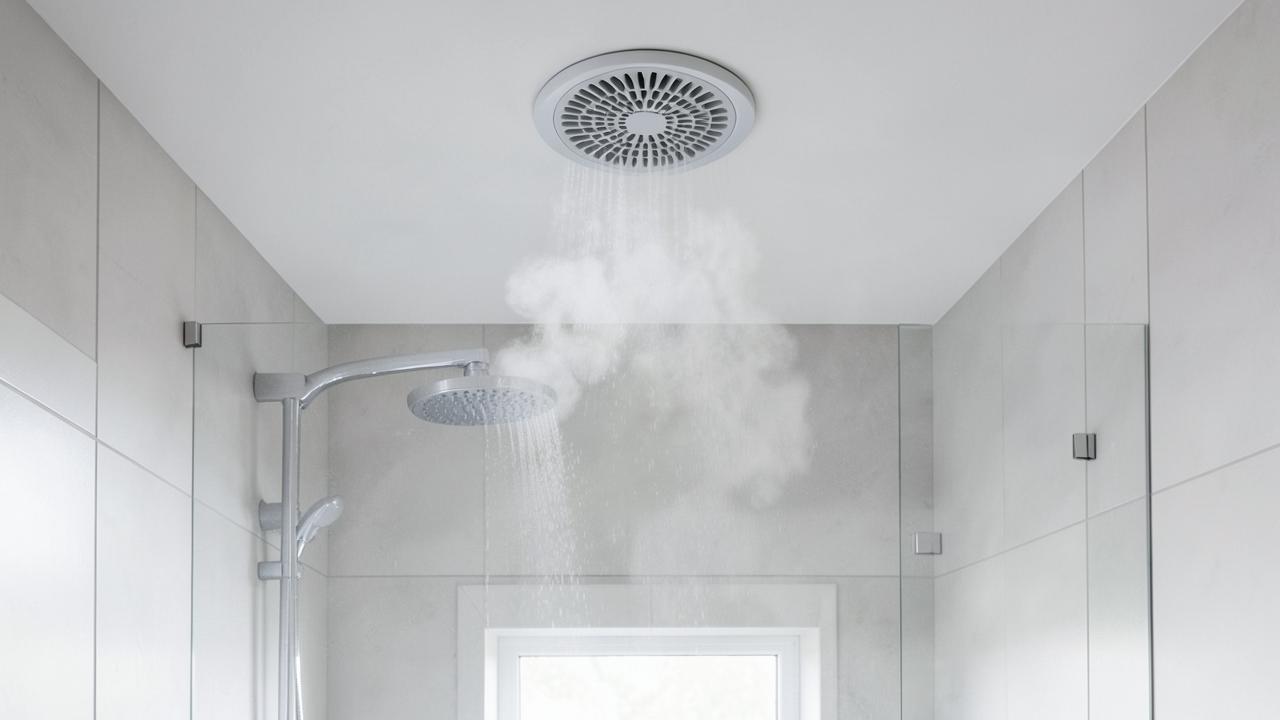
Size a bathroom exhaust fan at a minimum of 1 CFM (cubic feet per minute) per square foot of bathroom floor area, with an 8-foot ceiling, or use the fixture-count method for larger or more complex bathrooms; run the fan during the shower and for 20-30 minutes after; and always duct it to the outdoors through a roof or wall cap, never into an attic or soffit, which just relocates the moisture problem.
How do you calculate the right fan size (CFM) for your bathroom?
For a standard bathroom, multiply the floor area in square feet by 1 to get the minimum CFM; a 50-square-foot bathroom needs at least a 50 CFM fan, and most codes and manufacturers recommend rounding up to the next available size. For larger bathrooms over 100 square feet, or bathrooms with multiple fixtures, add CFM per fixture instead: 50 CFM each for a toilet, shower, and bathtub, and 100 CFM for a jetted tub.
| Bathroom size | Minimum fan size | Recommended fan size |
|---|---|---|
| 36-40 sq ft (small hall bath) | 36-40 CFM | 50 CFM |
| 50-60 sq ft (standard full bath) | 50-60 CFM | 80 CFM |
| 80-100 sq ft (primary bath) | 80-100 CFM | 110-150 CFM |
| 100+ sq ft with soaking tub and separate shower | Use fixture method, 150-250 CFM total | Consider two fans or one high-capacity unit |
Where should the exhaust duct actually terminate?
Bathroom exhaust ducts must terminate outside the building envelope, through a roof cap or a wall/soffit cap with a backdraft damper, never simply dumping into an attic, crawlspace, or between floor joists. Venting into an attic is one of the most common and damaging mistakes in bathroom remodels; it deposits large amounts of warm, moist air into an unconditioned space, which condenses on cold roof sheathing and causes mold, wood rot, and even ice dams in cold climates.
How long should the fan run and does timing matter?
Run the fan for the full duration of a shower or bath and continue running it for 20-30 minutes afterward, since it takes that long to clear residual humidity from walls, mirrors, and grout. A humidity-sensing or timer-switch fan solves the common problem of people forgetting to leave the fan on, and can be added to most existing fan installations for $30-$80 in switch cost.
- Standard toggle switch: fan only runs while manually on, easiest to forget to leave running.
- Timer switch: runs for a preset duration (5-60 minutes) after being triggered, then shuts off automatically.
- Humidity-sensing switch: activates automatically once humidity crosses a set threshold, ideal for households that forget to use the fan at all.
- Motion-and-humidity combo switch: turns on with occupancy and stays on until both motion stops and humidity drops.
What does installing or upgrading a bathroom fan cost?
A basic fan replacement using existing ducting runs $150-$350 including the unit and labor. Installing a new fan where none existed, including cutting a new roof or wall vent and running duct, typically costs $350-$800. Upgrading to a quieter, higher-CFM fan with a humidity sensor adds $50-$150 to the unit cost over a basic model.
What other moisture sources besides showers need ventilation?
A bathroom fan sized only for shower humidity can still leave a room damp if a combination tub-shower is used for long soaking baths, since a full tub releases steam more slowly but over a longer period than a quick shower. In bathrooms without a window, run the fan any time hot water runs in the sink for more than a minute or two, such as during shaving or filling a basin, since even sink steam adds measurable humidity to a small, poorly ventilated room. Homes with a laundry closet inside or adjacent to the bathroom should treat that as an added moisture source and consider bumping the fan size up by 20-30 CFM over the standard calculation. Steamy showers taken back-to-back by multiple household members compound the same effect, since a fan barely clears one round of humidity before the next shower starts, so households with that pattern benefit from a continuous low-speed setting rather than relying on a single burst of full-speed exhaust. A cracked or missing bathroom door seal can also let humidity drift into hallways instead of being pulled out through the fan, undermining even a correctly sized unit.
Can a bathroom window replace an exhaust fan?
A window helps but does not reliably replace a fan, since most people don't open windows in cold weather or at night, which is exactly when humidity buildup is worst. Most building codes require mechanical ventilation in bathrooms regardless of window presence.
Why is my bathroom fan loud and does that mean it's more powerful?
Loudness (measured in sones) is independent of airflow capacity (CFM); a loud fan is often just an older, less efficient motor design, and modern fans rated at 0.5-1.5 sones can move the same or more air far more quietly than an older 4-sone unit.
Is it normal for a bathroom fan to run continuously at low speed?
Yes, some ventilation strategies use a fan set to a low continuous speed (10-20 CFM) for constant background humidity control, boosting to full CFM during showers via a separate switch or humidity sensor, which is common in tightly sealed, energy-efficient homes.
How do you know if mold in a bathroom is from ventilation or a plumbing leak?
Mold following ceiling or wall shapes near the shower, especially on the exhaust duct path or around the fan housing, usually points to ventilation or duct condensation, while mold concentrated at floor level or spreading from one specific wall section often points to a hidden plumbing leak.
Run the numbers for your own project
- Home Air Quality and Ventilation CalculatorDoes my home get enough fresh air ventilation?
- Project Cost EstimatorWhat will this project cost me?
Keep reading
- How Much Paint Do You Actually Need for a Room?The tin says 400 square feet. Your wall says otherwise. Here is the arithmetic that actually holds up.
- DIY or Hire a Pro? A Decision Framework That Is Not About MoneyThe labour saving is real. So is the cost of a job done twice — and of tools you use once.
- Storage for Small Rooms That Does Not Make Them SmallerSmall rooms do not need more storage. They need storage that stops interrupting the eye.