How Do You Winterize a Gas Pressure Washer to Prevent Pump Freeze Cracks?
By Jim Vernon · 7 min read · Last updated
Water left inside a pressure washer pump expands by 9% when it freezes, exerting enough outward force to shatter a solid brass casing overnight.
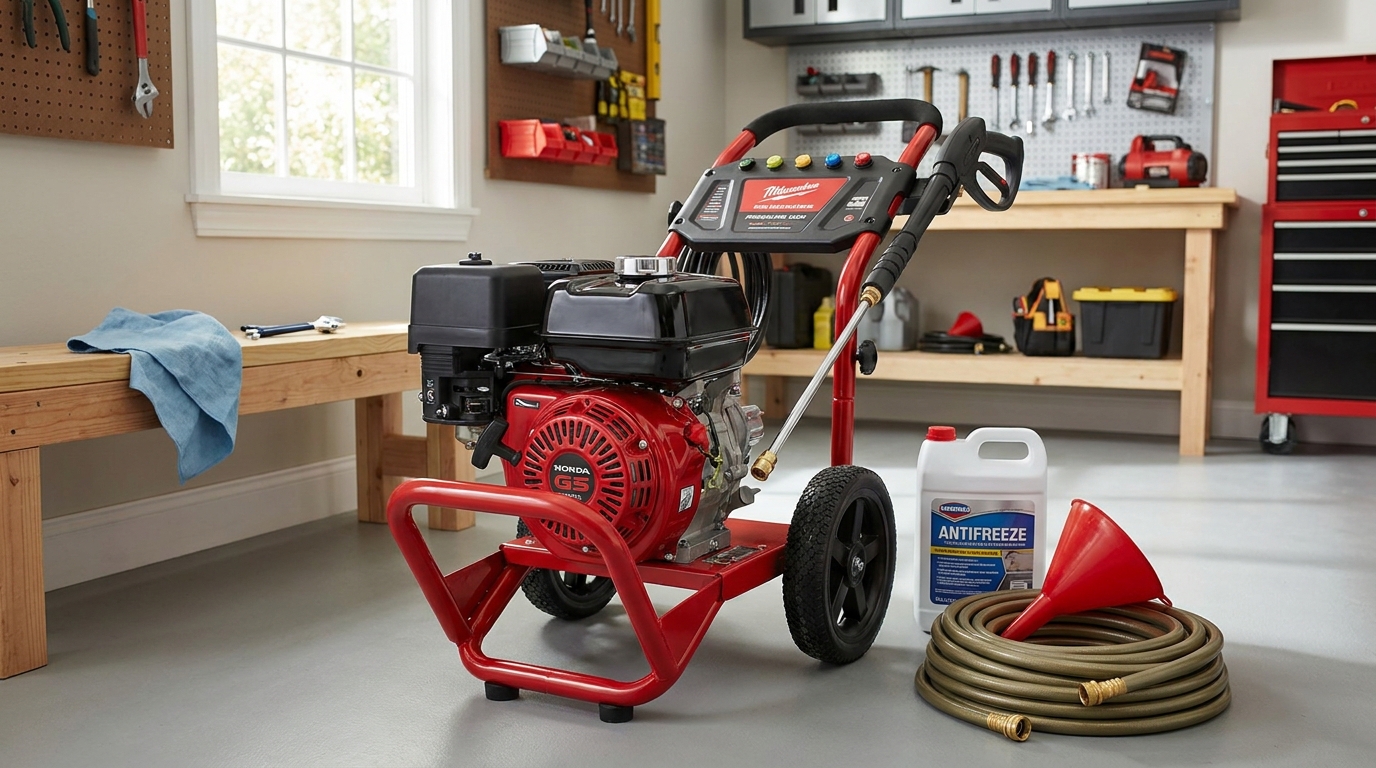
To winterize a gas pressure washer, you must purge all water from the pump system, circulate a specialized anti-freeze lubricant (pump saver), treat the remaining gasoline with a fuel stabilizer, and manually drain the carburetor bowl. You do not need power tools for this process; an adjustable wrench and a $12 to $16 (2026 USD) aerosol can of pump protector are enough to secure the machine. This maintenance must be performed before ambient temperatures drop below 32°F (0°C). Failing to winterize the pump correctly is the single most common reason pressure washers are thrown away in the spring, as replacing a cracked pump often costs nearly as much as buying a new unit. Taking 15 minutes to prep the machine in late fall guarantees it will start on the first pull next season and deliver full water pressure without leaks.
- Treat the fuel tank with a marine-grade stabilizer and run the engine for 5 minutes to protect the fuel lines.
- Drain the carburetor bowl manually with a wrench to prevent ethanol varnish from clogging the main jet.
- Never run the pump dry to blow out water; this will instantly scar the internal ceramic plungers.
- Use an aerosol pump saver to simultaneously push out residual water, lubricate the seals, and prevent freezing.
- Store the unit in an attached garage or basement, avoiding unheated sheds if you live in freezing climates.
Why Do Pressure Washer Pumps Crack if You Just Drain the Hoses?
Disconnecting the garden hose and the high-pressure wand does not empty the internal manifold of the pump. High-pressure axial cam and triplex pumps contain multiple tiny, spring-loaded check valves and ceramic pistons. Gravity alone cannot pull the water out of these intricate internal chambers.
When ambient temperatures drop below freezing, the trapped water inside these chambers turns to ice. Because ice expands, it places massive outward hydraulic pressure on the aluminum or brass pump housing. By spring, you will find a hairline fracture across the bottom of the pump body. When you turn on the garden hose, water will gush out of the crack before you even start the engine, rendering the machine entirely useless.
How Do You Protect the Fuel System from Ethanol Damage?
Standard pump gas containing 10% ethanol (E10) begins to degrade in as little as 30 days. Ethanol is hygroscopic, meaning it absorbs moisture from the winter air. As it sits in your pressure washer's gas tank, it separates into a corrosive water-alcohol mixture that rusts the tank and leaves behind a sticky varnish that clogs fuel lines.
Add 1 ounce (30 ml) of fuel stabilizer—preferably a marine-grade formula designed for ethanol—per 2.5 gallons (9.5 liters) of gasoline in your tank. Once the stabilizer is poured in, you must start the pressure washer (with the garden hose attached and water flowing) and let the engine run for 5 minutes. This ensures the treated fuel travels out of the tank, through the fuel lines, and fully into the carburetor.
Why Should You Drain the Carburetor Bowl Instead of Running the Engine Dry?
A common judgement call separates beginners from small-engine pros when prepping fuel systems. Beginners often turn off the fuel valve and let the engine run until it sputters and dies, assuming this completely empties the carburetor. Pros know this method is flawed. Running the engine dry still leaves a micro-puddle of fuel at the very bottom of the carburetor bowl, exactly where the main brass jet sits. When that tiny puddle evaporates over winter, it leaves a highly concentrated crust of varnish that blocks the jet.
Instead, pros manually drain the bowl. Locate the small 10mm or 1/2-inch bolt angled at the very bottom of the metal carburetor bowl. Place a rag underneath, use a wrench to loosen the bolt, and let the remaining 1/2 ounce (15 ml) of treated fuel drip out. Tighten the bolt back up. Your carburetor is now bone-dry and completely safe from winter varnish.
How Do You Flush the Detergent Siphon Tube Before Storage?
One of the most frequent failure modes for pressure washers is a clogged detergent injection system. Homeowners often leave residual soap in the clear plastic siphon tube. Over the winter, the chemical detergents dehydrate and crystallize into a solid, chalky block inside the tiny brass venturi injector fitting. Come spring, the machine will spray water but completely refuse to draw soap.
To avoid this, you must flush the system with clean water. Fill a small bucket with warm water and drop the clear siphon tube into it. Attach your black, low-pressure soap nozzle to the wand. Start the machine and pull the trigger for 2 minutes. The warm water will dissolve any leftover soap and pull pure water through the injection valve, leaving it completely clean before you winterize the main pump.
How Do You Inject Pump Saver Fluid Correctly?
With the engine off and the spark plug wire disconnected for safety, it is time to protect the pump manifold. Purchase a 4-ounce (118 ml) aerosol can of pump saver, which usually costs between $12 and $16 (2026 USD) at any hardware store. This fluid is a blend of RV-style antifreeze and seal lubricant. The can features a threaded plastic neck that screws directly onto the garden hose inlet of your pressure washer.
Screw the can onto the water inlet until hand-tight. Press the button on the top of the can to release the pressurized fluid. You will hear a hissing sound, and within a few seconds, white foam and leftover water will begin shooting out of the high-pressure water outlet. Keep pressing the button until only pure white foam exits the outlet. The internal chambers are now completely purged of water and coated in freeze-proof lubricant.
- Never pull the recoil starter cord to blow out water without pump saver; running a high-pressure pump dry for even 3 seconds will cause terminal friction damage to the ceramic plungers.
How Do You Winterize the High-Pressure Hose and Wand?
The peripheral accessories also require protection. Disconnect the high-pressure hose, the trigger gun, and the wand extensions. Uncoil the high-pressure hose entirely so it lies flat on the driveway. Squeeze the trigger on the gun and walk the entire 25-foot (7.6 m) to 50-foot (15.2 m) length of the hose over your shoulder, forcing gravity to push the trapped water out the end.
Before storing, inspect the rubber O-rings on the quick-connect fittings at both ends of the hose and the wand. Wipe a tiny dab of silicone grease onto these O-rings. This prevents the rubber from drying out, cracking, and causing severe pressure leaks during your first spring wash.
Where Is the Safest Place to Store the Machine Until Spring?
Even with pump saver properly installed, extreme temperature fluctuations take a toll on rubber seals and plastic gas tanks. If you live in USDA Hardiness Zones 5 or below, where winter temperatures routinely drop to -10°F (-23°C), an unheated, detached shed is a risky storage location.
The ideal storage spot is an attached garage or a dry basement where ambient temperatures rarely dip below freezing. Wherever you park it, throw a breathable canvas tarp over the machine to keep dust off the carburetor linkage. Avoid wrapping the pressure washer in a tightly sealed plastic tarp, as this traps ground moisture inside, leading to severe rust on the exhaust muffler and engine block.
| Fluid Type | Estimated Cost (2026) | Protection Level | Recommended For |
|---|---|---|---|
| Aerosol Pump Saver | $12 - $16 | Excellent | Purging water, preventing freezing, and lubricating internal rubber seals. |
| Marine Fuel Stabilizer | $8 - $12 | Excellent | Preventing E10 gas from varnishing the carburetor and rusting the fuel tank. |
| Liquid RV Antifreeze | $5 - $8 | Moderate | Budget freeze protection, but lacks the seal conditioners found in pump saver. |
| Automotive Antifreeze | $15 - $20 | Harmful | Do not use. Destroys ceramic plungers and poses an environmental hazard. |
Frequently asked questions
Can I use automotive antifreeze instead of aerosol pump saver?
No. Automotive antifreeze is highly toxic, terrible for the environment when flushed out into your lawn in the spring, and often contains silicates. These silicates act like liquid sandpaper against the delicate ceramic plungers inside a pressure washer pump, causing permanent scoring and pressure loss.
Should I change the engine oil before or after winter storage?
Always change the engine oil before winter storage. Used engine oil contains acidic combustion byproducts and microscopic metal shavings. If left sitting in the crankcase for four months, these acids slowly etch the internal aluminum engine components. Fresh oil neutralizes this threat.
How do I know if my pump already cracked over the winter?
The damage will be obvious immediately upon hooking up your garden hose. Before you even turn the engine on, turn the outdoor water spigot on. If the internal pump housing cracked from ice expansion, water will visibly pour out of the bottom or sides of the brass or aluminum pump body.
Can I use liquid RV antifreeze instead of the pressurized aerosol can?
Yes, but it is less effective and harder to apply. To use liquid RV antifreeze, you must attach a short 3-foot (0.9 m) piece of garden hose to the inlet, pour the antifreeze into a funnel, and pull the recoil starter cord 5 to 6 times to manually draw the fluid through the pump. The pressurized aerosol can is much safer because it guarantees full saturation without spinning the engine.
Keep reading
- How Much Paint Do You Actually Need for a Room?The tin says 400 square feet. Your wall says otherwise. Here is the arithmetic that actually holds up.
- DIY or Hire a Pro? A Decision Framework That Is Not About MoneyThe labour saving is real. So is the cost of a job done twice — and of tools you use once.
- Storage for Small Rooms That Does Not Make Them SmallerSmall rooms do not need more storage. They need storage that stops interrupting the eye.