How Do You Strip and Refinish a Fiberglass Front Door to Look Like Wood?
By Jim Vernon · 8 min read · Last updated
Your faded, peeling fiberglass door does not need to be replaced—you can revive its faux-wood glory in a single weekend for under $100.
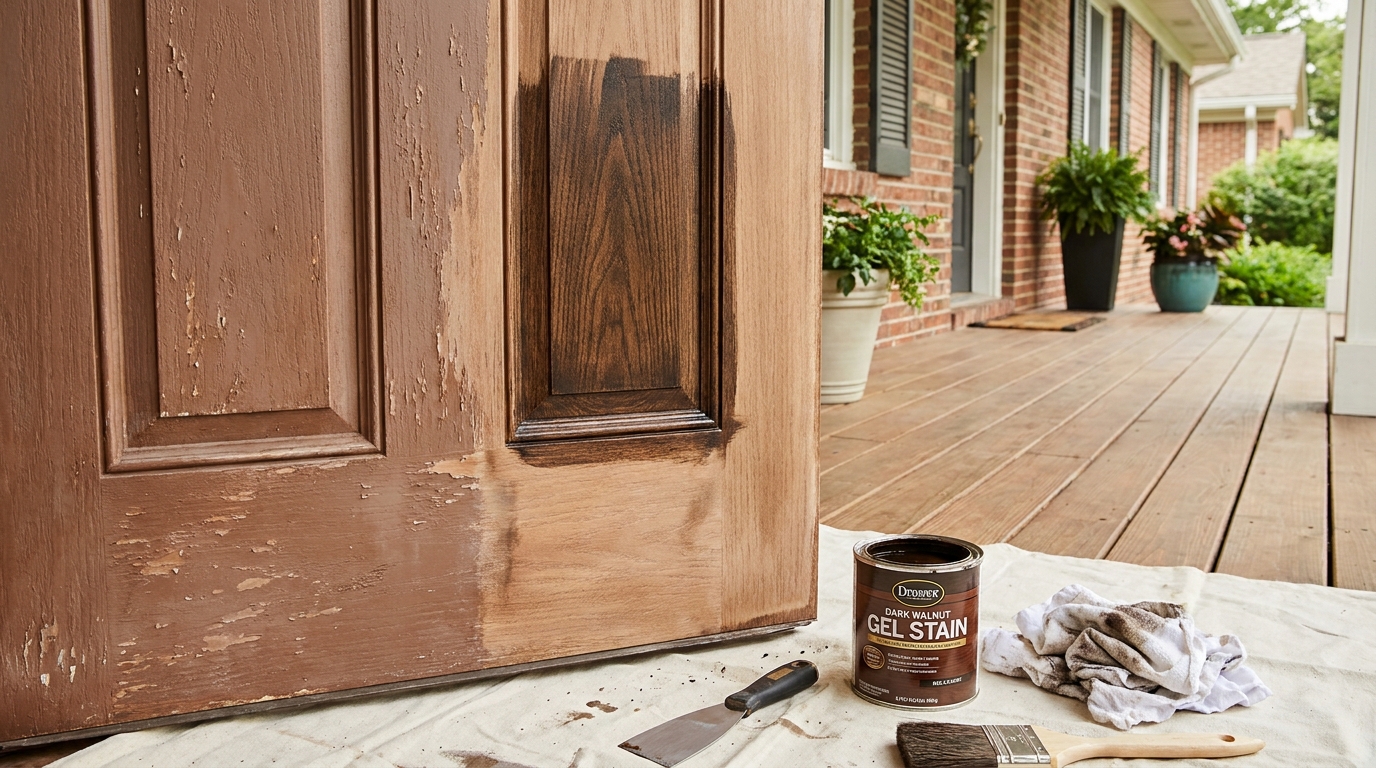
To refinish a fiberglass door, you must remove the door from its hinges, strip the old flaking clear coat and stain using a fiberglass-safe chemical stripper, wash the surface with mineral spirits, and apply two coats of oil-based gel stain followed by a marine-grade exterior polyurethane. The entire process takes a full weekend due to drying times, and in 2026, materials will cost you between $65 and $95. Never use a power sander to remove the old finish, as doing so permanently destroys the molded faux-wood texture stamped into the fiberglass shell. By applying the gel stain in a specific sequence that mimics traditional wood joinery, you can make a flat composite surface look indistinguishable from a solid oak or mahogany door.
- Never use power sanders or harsh abrasives on fiberglass, as this will erase the molded wood grain texture permanently.
- Always remove the door and lay it flat on sawhorses; applying gel stain to a hanging door guarantees drips and a messy, amateur finish.
- Use a citrus-based or water-based paint stripper safe for synthetic materials rather than highly caustic methylene chloride solvents.
- Apply gel stain in sections, matching the direction of the molded grain, and use a dry brush technique to blend the color.
- Seal the finished door with at least two coats of exterior marine-grade spar urethane formulated for high UV protection.
Why Do Fiberglass Doors Peel and Fade in the Sun?
Fiberglass doors are essentially composite shells stamped with a wood grain texture, colored with stain, and sealed with a clear topcoat. When a fiberglass door begins to look faded, milky, or actively flakes off in yellowed shards, the fiberglass itself is not failing. Instead, the clear polyurethane topcoat has degraded under ultraviolet light.
Sunlight breaks down the chemical bonds in standard clear coats. Once micro-cracks form in this protective layer, moisture from rain and humidity seeps underneath. The water becomes trapped between the clear coat and the factory stain, lifting the finish away from the non-porous fiberglass surface. South-facing and west-facing doors taking direct afternoon sun typically suffer this failure within five to seven years if they are not maintained.
- Look for a chalky or milky white haze across the darker stain, indicating UV damage to the topcoat.
- Check the bottom rail and lower panels where splashing rain accelerates topcoat peeling.
- Feel the surface; if it is rough to the touch or catches on a microfiber cloth, the clear coat has failed.
What Materials Do You Actually Need to Refinish Fiberglass?
Refinishing a standard 36-by-80-inch (91-by-203-centimeter) fiberglass door requires a specific combination of chemicals. You cannot use standard penetrating wood stain because fiberglass is entirely non-porous; penetrating stain will simply wipe off or remain sticky indefinitely. Instead, you must use an oil-based gel stain, which acts more like a highly pigmented, translucent paint that sits on top of the surface.
In 2026 US dollars, budget $18 to $25 for a quart of citrus-based or fiberglass-safe chemical stripper, $22 to $28 for a half-pint of premium oil-based gel stain, and $25 to $35 for a quart of exterior marine spar urethane. You will also need mineral spirits for cleaning, a plastic putty knife, a stiff nylon scrub brush, painter's tape, and high-quality synthetic bristle brushes.
- 1 quart fiberglass-safe chemical paint and stain stripper.
- 1 half-pint oil-based gel stain in your chosen wood tone.
- 1 quart exterior-grade marine spar urethane (satin or semi-gloss finish).
- 1 quart mineral spirits and a stack of clean, lint-free cotton rags.
- Plastic putty knives and a stiff nylon brush (never wire).
How Do You Safely Strip Old Finish From a Fiberglass Door?
The most common failure mode when tackling this project is treating the fiberglass door like a solid wood door and attacking the peeling finish with a random orbital sander. Fiberglass skins are thin, and the wood grain texture is extremely shallow. Sanding with 80-grit or 120-grit paper will instantly flatten the molded grain, leaving you with smooth, unpaintable bald spots that ruin the faux-wood illusion forever.
To avoid this, you must rely purely on chemical stripping. Brush a thick, even layer of your fiberglass-safe stripper across the door. Let it sit for the time recommended on the label, typically 30 to 45 minutes. As the old finish bubbles and lifts, gently scrape it away with a plastic putty knife. For the stain trapped deep inside the artificial grain lines, scrub the surface with a stiff nylon brush dipped in mineral spirits. Wipe the sludge away with rags until the door returns to its original, bare tan or white factory color. Let the door dry completely for at least two hours.
- Test the stripper on a small, inconspicuous area of the door edge to ensure it does not soften the fiberglass shell.
- Apply stripper heavily in the recessed panel profiles where old clear coat tends to pool and harden.
- Neutralize the stripper completely by wiping the entire door down heavily with mineral spirits on a clean rag.
Why Must You Remove the Door From Its Hinges First?
Here is a judgement call a pro makes differently from a beginner: A novice will try to strip and restain the door while it is still hanging on its hinges to save the hassle of boarding up the entryway. A professional knows that working on a vertical surface with gel stain guarantees disaster.
Gel stain is thick, like pudding, and must be manipulated with a brush to mimic wood grain. If the door is vertical, gravity pulls the heavy stain downward during the 12 to 24 hours it takes to dry, resulting in dark, sticky runs at the corners of every raised panel. Always pull the hinge pins, remove the handle and deadbolt hardware, and lay the door perfectly flat on padded sawhorses in a well-ventilated garage. Tape a piece of heavy plastic over your open doorway to keep bugs and weather out overnight.
- Use a hammer and a nail punch to tap the hinge pins upward from the bottom.
- Remove all weatherstripping attached to the bottom edge of the door so it does not drag through wet stain.
- Mask off the glass inserts completely, taking care to press the tape firmly against the molding edges.
How Do You Apply Gel Stain to Mimic Real Wood Grain?
Applying gel stain is an additive process. You are not waiting for it to soak in; you are painting it on and strategically wiping it off. Dip a high-quality synthetic brush into the gel stain and apply a medium coat to one section of the door. Working quickly, take a clean, dry bristle brush or a lint-free rag and lightly drag it over the wet stain in the exact direction of the molded fiberglass grain. This removes the excess while leaving darker pigments lodged in the textured grooves, creating the illusion of deep wood.
You must apply the stain in the same sequence that a real wood door is built. Stain the recessed interior panels first. Next, stain the vertical stiles that run between the panels. Then, stain the horizontal rails, being careful to pull your brush straight across and stop cleanly where the horizontal grain meets the vertical grain. Finally, stain the long outer vertical stiles. If you just brush up and down across the whole door haphazardly, it will look like a smeared plastic sheet.
- Work in temperatures between 65 degrees Fahrenheit (18 degrees Celsius) and 85 degrees Fahrenheit (29 degrees Celsius) to keep the stain from flashing dry too fast.
- Keep mineral spirits handy; if you mess up a section, you can wipe it completely clean while wet and start over.
- Allow the first coat of gel stain to dry for a full 24 hours before assessing if a second, lighter coat is needed for depth.
How Do You Seal the Door to Prevent Future Peeling?
Once the gel stain has dried for at least 48 hours and feels completely dry to the touch, you must lock it under a UV-resistant topcoat. Interior polyurethane will crack and yellow outdoors within a single summer. You need a marine-grade exterior spar urethane. Spar urethane contains specific oils that allow the cured finish to remain slightly flexible, expanding and contracting with the fiberglass door as it heats up in the afternoon sun and cools at night.
Apply the topcoat with a high-quality synthetic brush, using long, continuous strokes to avoid leaving brush marks. Do not overwork the urethane once it is on the door. Apply two relatively thin coats rather than one thick coat, waiting the manufacturer's recommended time between applications. A satin or semi-gloss finish typically looks the most authentic for simulated wood. Re-hang the door only after the final coat has cured for at least 12 hours so the edges do not stick to the weatherstripping.
- Stir the spar urethane slowly with a stir stick; never shake the can, which introduces tiny air bubbles that will ruin the clear finish.
- Lightly scuff the first dried coat of urethane with a synthetic scouring pad (not sandpaper) before applying the second coat.
- Plan to lightly clean and apply one fresh maintenance coat of clear urethane every three to four years to prevent ever having to strip the door again.
| Coating Type | Application Difficulty | Appearance Result | Best Use Case |
|---|---|---|---|
| Oil-Based Gel Stain | Moderate | Authentic, deep wood grain look. | Restoring faded faux-wood doors to their original factory appearance. |
| 100% Acrylic Exterior Paint | Easy | Solid color, covers the grain texture slightly. | Updating the home's exterior color scheme when a wood look is no longer desired. |
| Standard Liquid Wood Stain | High (Prone to failure) | Smeared, blotchy, and permanently sticky. | Never use on fiberglass; suitable only for real, porous wood doors. |
Frequently asked questions
Can I change my fiberglass door from a dark stain to a light wood color?
Yes, but only if you completely strip the old finish down to the bare factory fiberglass skin. Once the door is fully stripped to its base color (usually tan or buff), you can apply a lighter-colored gel stain like golden oak or light maple.
How long will a refinished fiberglass door last before peeling again?
If you use a high-quality marine spar urethane and apply two proper coats, the finish will typically last five to seven years in direct sun. You can extend this indefinitely by lightly wiping the door clean and applying a single fresh topcoat of clear urethane every three years.
Can I use standard liquid wood stain on fiberglass?
No. Liquid wood stain requires a porous surface to absorb the pigments. Fiberglass is completely non-porous plastic. Liquid stain will pool on the surface, remain tacky for weeks, and eventually wipe right off. You must use a gel stain.
Is it safe to use a heat gun to remove the old clear coat?
No. Heat guns can easily warp the fiberglass skin, melt the synthetic core, or loosen the adhesives holding the door panels together. Stick to chemical strippers specifically labeled as safe for fiberglass or synthetic surfaces.
Keep reading
- How Much Paint Do You Actually Need for a Room?The tin says 400 square feet. Your wall says otherwise. Here is the arithmetic that actually holds up.
- DIY or Hire a Pro? A Decision Framework That Is Not About MoneyThe labour saving is real. So is the cost of a job done twice — and of tools you use once.
- Storage for Small Rooms That Does Not Make Them SmallerSmall rooms do not need more storage. They need storage that stops interrupting the eye.