How Do You Safely Remove Moss From a Roof Without Ruining the Shingles?
By Jim Vernon · 10 min read · Last updated
Don't blast that green fuzz with a pressure washer unless you want to buy a completely new roof by next spring.
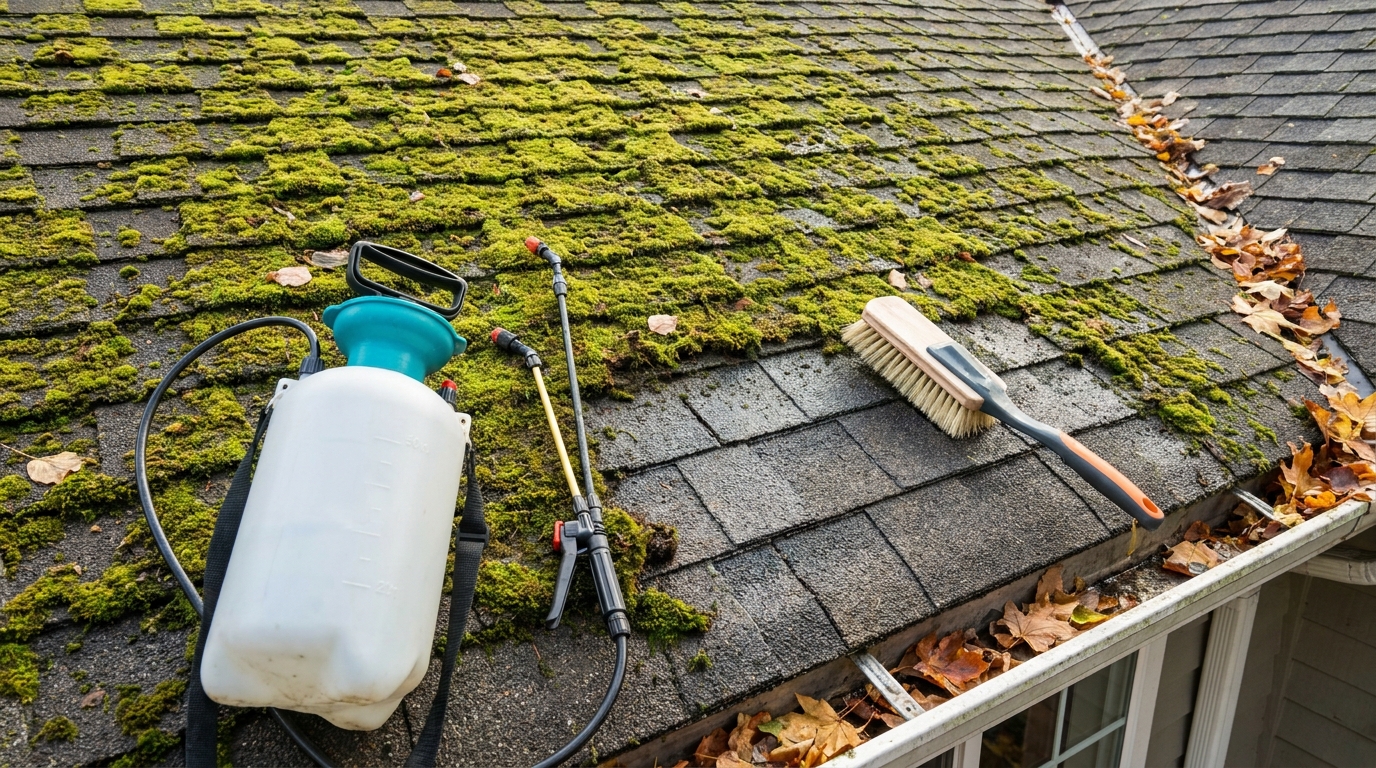
The safest way to remove moss from an asphalt shingle roof is to apply a liquid moss-killing solution, such as zinc sulfate or potassium salts of fatty acids, wait two to four weeks for the moss to die and turn brown, and then let natural rainfall wash it away. If stubborn dead patches remain, you can gently sweep them downward with a soft-bristle broom. Never use a pressure washer, a stiff wire brush, or a scraper on an asphalt roof. Mechanical force will strip the protective ceramic granules from your shingles, drastically shortening the lifespan of your roof and instantly voiding the manufacturer's warranty. Removing roof moss is an exercise in patience. By letting the chemical treatment do the heavy lifting, you preserve your roof's integrity while eliminating the spongy growth that traps moisture and rots your home's structural decking.
- Never use a pressure washer or stiff brush on asphalt shingles; it strips away UV-protecting granules.
- Apply liquid moss treatments like zinc sulfate or potassium salts of fatty acids using a low-pressure pump sprayer.
- Wait two to four weeks after treatment for the moss to turn brown and release its grip on the shingles.
- Protect foundation plants by heavily watering them before and after treatment, and covering them with tarps during application.
- Prevent future growth by installing 3-inch (7.6 cm) copper or zinc strips along the roof's ridge line.
Why is moss growing on my roof in the first place?
Moss thrives in environments that provide consistent moisture, indirect sunlight, and cool to moderate temperatures, typically between 40 degrees Fahrenheit and 70 degrees Fahrenheit (4 degrees Celsius to 21 degrees Celsius). This is why homes in the Pacific Northwest and other highly humid, forested regions, particularly in USDA hardiness zones 6 through 9, struggle with roof moss year after year. The spores blow in on the wind or drop from overhanging trees, settling into the tiny crevices between shingle tabs.
Once established, moss acts like a highly efficient sponge. It absorbs rainwater and prevents the roof from drying out during the day. Over time, the moss develops shallow, root-like structures called rhizomes that grow underneath the edges of the asphalt shingles. As these rhizomes expand, they physically lift the shingles away from the roof deck. This lifting makes your roof highly susceptible to wind blow-off and allows rainwater to seep underneath the asphalt, where it will eventually rot the wood underlayment and cause interior ceiling leaks.
- North-facing roof planes are the most vulnerable due to receiving the least amount of direct sunlight.
- Overhanging branches drop debris that feeds the moss and provides the shade it needs to thrive.
- A roof slope that holds onto pine needles and leaf litter creates the perfect micro-environment for spores to anchor.
Why shouldn't I just pressure wash or scrape the moss off?
The most common failure mode for homeowners tackling roof cleaning is attempting to blast the moss away with a pressure washer or aggressively scrubbing it with a stiff-bristled push broom. Asphalt shingles are coated with a layer of crushed, ceramic-coated mineral granules. These granules are not just for color; they are the primary defense against the sun's ultraviolet rays. A pressure washer will strip these granules away in seconds. Without that protective layer, the exposed asphalt will dry out, crack, and fail within a few short years.
Furthermore, spraying high-pressure water upward from a ladder forces moisture directly underneath the shingle tabs, driving water past the underlayment and into the structural wood deck. This is a classic example of a judgement call where a professional makes a completely different decision than a beginner. A beginner wants instant gratification, attacking live, firmly rooted green moss with mechanical force. A professional understands that live moss is stubbornly anchored. A pro will apply a low-pressure chemical treatment, walk away for a month, and let the dead moss release its grip naturally, preserving the roof's delicate surface.
- Pressure washing voids nearly all asphalt shingle manufacturer warranties.
- Scraping live moss pulls the shingle granules off along with the rhizomes.
- Chemical soft-washing is the only method approved by the Asphalt Roofing Manufacturers Association.
Which chemical treatments actually kill roof moss safely?
When choosing a chemical treatment, you have three primary options: zinc sulfate, potassium salts of fatty acids, or a diluted chlorine bleach solution. Zinc sulfate powder is highly effective and relatively inexpensive. You dissolve about 2.5 pounds (1.1 kg) of the powder into 5 gallons (18.9 liters) of water in a pump sprayer. It leaves behind a metallic residue that continues to inhibit moss growth for several months after application. However, zinc runoff can be harmful to fish and aquatic invertebrates, so it should not be used if your gutters drain near a creek or pond.
Potassium salts of fatty acids are the active ingredient in many eco-friendly, biodegradable commercial moss killers. These soaps penetrate the moss cell walls and dehydrate the plant quickly, usually turning it brown within a week. They are the safest option for homes with extensive foundation landscaping or nearby water sources.
A traditional bleach solution is the cheapest and fastest-acting method, though it is the harshest on surrounding vegetation. Mix 1 quart (0.9 liters) of standard household bleach with 1 gallon (3.8 liters) of water, adding a few drops of dish soap to help the liquid cling to the roof. Bleach kills the moss spores on contact but evaporates quickly, offering zero residual prevention.
- Avoid using laundry detergents, as their heavy degreasers break down the asphalt binders in your shingles.
- Always mix chemicals outdoors and wear safety goggles, chemical-resistant gloves, and a respirator.
- Never mix bleach with any product containing ammonia, which creates toxic chloramine gas.
How do you protect foundation plants from toxic roof runoff?
The runoff from roof cleaning chemicals can easily burn the leaves of your foundation shrubs or alter the soil pH, causing long-term damage to your landscaping. The secret to protecting your plants is hydration. At least an hour before you begin spraying the roof, thoroughly soak the soil around your foundation plants and heavily mist their leaves with fresh water. When a plant's leaves and roots are already saturated with clean water, they are far less likely to absorb any chemical overspray.
Next, drape lightweight plastic tarps over the vulnerable shrubs directly beneath your work area. Do not leave these tarps on for more than a few hours on a hot day, or you risk baking the plants. Once you finish applying the moss killer to the roof, immediately rinse the tarps with a garden hose before removing them. Finally, give the plants and the surrounding soil one last heavy watering to dilute any rogue drips that made it past your defenses.
- Pre-soaking plants closes their stomata, reducing chemical absorption.
- Divert downspouts into plastic buckets or away from lawn areas using flexible extensions during the process.
- Work in small sections so you can manage the runoff and protect specific garden beds one at a time.
How do you properly apply the treatment and remove the dead moss?
Pick an overcast day with no rain in the forecast for at least 48 hours. Windless, overcast conditions are ideal because direct sunlight will evaporate the liquid treatment before it has a chance to soak into the thick moss clumps. Using a standard 2-gallon or 5-gallon pump sprayer, apply your chosen solution starting from the roof ridge and working your way down. Saturate the moss thoroughly, but avoid spraying so heavily that the liquid sheets off the roof into the gutters. Allow the treatment to dwell on the roof without rinsing it.
Over the next two to four weeks, the moss will turn yellow, then brown, and eventually black as it dies and shrivels. Once it is completely dead, its roots will release their hold on the asphalt. In many cases, subsequent rainstorms and wind will wash the dead debris away naturally, requiring no further action from you. If heavy clumps remain, you can go back onto the roof with a soft-bristle push broom. Always sweep in a downward motion, from the ridge toward the gutters. Sweeping upward will catch the edges of the shingles, lifting them and breaking their adhesive seals.
- Always use an OSHA-approved safety harness and roof anchor when working on sloped roofs.
- Never step directly on wet moss, as it is as slippery as black ice.
- Clean out your gutters immediately after sweeping the roof to prevent the dead moss from causing clogs.
How do you install metal strips to stop moss from returning?
Cleaning your roof is only half the battle; preventing the moss from returning requires altering the roof's environment. The most effective long-term preventative measure is installing a sacrificial metal strip at the highest point of the roof. When rainwater hits bare copper or zinc, it slowly releases metallic ions that wash down the slope of the roof. These ions create an inhospitable environment for moss, algae, and lichen, effectively keeping the roof clear for years.
Purchase a roll of pure copper or zinc flashing that is at least 3 inches (7.6 cm) wide. Working at the ridge of the roof, gently loosen the bottom edge of the ridge cap shingles with a putty knife. Slide the metal strip underneath the ridge cap so that 2 inches (5 cm) of the metal remains exposed to the rain. Secure the strip using galvanized roofing nails placed every 2 feet (0.6 meters), and seal the nail heads with a dab of asphalt roofing cement. Additionally, physically trim back any tree branches that hang over the house to ensure the roof receives at least six hours of direct sunlight each day.
- Copper is generally more effective and longer-lasting than zinc, though slightly more expensive.
- The metallic ions will only protect the roof area directly below the strips; dormers and lower roof tiers will need their own strips.
- Avoid using galvanized steel, which will eventually rust and stain your shingles.
How much does it cost to treat a mossy roof in 2026?
Tackling a mossy roof yourself is a highly cost-effective weekend project, assuming you have a single-story home with a walkable pitch and already own basic safety gear. The chemical treatments are quite affordable. A 3-pound container of powdered zinc sulfate costs about 35 dollars, which is enough to mix roughly 30 gallons of solution and treat a standard 1,500-square-foot roof. Pre-mixed potassium salt solutions or commercial bleach additives will run you between 40 dollars and 60 dollars. Factoring in a new pump sprayer and some copper stripping for prevention, a complete DIY job usually costs between 100 dollars and 180 dollars in 2026.
If your roof is steep, multi-story, or dangerously slick, hiring a professional soft-washing company is the only safe choice. Professionals use specialized low-pressure pumps to spray proprietary algaecides and moss killers from the safety of ladders or the ground. In 2026, professional roof soft-washing typically ranges from 450 dollars to 900 dollars, depending on the square footage of the roof and the severity of the moss infestation. While more expensive, pros carry liability insurance and have the proper equipment to ensure zero damage to your shingles.
- DIY chemical costs: $30 to $60 for an average home.
- Preventative copper flashing roll (50 feet): $60 to $80.
- Professional soft-washing service: $450 to $900 based on pitch and size.
| Treatment Type | Cost per 1000 Sq Ft (2026) | Speed of Results | Plant & Environmental Safety |
|---|---|---|---|
| Zinc Sulfate (Powder/Liquid) | $30 - $45 | 2 to 4 weeks | Moderate (can harm aquatic life and plants if not diluted) |
| Household Bleach & Water Mix | $10 - $15 | 1 to 3 days | Low (harsh on soil pH; requires heavy plant protection) |
| Potassium Salts of Fatty Acids | $45 - $60 | 1 to 2 weeks | High (biodegradable and safest for foundation plants) |
| Zinc/Copper Strips (Preventative) | $100 - $150 | Continuous | Moderate (slow leaching; very safe when installed correctly) |
Frequently asked questions
Can I use powdered laundry detergent to kill roof moss?
While some DIYers swear by sprinkling powdered laundry detergent along the roof ridge, it is highly discouraged. Laundry detergents contain harsh degreasers designed to break down oils. These degreasers will attack the petroleum-based asphalt binders in your shingles, leading to premature cracking, granule loss, and a shortened roof lifespan.
Do I really need to get on the roof to apply the moss killer?
Not necessarily. If you have a single-story home, you can purchase chemical moss killers that come in specialized hose-end sprayer bottles. These attach directly to your garden hose and can shoot a stream up to 25 feet (7.6 meters) into the air. However, you will have less control over overspray, requiring extra care for your foundation plants.
Is a small amount of green moss actually bad for the roof, or is it just cosmetic?
Even a small amount of moss is detrimental. Moss holds moisture against the shingles long after the rain stops, preventing the roof from properly drying. Over time, this constant dampness degrades the asphalt, while the roots physically wedge the shingles apart, creating pathways for water to enter your attic.
How long will copper strips keep my roof free of moss?
Properly installed copper strips can provide protection for 15 to 25 years. They will slowly oxidize and turn a dull brown or green over time, but they will continue to release the necessary ions whenever it rains, protecting the shingles directly down-slope from the strip.
Keep reading
- How Much Paint Do You Actually Need for a Room?The tin says 400 square feet. Your wall says otherwise. Here is the arithmetic that actually holds up.
- DIY or Hire a Pro? A Decision Framework That Is Not About MoneyThe labour saving is real. So is the cost of a job done twice — and of tools you use once.
- Storage for Small Rooms That Does Not Make Them SmallerSmall rooms do not need more storage. They need storage that stops interrupting the eye.