How Do You Fix a Sticking Sliding Glass Door So It Glides With One Finger?
By Jim Vernon · 8 min read · Last updated
A heavy, grinding sliding glass door isn't just an annoyance—it's a warning sign that your internal rollers are moments away from snapping permanently.
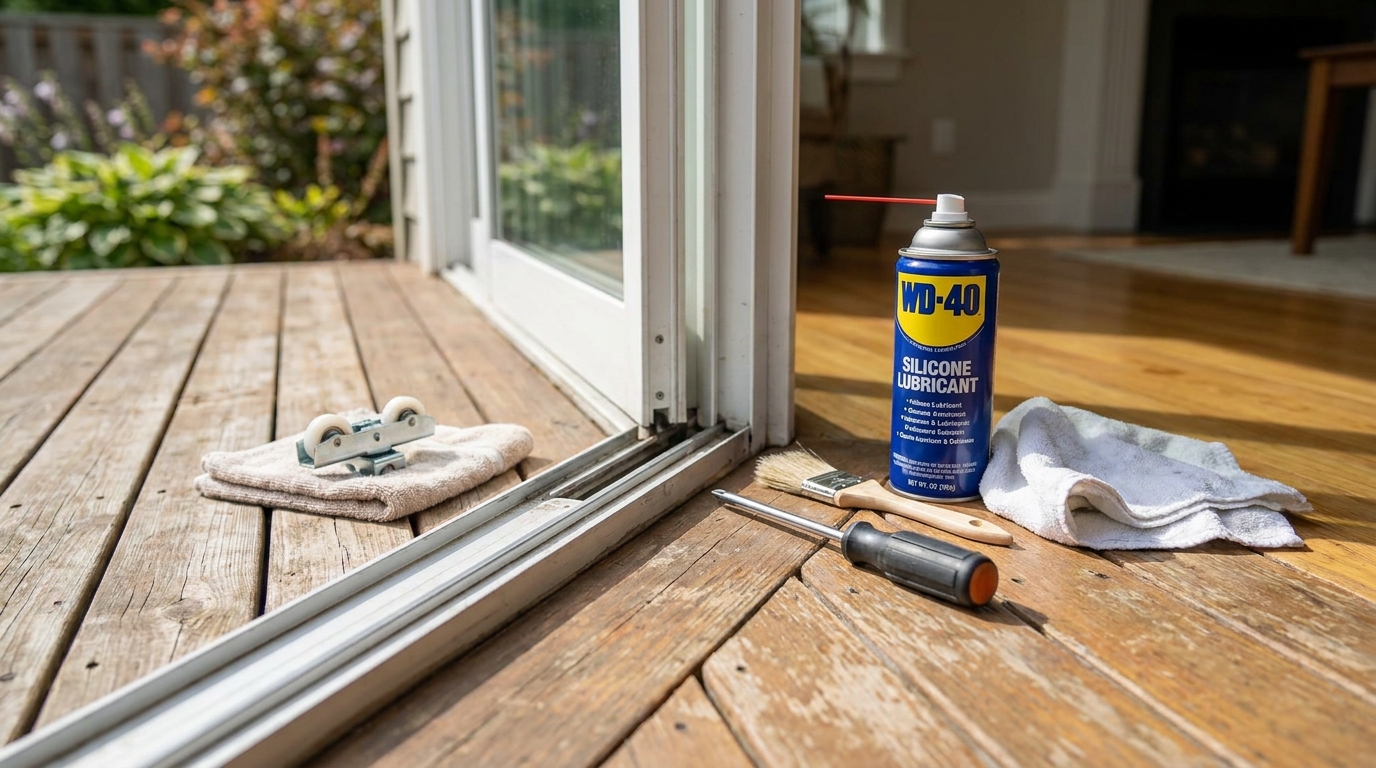
To fix a sticking sliding glass door, you must first clean the bottom track down to bare metal, adjust the roller height screws to lift the door off the track, and lubricate the roller bearings with a dry PTFE spray. If the door still grinds after cleaning and adjusting, you need to remove the door panel and replace the tandem roller assemblies, which typically cost between $15 and $35 in 2026. This repair requires only basic hand tools and takes less than an hour, restoring the door to a smooth, one-finger glide.
- Most sticking issues are solved by deep-cleaning the track and adjusting the roller height.
- Never lift a sliding door out of its frame without fully retracting the rollers first.
- Use a dry PTFE spray lubricant, as wet lubricants like WD-40 attract dirt and destroy rollers.
- Replacement tandem rollers cost $15 to $35 and usually feature 1-1/4 inch or 1-1/2 inch wheels.
Why Is Your Sliding Glass Door Suddenly So Hard to Open?
Sliding glass doors weigh between 60 and 100 pounds (27 to 45 kg) and sit on two small roller assemblies housed inside the bottom frame. When the door becomes difficult to move, it is rarely a problem with the frame itself. Instead, pet hair, dirt, and dead insects accumulate in the track groove. As the rollers run over this debris, the friction binds the internal bearings.
Over time, this constant friction either grinds the nylon wheel flat or causes the housing to collapse slightly, dropping the metal frame of the door directly onto the aluminum track. You can tell this has happened if you hear a sharp metal-on-metal scraping sound. Catching the problem early often means you only need a deep clean and a height adjustment, saving you from having to replace the hardware entirely.
- Listen for metal-on-metal scraping, which indicates a collapsed or seized roller.
- Check for a thick buildup of pet hair and dirt in the bottom track groove.
- Look for uneven gaps at the top or bottom of the closed door, signaling a dropped wheel.
What Tools and Materials Do You Need to Fix a Sticking Slider?
You can complete this repair with basic household tools. You will need a stiff nylon brush, a vacuum with a crevice attachment, a flathead screwdriver or stiff putty knife for scraping, and a #2 Phillips screwdriver for adjusting or removing the hardware. If you need to remove the door, a pair of sawhorses covered in moving blankets will provide a safe, padded work surface.
For materials, you need dish soap, warm water, and a can of dry PTFE (Teflon) spray lubricant, which costs about $8 to $12 in 2026. If your rollers are damaged, you will need a replacement tandem roller assembly. These cost $15 to $35 at most hardware stores. Take the old roller with you to the store to match the wheel diameter, which is almost always 1-1/4 inches (31.7 mm) or 1-1/2 inches (38.1 mm).
- #2 Phillips screwdriver and a flat putty knife for scraping.
- Stiff nylon brush and a shop vacuum with a narrow crevice tool.
- Dry PTFE spray lubricant ($8 to $12) to coat the bearings.
- Replacement tandem rollers ($15 to $35) if the existing wheels are damaged or seized.
How Do You Clean the Door Tracks Properly?
Most sticking issues can be solved by aggressively cleaning the track. Start by using a dry, stiff nylon brush to loosen the surface dirt, then vacuum it away with a crevice tool. Next, take a flat putty knife, wrap the blade in a damp rag, and push it forcefully along the inside corners of the track to dislodge compacted grime and pet hair that the vacuum missed.
Mix a solution of warm water and a few drops of dish soap. Scrub the raised crown of the track—the part the wheel actually rides on—until it is completely smooth to the touch. Dry the track thoroughly with a clean rag. Do not use acidic cleaners like vinegar or abrasive scouring pads, as these will pit the soft aluminum track and create microscopic ridges that cause the rollers to wear out faster.
- Brush and vacuum all loose dirt before applying any water or cleaning liquids.
- Wrap a putty knife in a damp rag to dig into tight inside corners.
- Scrub the raised track crown with warm water and dish soap until perfectly smooth.
- Dry the aluminum completely to prevent water spotting and future corrosion.
How Do You Adjust the Roller Height to Stop Bottom Rubbing?
If the track is clean but the door still drags, the roller assembly has likely settled, causing the bottom of the door to rub against the track. Look at the bottom face of the sliding door panel. You will see small holes at both the left and right sides, sometimes covered by plastic plugs. Insert a #2 Phillips screwdriver into these holes to engage the internal adjustment screw.
Turn the screw clockwise to push the roller down, which lifts the door higher off the track. Turn it counterclockwise to lower the door. Raise both sides evenly until there is a 1/8-inch (3 mm) gap between the bottom of the door frame and the track. A common failure mode for beginners is using a power drill to adjust these screws. The soft metal threads strip instantly under high torque. Always use a hand screwdriver and turn slowly.
- Locate the adjustment holes at the bottom left and right corners of the door panel.
- Turn the screw clockwise to lift the door, counterclockwise to lower it.
- Raise both sides evenly to maintain a square, plumb fit against the latch jamb.
- Never use a power drill, as the soft metal adjustment screws strip easily.
How Do You Safely Remove a Heavy Sliding Door From Its Frame?
If cleaning and adjusting do not fix the problem, you must remove the door to inspect the rollers. Before attempting to lift the door, turn both adjustment screws counterclockwise to retract the rollers fully inside the frame. If you skip this step, the rollers will catch on the bottom track as you lift, bending the track and snapping the roller wheels—a costly mistake that ruins the frame.
Have a helper stand on one side of the door while you stand on the other. Open the door halfway. Grab the vertical edges, lift the panel straight up into the top track channel as far as it will go, and then swing the bottom of the door gently toward you, out of the lower track. Once the bottom is clear, lower the door out of the top track and lay it flat on padded sawhorses.
- Retract the rollers fully before attempting to lift the door panel.
- Open the door halfway to avoid binding against the latch jamb.
- Lift the panel into the top channel, then swing the bottom outward.
- Work with a partner to handle the 60 to 100-pound (27 to 45 kg) weight safely.
How Do You Replace Worn or Broken Door Rollers?
With the door lying flat, inspect the bottom edge. You will see the tandem roller assemblies secured by a mounting screw. Carefully remove this mounting screw, making absolutely sure not to remove the larger structural screws that hold the door frame securely together around the glass. Use a flathead screwdriver to gently pry the old roller assembly out of the bottom door cavity.
Inspect the old wheels. If they are chipped, seized, or wobbling loosely on their axles, throw them away. Press the new roller assembly into the cavity, ensuring it sits flush, and reinstall the mounting screw. Make sure you install the new rollers with the adjustment screw facing outward toward the access hole. Once both rollers are replaced, lift the door back into the frame and adjust the height.
- Remove only the roller mounting screws, not the large structural frame screws.
- Pry the old roller cartridge straight out of the bottom aluminum channel.
- Ensure the adjustment screw on the new roller faces the exterior access hole.
- Press the new assembly firmly until it sits flush against the frame.
Which Lubricant Actually Works Without Attracting Dirt?
The biggest judgment call a pro makes differently from a beginner is the choice of track lubricant. Beginners often reach for standard WD-40 or wet silicone spray and completely soak the aluminum track. This is a massive mistake. Wet lubricants act as a magnet for dust, pet hair, and sand, turning into a sticky, abrasive sludge within weeks that permanently destroys the new wheels.
Pros exclusively use a dry PTFE (Teflon) spray. Instead of spraying the track, aim the straw directly at the internal metal bearings of the roller wheels before you install them. For the track itself, spray a small amount of dry PTFE onto a clean rag and wipe a microscopic film only along the raised center bead where the wheel makes contact. This provides all the necessary glide without leaving a sticky residue.
- Never use standard WD-40, oil, or wet silicone spray on sliding door tracks.
- Wet lubricants attract dirt and create a grinding sludge that ruins plastic rollers.
- Apply dry PTFE spray directly to the internal wheel bearings, not the entire track.
- Wipe a thin, microscopic film of dry PTFE onto the raised track crown using a rag.
| Roller Material | 2026 Cost Range | Best Environment | Durability & Performance |
|---|---|---|---|
| Nylon | $15–$25 | Coastal homes (rust-resistant) | Quiet operation, but wears down faster under heavy doors |
| Steel | $20–$35 | Inland homes (moderate humidity) | Slightly noisier operation, but lasts significantly longer than nylon |
| Stainless Steel | $30–$45 | High humidity or very heavy doors | Maximum weight capacity and extremely durable, highly rust-resistant |
Frequently asked questions
Can I replace a sliding door roller without removing the door?
No. The roller assemblies are inserted deep into the bottom frame rail of the door panel. You must remove the door from the tracks and lay it flat to access the mounting screws and slide the old cartridge out.
Why does my sliding door bounce as I open it?
A bouncing motion means one of the roller wheels has developed a flat spot. This happens when a bearing seizes, preventing the wheel from turning, causing the door to drag the locked wheel across the track until it wears flat. You must replace the roller assembly.
How do I know if my door track is bent beyond repair?
Place a straightedge along the raised crown of the track. If there is a dip larger than 1/16 inch (1.5 mm) or the crown is visibly crushed inward, new rollers will continually jump the track. In this case, you must install a stainless steel track cover over the damaged aluminum.
How often should I clean and lubricate my sliding door tracks?
For optimal performance, vacuum the tracks monthly and wipe them down with a damp rag. Apply a fresh, thin film of dry PTFE spray to the track crown every six months, or every three months if you live in a dusty, high-wind area or have shedding pets.
Keep reading
- How Much Paint Do You Actually Need for a Room?The tin says 400 square feet. Your wall says otherwise. Here is the arithmetic that actually holds up.
- DIY or Hire a Pro? A Decision Framework That Is Not About MoneyThe labour saving is real. So is the cost of a job done twice — and of tools you use once.
- Storage for Small Rooms That Does Not Make Them SmallerSmall rooms do not need more storage. They need storage that stops interrupting the eye.