How Do Dimmer Switches Work and Which Type Should You Buy?
By Jim Vernon · 5 min read · Last updated
That buzzing dimmed LED isn't a bad bulb — it's the wrong dimmer.
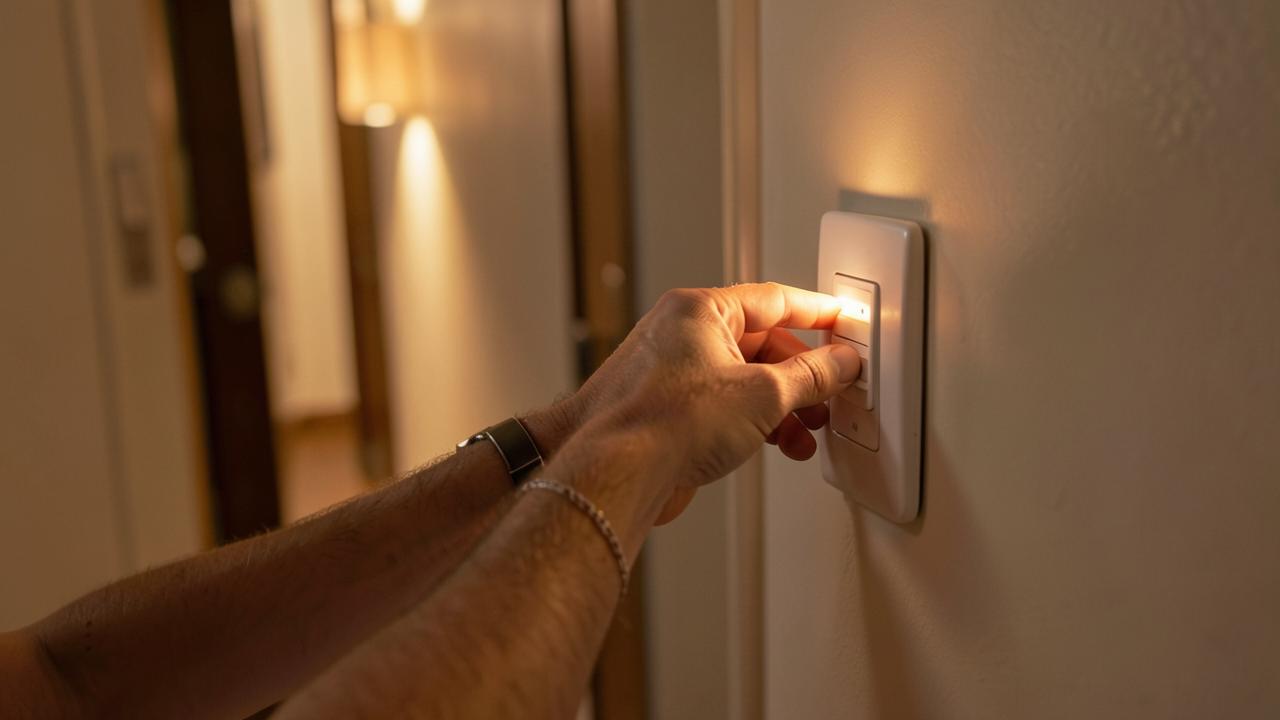
A dimmer switch reduces light output by rapidly switching power on and off many times per second rather than lowering voltage steadily, and the human eye perceives the average as dimmer light. The type of dimmer matters because LED bulbs draw very little current and respond to older incandescent-rated dimmers with flicker, buzzing, or a dim range that only goes from 100% to 40% instead of down to near-off.
What are the main dimmer types available?
| Dimmer type | Works with | Typical cost | Notes |
|---|---|---|---|
| Standard incandescent/halogen (TRIAC) | Incandescent, halogen only | $8-15 | Will cause flicker or buzz with most LEDs |
| LED/CFL-rated dimmer | Dimmable LED and CFL bulbs | $15-30 | Look for 'LED compatible' on the box; still bulb-brand dependent |
| Smart dimmer (Wi-Fi or hub-based) | Dimmable LEDs, app/voice control | $25-60 | Needs neutral wire in most US installs; check panel |
| 3-way/4-way dimmer | Any of the above, multi-switch circuits | $20-45 per switch | Both switches on a 3-way circuit must be compatible types |
How do you know if your existing wiring supports a smart dimmer?
Most smart dimmers need a neutral wire (usually white) bundled in the switch box in addition to the hot and load wires; homes built before the mid-1980s often lack one at the switch location. Turn off the breaker, remove the switch plate, and look for a white wire capped off in the back of the box — if there isn't one, you'll need either a no-neutral-compatible smart dimmer (a smaller product category, roughly $30-50) or an electrician to run one.
What causes buzzing or flickering after installing a dimmer?
- Incompatible dimmer-bulb pairing — swap to an LED-rated dimmer or a bulb from the dimmer manufacturer's compatibility list.
- Dimmer overloaded below its minimum wattage — many dimmers need at least 25-40W total load, which a handful of 5W LED bulbs won't reach; add bulbs or buy a low-wattage-rated dimmer.
- Loose wire connection at the switch or fixture — turn off the breaker and check that wire nuts are snug and screws are torqued.
- Bulb dimming curve mismatch — some LEDs step down in visible jumps rather than smoothly; this is a bulb quality issue, not a wiring problem.
Can you install a dimmer yourself?
Swapping a single-pole dimmer for an existing single-pole switch on a circuit that's already dead at the breaker is a common DIY task: shut off the breaker, confirm it's dead with a non-contact voltage tester, note which wire goes to which terminal, and transfer them one at a time to avoid mixing them up. A 3-way dimmer swap (two switches controlling one light) is more error-prone because of traveler wires, and a wrong connection can trip the breaker or damage the dimmer.
Where does a dimmer actually pay for itself?
Dimming an LED to 50% brightness cuts its power draw by roughly 40-50% and can meaningfully extend bulb life, though LED bulbs already last 15,000-25,000 hours so the lifespan benefit is secondary. The bigger payoff is flexibility — one fixture that serves as bright task light and low mood light — which avoids buying and installing a second fixture for the same room.
How do you read a dimmer's minimum and maximum wattage rating?
Every dimmer is printed with a wattage range, such as 25-400W for incandescent or 10-150W for LED-rated models. The minimum matters more with LEDs because a single 5-9W LED bulb can fall below the dimmer's minimum load, causing flicker even though everything else about the pairing is correct. If a room only has one or two low-wattage LED bulbs on a dimmer, look specifically for a dimmer with a low minimum load rating (some go as low as 5-10W) rather than a standard LED dimmer built assuming multiple bulbs per circuit.
What's the difference between a rotary, slide, and paddle dimmer?
- Rotary dimmers (turn a knob) are the most common and reliable, with a simple analog dial that also acts as the on/off switch when pressed or turned fully.
- Slide dimmers show brightness level visually along a track, which some people find easier for guests unfamiliar with a rotary dial.
- Paddle/rocker dimmers with a separate small slider look like a standard switch with a thin brightness bar; they blend in better with modern switch plates and multi-gang setups.
- All three types come in standard, LED-rated, and smart versions, so the physical style is a cosmetic choice, not a functional one.
What does professional dimmer installation cost if you'd rather not DIY?
An electrician typically charges $75-150 to swap a single existing switch for a dimmer, including diagnosing any wiring quirks, and $150-300 for a 3-way dimmer pair since it involves tracing traveler wires between two boxes. Adding a smart dimmer where a neutral wire needs to be fished in from a nearby outlet or the panel can run $200-450 depending on wall access. Most electricians will do several dimmer swaps in one visit for a reduced per-switch rate, so it's worth batching multiple rooms into a single appointment rather than calling for one switch at a time.
Frequently asked questions
Can I put any dimmable LED bulb on any LED-rated dimmer?
Usually yes, but not always — some premium dimmers publish compatibility lists because dimming curves vary by bulb chipset. If a specific bulb flickers on an LED-rated dimmer, try a different bulb brand before assuming the dimmer is defective; this mismatch is more common than actual product failure.
Do dimmers work with ceiling fan light kits?
Standard light dimmers should not be used to control fan motor speed — they can overheat and damage the motor. Use a dimmer only on a wiring run that's dedicated to the light portion, or buy a combination fan/light control rated for both functions.
Is it worth switching to smart dimmers throughout a house?
It's worth it selectively — entryways, living rooms, and bedrooms benefit from scheduling and remote control, but budget-conscious homeowners can skip smart dimmers in closets, garages, and utility rooms where the convenience adds little and the cost per switch triples.
Run the numbers for your own project
- Energy Savings CalculatorWill this upgrade pay for itself?
- Project Cost EstimatorWhat will this project cost me?
Keep reading
- How Much Paint Do You Actually Need for a Room?The tin says 400 square feet. Your wall says otherwise. Here is the arithmetic that actually holds up.
- DIY or Hire a Pro? A Decision Framework That Is Not About MoneyThe labour saving is real. So is the cost of a job done twice — and of tools you use once.
- Storage for Small Rooms That Does Not Make Them SmallerSmall rooms do not need more storage. They need storage that stops interrupting the eye.