How Does a Shower Valve and Pan Work, and Fail?
By Jim Vernon · 4 min read · Last updated
A leaking shower almost never means the tile failed; it means the layer behind the tile failed.
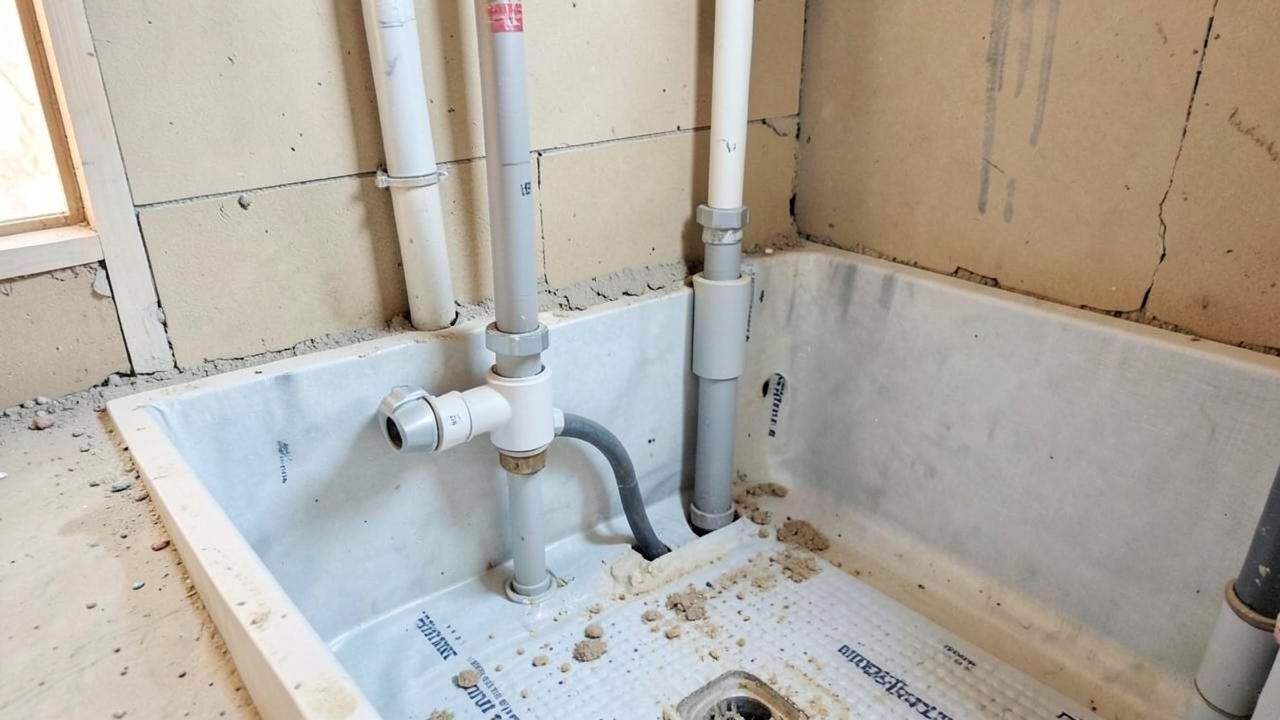
A shower valve controls water temperature and flow through an internal cartridge or ball assembly that wears out from mineral scale and daily use, typically needing replacement every 10-20 years. A shower pan is a waterproof membrane and sloped substrate under the visible tile or acrylic surface; when a shower leaks, it's almost always this hidden membrane failing, not the tile grout, even though grout gets blamed first.
What are the parts of a shower valve and what wears out?
Inside the wall, a shower valve body houses either a cartridge, a ball, or a thermostatic mixing mechanism that blends hot and cold water before it reaches the showerhead. Cartridges are the most common in modern single-handle valves and are also the easiest to replace, typically a $15-$60 part that a homeowner can swap in under an hour once the handle and trim are off. Pressure-balancing valves, required by plumbing code in most new construction, also prevent scalding if someone flushes a toilet elsewhere in the house while you're showering.
| Symptom | Likely cause | Typical fix cost |
|---|---|---|
| Water temperature swings when another fixture runs | No pressure-balancing valve, or a failing one | $150-$400 to replace valve |
| Handle hard to turn, leaks around handle | Worn cartridge or O-rings | $100-$250 including labor |
| Low flow from showerhead only | Clogged showerhead or aerator, mineral scale | $0-$40, soak in vinegar or replace |
| Water stains on ceiling below a second-floor shower | Failed pan membrane or cracked grout allowing seepage | $1,500-$4,000 to rebuild pan |
| Grout looks fine but floor feels spongy near the drain | Subfloor rot from long-term pan leak | $2,000-$6,000 including subfloor repair |
Why do shower pans leak even when the tile looks perfect?
A tiled shower pan relies on a waterproof membrane, either a sheet membrane, a liquid-applied membrane, or a traditional mortar bed with a PVC or CPE liner, installed beneath the mortar bed and tile, sloped at 1/4 inch per foot toward the drain. Grout and tile are not waterproof on their own; they're a wear surface over the membrane. When the membrane cracks, tears at a corner, or was never properly sealed around the drain flange (called a weep hole system), water gets behind the tile and travels along the membrane to the nearest low point, often showing up as a stain far from where the actual leak originated.
How can you tell if a leak is the valve or the pan?
- Check for moisture only during active shower use versus moisture that appears hours later; valve leaks tend to show immediately, pan leaks can lag.
- Look at the location of a ceiling stain below the shower; a stain directly under the shower floor points to the pan, a stain near a wall points to a valve or supply line leak inside that wall.
- Run water into the pan itself without using the showerhead (plug the drain and fill a few inches) and watch for seepage at the edges over 15 minutes, isolating pan versus valve.
- If you can access the valve from the reverse side of the wall (a utility closet or basement ceiling), inspect the valve body and supply connections directly for drips.
How much does a full pan rebuild cost versus a valve swap?
Replacing a shower valve, even one buried in a tiled wall requiring an access panel or tile cut, typically runs $300-$700 including the part and labor. A full shower pan rebuild, which requires removing all tile down to the studs, replacing the membrane and mortar bed, and re-tiling, runs $2,500-$6,000 for an average-size shower and takes 1-2 weeks including tile cure time.
How can you extend the life of a valve and pan you already have?
Flush mineral scale from a showerhead and handheld hose every few months by soaking removable parts in equal parts water and vinegar for 30 minutes, which reduces strain on the valve cartridge from restricted flow. Re-caulk the inside corners and the tile-to-tub or tile-to-pan joint annually with a flexible silicone caulk rated for wet areas, since this is cheap preventive maintenance, typically under $10 in materials, that keeps water from ever reaching a marginal membrane seam in the first place, and it costs far less than any repair made after a leak is already underway.
How often should a shower valve cartridge be replaced?
There's no fixed schedule, but most cartridges last 10-15 years under normal use and fail sooner in hard-water areas where mineral scale builds up faster. Replace it as soon as you notice dripping after the handle is fully shut off, since a dripping cartridge wastes water continuously.
Can you waterproof a shower pan without removing the tile?
No reliable method waterproofs an already-failed membrane from the tile side; the membrane sits underneath the mortar bed and tile, so a genuine repair requires removing the surface layer down to the substrate to access and replace it.
What is a weep hole in a shower drain and why does it matter?
Weep holes are small openings in the drain body that let water which seeps through the mortar bed drain away into the pipe rather than pooling under the tile. If they're clogged with mortar during installation, water gets trapped under the pan and eventually causes rot or mold.
Is a fiberglass or acrylic shower pan more leak-resistant than tile?
A one-piece acrylic or fiberglass pan has no grout lines or membrane seams to fail, making it inherently more leak-resistant than a tiled pan, though it offers far fewer design options and can crack if the subfloor beneath it isn't perfectly flat and supported.
Run the numbers for your own project
- Tile and Grout CalculatorHow many tiles, and how much adhesive and grout?
- Water Heater Size CalculatorWhat size water heater does my household need?
- Project Cost EstimatorWhat will this project cost me?
Keep reading
- How Much Paint Do You Actually Need for a Room?The tin says 400 square feet. Your wall says otherwise. Here is the arithmetic that actually holds up.
- DIY or Hire a Pro? A Decision Framework That Is Not About MoneyThe labour saving is real. So is the cost of a job done twice — and of tools you use once.
- Storage for Small Rooms That Does Not Make Them SmallerSmall rooms do not need more storage. They need storage that stops interrupting the eye.