The Watering Schedule Myth: Why 'Once a Week' Kills Houseplants
By Jim Vernon · 5 min read · Last updated
Calendars don't know how much light your window got this week. Your soil does.
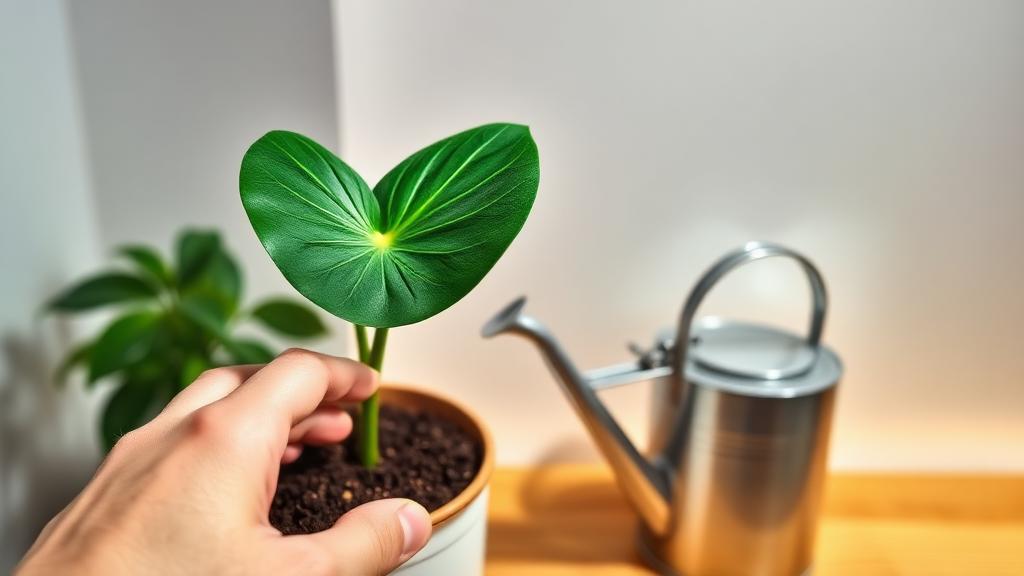
Search 'how often to water a pothos' and you'll get a number: every seven to ten days. That number is not wrong, exactly — it's just answering a question that has no fixed answer. A pothos in a bright east window in July dries out on a completely different timeline than the same species in a dim hallway in January, even in identical pots.
What actually controls how fast soil dries
- Light intensity — more light drives more transpiration and faster evaporation from the soil surface.
- Pot material — terracotta wicks moisture out through its walls; glazed ceramic and plastic hold it in.
- Pot size relative to the plant — a small plant in a large pot stays wet far longer than a rootbound plant in a snug pot.
- Air temperature and humidity — a plant near a heating vent or in a dry winter room dries faster than one in a humid bathroom.
- Season — most houseplants slow growth in winter and use dramatically less water, even indoors under stable temperatures.
The test that replaces the calendar
Push a finger into the soil to the second knuckle, roughly two inches down. For most tropical foliage houseplants, water when that depth feels dry. For succulents and cacti, wait until the soil is dry throughout the pot, not just the top layer. This single habit outperforms any fixed schedule because it responds to the plant's actual condition rather than the date.
| Plant type | When to water | Common mistake |
|---|---|---|
| Tropical foliage (pothos, philodendron) | Top 2 in dry | Watering on a fixed weekly schedule year-round |
| Succulents and cacti | Fully dry through the pot | Treating them like foliage plants |
| Ferns | Surface just barely dry | Letting them dry out fully, which browns fronds |
| Orchids (potted in bark) | Bark feels light and dry, roots turn silvery-green | Watering on the same schedule as soil-potted plants |
Why overwatering, not underwatering, kills most houseplants
A wilting, thirsty plant looks alarming and gets watered immediately, and it usually recovers within hours. A plant sitting in waterlogged soil shows no obvious signal until root rot is already underway — yellowing lower leaves, a mushy stem base, or a sour smell from the pot. By the time those symptoms show, the damage is often done. This asymmetry is why 'when in doubt, water' is bad advice; when in doubt, check first.
Adjusting for season without overthinking it
Most houseplants need roughly half as much water from late autumn through winter as they do in active summer growth, simply because lower light means slower growth and less water uptake. Rather than tracking two separate schedules, keep using the finger test — it naturally stretches the interval between waterings as growth slows, without any recalculation on your part.
A practical routine
- Group plants by light exposure, not species, so you check similar conditions together.
- Do a five-minute finger-test round through the whole collection once or twice a week.
- Water thoroughly until it runs from the drainage hole, then let the pot drain fully before returning it to its saucer.
- Skip any plant that still feels damp — checking again in a few days costs nothing.
A worked example: two identical pothos, two different intervals
Say you own two pothos in matching 6-inch pots. One sits on a bright east windowsill; the other sits six feet back from a north window in the same room. In summer, the windowsill plant might dry to the two-inch mark every 5-6 days, while the setback plant takes 10-12 days to reach the same point — nearly double the interval, in the same house, on the same watering can. Come winter, both slow down further: the windowsill plant might stretch to 10 days and the setback plant to three weeks or more. A single 'water every week' rule would overwater one of these plants for most of the year.
Moisture meters versus the finger test
A cheap probe-style moisture meter (roughly $8-15) reads conditions several inches down, which matters in pots deeper than about 6 inches where a finger can't reach the zone that actually stays wet longest. The trade-off is that inexpensive meters drift over time and can read falsely dry in soil with a lot of perlite or bark, which conducts the probe's signal differently than dense potting soil. Treat a meter as a second opinion on a deep pot, not a replacement for occasionally lifting the pot to feel its weight — a light pot is a dry pot, and weight is a check no meter can fake.
How light level maps to actual watering interval
| Window exposure | Approx. light level | Typical summer interval for a 6-in pothos |
|---|---|---|
| South-facing, unobstructed | 2,000-10,000+ lux near the glass | 4-6 days |
| East or west-facing | 1,000-5,000 lux | 6-9 days |
| North-facing or 6+ ft back from a bright window | 200-800 lux | 10-14 days |
Common mistakes
- Watering a little bit every day or two 'to be safe' instead of watering thoroughly and then waiting.
- Judging soil moisture by the surface alone in a large or deep pot, where the surface can look dry while the root zone stays soaked.
- Ignoring the saucer — letting a pot sit in standing water undoes the benefit of a correctly timed watering by keeping the bottom roots wet indefinitely.
- Assuming a wilting plant always needs water, when wilting can also be a symptom of root rot from overwatering.
- Switching a plant's spot without adjusting the watering interval to match its new light level.
Is misting a substitute for watering?
No. Misting raises humidity around leaves briefly but adds negligible water to the root zone. It has a place for humidity-loving plants but does not replace soil watering.
Should I water on a schedule if I'm often away?
A rough schedule as a reminder to check is fine — the mistake is watering automatically without checking first. Self-watering pots or wicking systems are a better fix for frequent travel than a stricter calendar.
Why does the same plant need water more often in summer?
Higher light and warmth speed up photosynthesis and transpiration, so the plant pulls more water through its roots and the soil dries faster from both root uptake and surface evaporation.
Run the numbers for your own project
- Plant Watering CalculatorHow often and how much should I water this plant?
Keep reading
- How Much Paint Do You Actually Need for a Room?The tin says 400 square feet. Your wall says otherwise. Here is the arithmetic that actually holds up.
- DIY or Hire a Pro? A Decision Framework That Is Not About MoneyThe labour saving is real. So is the cost of a job done twice — and of tools you use once.
- Storage for Small Rooms That Does Not Make Them SmallerSmall rooms do not need more storage. They need storage that stops interrupting the eye.