Home Lighting Design Basics: Layering Light Instead of Just Adding It
By Jim Vernon · 4 min read · Last updated
A room with only one overhead fixture is lit, but it's rarely lit well — good lighting comes in layers, not a single source.
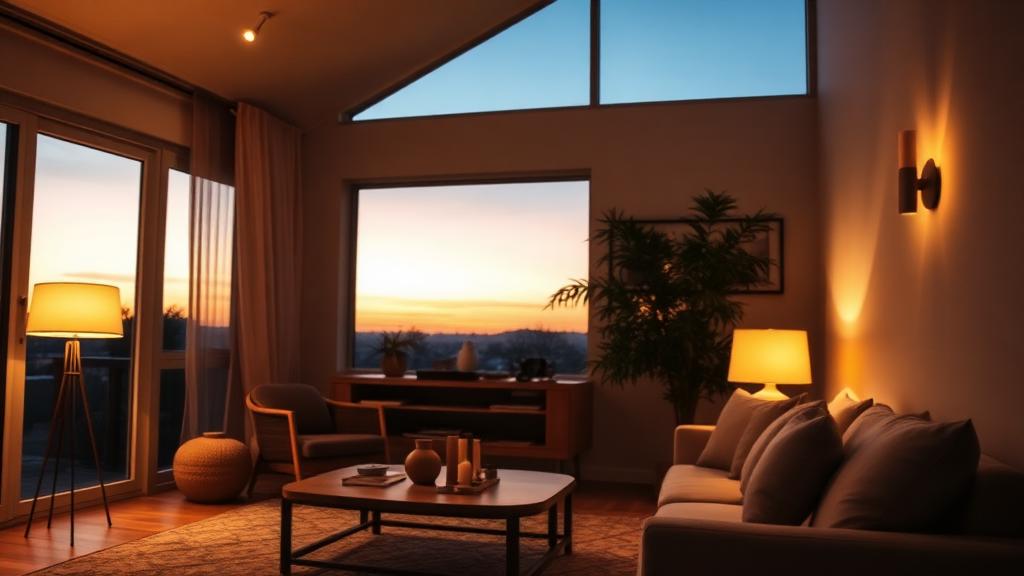
Most rooms that feel flat or harshly lit have one thing in common: a single light source doing all the work. Professional lighting design leans on three distinct layers working together, and understanding them makes it much easier to fix a room without an electrician's full rewiring job.
The three layers
- Ambient (general) lighting — overall room illumination, typically from an overhead fixture, recessed cans, or a torchiere floor lamp bouncing light off the ceiling.
- Task lighting — focused, brighter light for a specific activity: reading, cooking prep, applying makeup, working at a desk.
- Accent lighting — lower-level, decorative light that highlights art, architecture, or a focal point, and adds depth rather than just brightness.
A living room with a single ceiling fixture (ambient only) tends to feel like an office. Add a reading lamp near the seating (task) and a picture light or uplight on a bookshelf (accent), and the same room reads as considered rather than merely lit — often without adding much total wattage.
Lumens, not watts, measure brightness
Watts measure energy consumption, not light output — a habit left over from incandescent bulbs where the two were roughly proportional. LED bulbs produce far more light per watt, so comparing bulbs by lumens is the accurate way to match replacement brightness or plan a new fixture.
| Room / task | Suggested lumens (per fixture area) | Notes |
|---|---|---|
| Living room, ambient | 1,500-3,000 total | Split across multiple fixtures for even coverage |
| Kitchen task areas (counters) | 450-800 per work zone | Under-cabinet lighting works well here |
| Reading lamp | 450-800 | Positioned to avoid glare on the page or screen |
| Bathroom vanity | 600-1,600 total | Aim for light on the face, not just overhead |
| Hallway / accent | 150-300 | Lower level is intentional here |
Color temperature changes how a space feels
Color temperature, measured in Kelvin, ranges from warm yellow-white to cool blue-white light. Warmer light (2700-3000K) generally suits living rooms and bedrooms, and cooler light (3500-4000K+) suits kitchens, bathrooms, and workspaces where alertness and color accuracy matter more. Mixing very different color temperatures in the same visible space tends to look mismatched even if each fixture is fine on its own.
Practical layering without rewiring
- Add plug-in floor and table lamps on smart plugs or timers to introduce task and accent layers without running new electrical.
- Use puck lights or an LED strip under kitchen cabinets for task lighting that dramatically improves counter visibility for a modest cost.
- Swap a single central fixture's bulb for a smart, tunable bulb that can shift color temperature through the day, if a full multi-fixture layering plan isn't in the budget yet.
When to bring in an electrician
Adding new circuits, installing recessed lighting, or running wiring for under-cabinet or dedicated accent fixtures should go to a licensed electrician, both for code compliance and because incorrect wiring in a ceiling or wall cavity is a fire risk. Swapping a lamp bulb or plugging in a new floor lamp is well within normal DIY territory; opening up a wall or ceiling for new wiring is not.
A worked example: lighting a small home office
A 10-by-10 foot home office with only a single 800-lumen ceiling fixture (ambient only, roughly 8 lumens per square foot) often feels dim and causes eye strain during screen work. Adding a 450-800 lumen desk lamp positioned to the side of the monitor (task) and a small 150-300 lumen shelf light (accent) brings the room to a layered, comfortable level without rewiring anything, for the cost of two plug-in fixtures.
- Common mistake: relying on a single ceiling fixture to do the job of all three lighting layers in a room used for varied tasks.
- Common mistake: buying bulbs by wattage out of habit instead of checking lumens, leading to a much dimmer or brighter result than expected.
- Common mistake: mixing very different color temperatures (like 2700K and 5000K) within the same visible space, which reads as mismatched even if each light is fine alone.
- Common mistake: installing a dimmer rated for incandescent bulbs with LED bulbs, causing flickering or buzzing.
- Common mistake: placing a reading or desk lamp directly behind the work area, creating glare on the page or screen instead of useful light on it.
What's a reasonable starting point if I can only add one thing?
A task lamp in the spot you actually read, work, or prep food usually delivers the most noticeable improvement for the lowest cost and effort, since it's solving a specific, felt problem rather than a general one.
Should every room use the same light color temperature?
Not necessarily — kitchens and bathrooms often benefit from cooler light for task visibility, while bedrooms and living rooms usually feel more comfortable warmer. Keep it consistent within a single open space, though.
Are smart bulbs worth it just for lighting design purposes?
They're a low-effort way to test different color temperatures and dimming levels in a room before committing to fixed fixtures, which makes them genuinely useful for figuring out what a space actually needs.
How many lumens does a typical incandescent-equivalent LED produce?
A 60-watt incandescent replacement is roughly 800 lumens, and a 100-watt equivalent is roughly 1,600 lumens — useful reference points when comparing LED packaging that lists both watt-equivalence and actual lumens.
Is it worth adding dimmers to every room?
Dimmers add flexibility especially in living rooms and bedrooms where the ideal brightness changes by time of day, but they're less useful in task-focused spaces like a kitchen counter or home office where consistent, adequate light matters more than mood adjustment.
Run the numbers for your own project
- Energy Savings CalculatorWill this upgrade pay for itself?
- Appliance Running Cost CalculatorHow much does this appliance cost to run?
Keep reading
- How Much Paint Do You Actually Need for a Room?The tin says 400 square feet. Your wall says otherwise. Here is the arithmetic that actually holds up.
- DIY or Hire a Pro? A Decision Framework That Is Not About MoneyThe labour saving is real. So is the cost of a job done twice — and of tools you use once.
- Storage for Small Rooms That Does Not Make Them SmallerSmall rooms do not need more storage. They need storage that stops interrupting the eye.