What Should First-Time Solar and Battery Buyers Know?
By Jim Vernon · 4 min read · Last updated
Solar is usually a money decision. A battery is usually a resilience decision wearing a money costume.
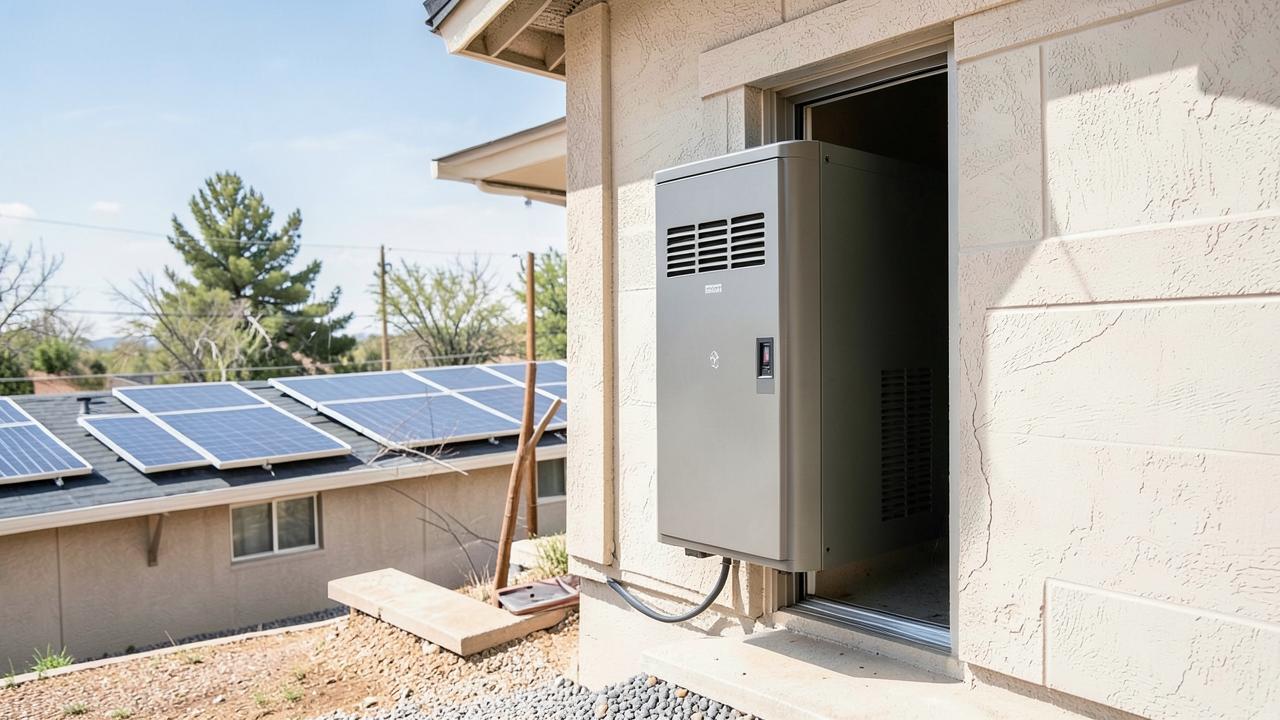
A residential solar system typically pays back its installed cost in 7-12 years through reduced electricity bills, depending on local electricity rates, sun exposure, and available incentives like the federal 30% residential clean energy tax credit. A home battery adds backup power during outages and can shift solar production to evening use, but on pure energy-cost math alone it usually extends payback by several years — most buyers choose one primarily for outage resilience.
What does a typical residential solar system cost and produce?
| System size | Typical installed cost (before incentives) | After 30% federal credit | Typical annual output |
|---|---|---|---|
| 5 kW | $15,000-$20,000 | $10,500-$14,000 | 6,500-8,500 kWh/year |
| 7 kW | $21,000-$28,000 | $14,700-$19,600 | 9,000-12,000 kWh/year |
| 10 kW | $28,000-$38,000 | $19,600-$26,600 | 13,000-17,000 kWh/year |
How do you size a system to your actual usage?
- Pull 12 months of utility bills to find your actual annual kWh usage — a single month, especially summer or winter, will mislead you.
- Multiply annual kWh usage by your local production factor (roughly 1,100-1,600 kWh per kW of panels per year depending on regional sun hours) to estimate needed system size.
- Account for roof orientation and shading — a south-facing unshaded roof performs at the top of that range; east/west-facing or partially shaded roofs perform 15-30% lower.
- Decide whether you're offsetting 100% of usage or a partial amount; many installers default to 100% offset quotes, which isn't mandatory.
What does a home battery actually add, and what does it cost?
A typical home battery (10-13.5 kWh usable capacity) costs $10,000-$16,000 installed, including inverter and electrical work, before incentives (the same 30% federal credit applies when paired with solar). One battery of that size can cover essential loads — refrigerator, some lights, Wi-Fi, a few outlets — for roughly 8-24 hours depending on what's connected, but rarely runs a whole house including AC or an electric range for long.
How does net metering affect the payback math?
- Full retail net metering (excess solar credited at the same rate you pay) gives the fastest solar payback and reduces the financial case for a battery, since the grid effectively acts as free storage.
- Reduced net metering or net billing (excess credited at a lower wholesale-like rate, increasingly common as states revise policy) extends solar payback and strengthens the case for a battery, since self-consuming your own solar power becomes more valuable than exporting it cheaply.
- Time-of-use utility rates (higher prices in early evening) also strengthen the battery case, letting you use stored daytime solar during expensive evening peak hours instead of buying grid power then.
What maintenance does a solar-plus-battery system need?
Panels need occasional rinsing (rain handles most of it in many climates) and a visual check after storms for cracked glass or loose mounting; most warranties run 20-25 years on panels and 10 years on batteries and inverters. Inverters are the most common failure point around year 10-15 and typically cost $1,500-$3,000 to replace, which should be factored into long-term payback expectations rather than treated as a surprise.
How do you choose between a few competing solar quotes?
Get at least three quotes and compare them on cost per watt (typically $2.50-$3.80 per watt installed before incentives), not just total price, since system sizes and equipment quality vary between bids. Ask each installer for the specific panel and inverter brand and warranty terms, whether they subcontract the electrical work or do it in-house, and how many years they've operated locally — a company that's been installing in your specific climate and utility territory for 5+ years will know local permitting quirks and net metering rules better than a newer national franchise. Be cautious of any quote that promises 100% bill elimination or a payback period under 5 years without clearly showing the assumptions behind it.
What happens to solar and battery equipment during a power outage?
Without a battery, most grid-tied solar systems automatically shut off during a power outage as a safety measure, even on a sunny day, so the panels don't backfeed power onto lines utility workers may be repairing — a common misconception is that solar alone keeps the lights on in a blackout. Adding a battery with the correct inverter setup (an automatic transfer switch or a battery inverter with backup capability) allows the system to island itself from the grid and continue powering the home's essential circuits, typically limited to a subset of circuits chosen during installation rather than the whole house.
Frequently asked questions
Does solar work well in cloudy or cold climates?
Panels still produce meaningful power on cloudy days (typically 10-25% of clear-sky output) and actually perform slightly more efficiently in cold temperatures than extreme heat. Cloudy regions have lower total annual production per panel, which installers account for by recommending a larger system size to hit the same offset target.
Can I add a battery to an existing solar system later?
Yes, most modern solar installations are battery-ready or can be retrofitted, though older systems with certain inverter types may need an added component (a hybrid inverter or separate battery inverter) to integrate properly. Ask your installer specifically about retrofit compatibility before assuming it's a simple add-on.
Is leasing solar panels a better deal than buying?
Leasing avoids the upfront cost but forfeits the federal tax credit and typically saves less over the system's lifetime than an owned system, plus it can complicate a home sale since the lease transfers to the buyer. Buying (cash or loan) generally produces better long-term savings if you plan to stay in the home 7+ years.
Run the numbers for your own project
- Energy Savings CalculatorWill this upgrade pay for itself?
- Insulation Cost Payback CalculatorHow long until attic insulation pays for itself?
Keep reading
- How Much Paint Do You Actually Need for a Room?The tin says 400 square feet. Your wall says otherwise. Here is the arithmetic that actually holds up.
- DIY or Hire a Pro? A Decision Framework That Is Not About MoneyThe labour saving is real. So is the cost of a job done twice — and of tools you use once.
- Storage for Small Rooms That Does Not Make Them SmallerSmall rooms do not need more storage. They need storage that stops interrupting the eye.