Heat Pump vs. Furnace: Which Should Heat Your House?
By Jim Vernon · 5 min read · Last updated
The right answer depends less on brand and more on your climate zone and your electric rate.
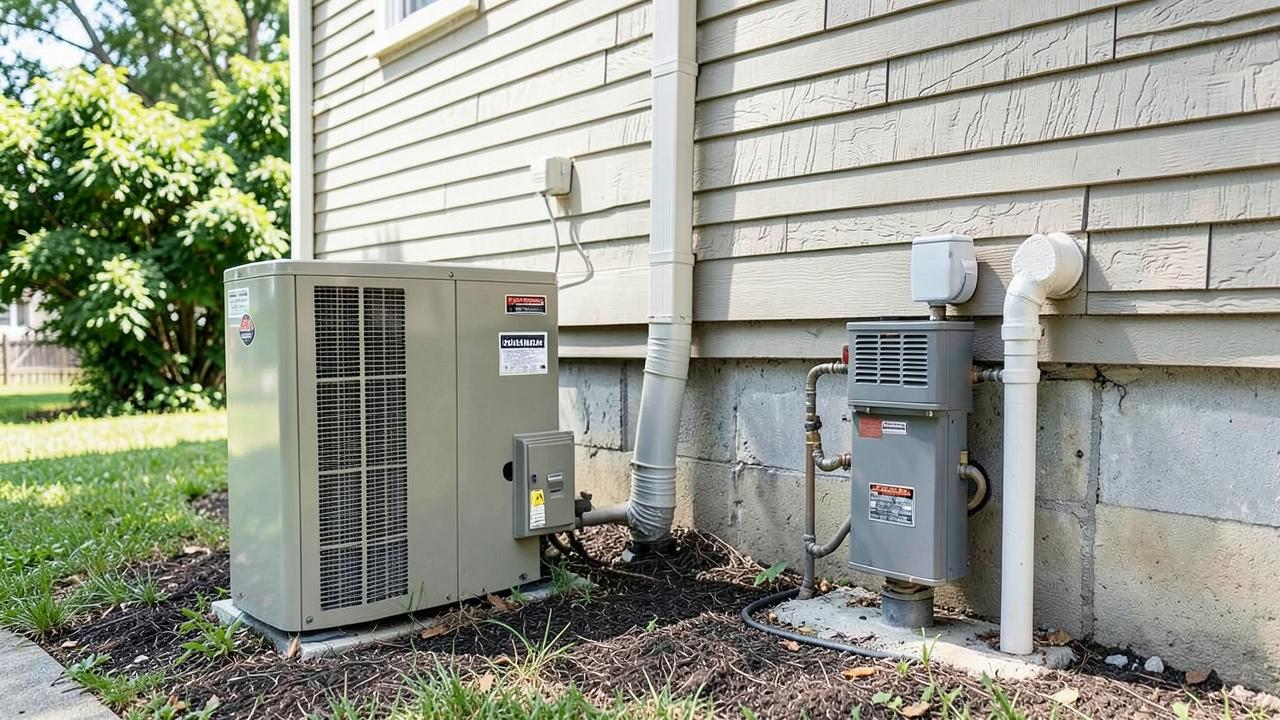
For most US climates with average winter lows above 5-15°F, a modern cold-climate heat pump heats a home more cheaply than a gas furnace and adds air conditioning for free; in colder regions or where electricity costs far more than gas, a furnace (often paired with a heat pump for shoulder seasons) still wins on operating cost. The decision comes down to your local utility rates, design temperature, and how much you value replacing two systems (furnace plus AC) with one.
How do heat pumps and furnaces actually differ?
A furnace burns gas or propane to generate heat directly, at roughly 80-98% efficiency depending on age and AFUE rating. A heat pump moves existing heat from outdoor air into your house using a refrigeration cycle, so it can deliver more heat energy than the electricity it consumes — coefficients of performance (COP) of 2.5 to 4.0 are typical, meaning 250-400% efficiency. The catch is that a heat pump's output and efficiency both drop as outdoor temperature falls, while a furnace's output stays essentially constant regardless of weather.
What does each system cost to install and run?
| Factor | Gas furnace (80-96% AFUE) | Cold-climate heat pump |
|---|---|---|
| Equipment + install, avg home | $4,500-$9,000 | $8,000-$16,000 (ducted) |
| Adds cooling too? | No, needs separate AC ($4,000-$7,000) | Yes, built in |
| Fuel cost per unit heat | Gas: ~$1.00-$1.40 per therm equivalent | Electric: varies by local rate, often $0.90-$1.60 equivalent |
| Efficiency at 5°F outdoors | Unchanged, ~95% | Drops to COP ~1.8-2.5 on cold-climate models |
| Typical lifespan | 15-20 years | 12-15 years (more moving parts, outdoor exposure) |
Which one is cheaper to run in your climate?
Run a simple comparison: multiply your furnace's annual therms by your gas rate, and compare that to your projected heat pump kilowatt-hours times your electric rate. As a rule of thumb, if your electricity costs less than about 3x your gas price per equivalent heat unit, a heat pump usually wins on operating cost even in a moderately cold climate. In regions with cheap hydro or solar-heavy grids, heat pumps often win decisively. In areas with expensive electricity and cheap natural gas, a furnace remains cheaper to run even though the heat pump is more efficient.
- Mild/moderate climates (design temp above 20°F): heat pump alone, no backup needed in most cases.
- Cold climates (design temp 0-20°F): cold-climate heat pump with electric resistance or a small furnace as backup below its rated cutoff.
- Very cold climates (design temp below 0°F): dual-fuel system — heat pump handles most hours, furnace kicks in only on the coldest days.
- All-electric homes or those pursuing electrification incentives: heat pump is usually the only path that qualifies for federal tax credits up to $2,000.
What about dual-fuel systems?
A dual-fuel (hybrid) setup pairs a heat pump with a gas furnace and a control that switches to gas only below a set outdoor temperature, often 25-35°F. This captures the heat pump's cheap, efficient heating for the majority of the season while avoiding the worst of its cold-weather performance drop. It costs more upfront than either system alone but often has the lowest blended annual operating cost in climates with real winters, and it keeps a fuel backup if the grid goes down.
How do you decide for your specific house?
- Pull your last 12 months of gas and electric bills and note your rates per therm and per kWh.
- Find your ACCA Manual J design temperature or a rough local equivalent from a contractor.
- Get quotes for both a straight heat pump and a dual-fuel system sized to your actual heat loss, not your old equipment's tonnage.
- Factor in the $2,000 federal heat pump tax credit and any state or utility rebates, which can cut net cost by 20-40%.
- Weigh non-cost factors: a heat pump adds cooling and removes a combustion appliance from the house, which some households value regardless of the payback math.
What does installation actually involve for each system?
A furnace swap in an existing gas home typically takes a single day: disconnect the old unit, set the new one, reconnect gas, vent, and ductwork, then test. A heat pump replacement adds an outdoor condenser placement, refrigerant line set routing, and often an electrical panel check, since cold-climate models can draw 30-60 amps at 240V and older 100-amp panels sometimes need an upgrade ($1,500-3,500) to accommodate the new circuit alongside existing loads like an electric range or EV charger. Ask your contractor to check panel capacity during the quote stage, not after equipment is already ordered, since a panel upgrade changes the total project cost meaningfully.
How does noise compare between the two systems?
Outdoor heat pump condensers run at roughly 50-60 decibels at close range, comparable to a running dishwasher, and newer variable-speed models are noticeably quieter than older single-stage units since they rarely need to run at full capacity. A furnace's noise is mostly indoors — blower and burner sound in the mechanical room — and is less noticeable to neighbors but can be audible on lower floors of a house. Placement matters for heat pumps specifically: mounting the condenser away from bedroom windows and on a vibration-dampening pad reduces most complaints homeowners have after installation.
Will a heat pump keep my house warm in a real cold snap?
A correctly sized cold-climate heat pump maintains meaningful output down to -5°F to -15°F depending on the model. If you're worried about extreme cold or a design temp below 0°F, a dual-fuel setup with a small furnace backup removes the risk entirely.
Is it worth replacing a working furnace with a heat pump early?
Usually not purely for savings — replacing equipment before end of life rarely pays back fast enough to justify it on economics alone. It makes more sense when the furnace is 12+ years old, your AC also needs replacing, or rebates make the net cost comparable to a furnace-only replacement.
Do heat pumps work with existing ductwork?
Ducted heat pumps generally work with existing ducts if they were sized reasonably for the previous furnace's airflow, though heat pumps typically move higher CFM at lower supply temperatures, so a duct evaluation before install is worth the $150-300 it usually costs.
Run the numbers for your own project
- AC and Heater BTU CalculatorHow many BTUs do I need to heat or cool this room?
- Energy Savings CalculatorWill this upgrade pay for itself?
- Home Maintenance ScheduleWhat should I be doing to my home this month?
Keep reading
- How Much Paint Do You Actually Need for a Room?The tin says 400 square feet. Your wall says otherwise. Here is the arithmetic that actually holds up.
- DIY or Hire a Pro? A Decision Framework That Is Not About MoneyThe labour saving is real. So is the cost of a job done twice — and of tools you use once.
- Storage for Small Rooms That Does Not Make Them SmallerSmall rooms do not need more storage. They need storage that stops interrupting the eye.