Hanging Heavy Things on Any Wall Without Ripping It Out
By Jim Vernon · 4 min read · Last updated
Weight limits printed on anchor packaging assume a stud or solid backing. Skip that step and the number is fiction.
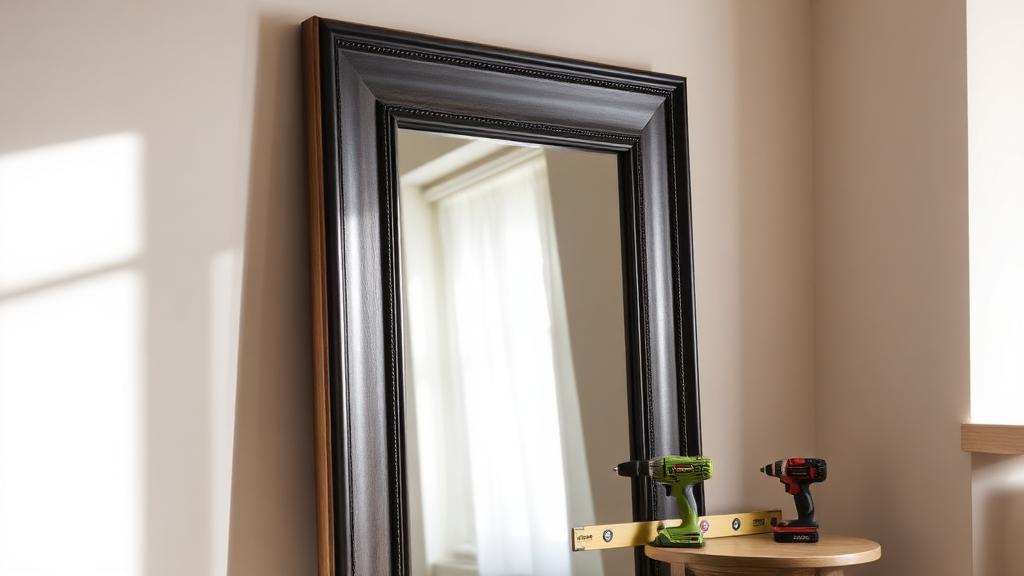
The failure mode for hung items is almost always the same: an anchor rated for a weight it can only hold in solid material was used in hollow drywall, or a heavy item was hung on a single point instead of being spread across two.
Find the stud first, always
A stud finder, or the older tap-and-listen method combined with checking near outlets (studs usually run beside electrical boxes), locates solid framing. Anything mounted directly into a stud with a wood screw carries far more weight than any drywall anchor, often 50-100 lb per screw depending on the screw and how much wood it engages.
Anchor types and what they actually hold
| Anchor type | Wall type | Typical hold (single anchor) |
|---|---|---|
| Plastic expansion anchor | Drywall | Up to 10-15 lb |
| Self-drilling plastic anchor | Drywall | Up to 20-25 lb |
| Toggle bolt | Drywall | Up to 50-75 lb |
| Molly bolt (metal) | Drywall or plaster | Up to 25-50 lb |
| Masonry screw / sleeve anchor | Brick, block, concrete | 75-100+ lb |
| Wood screw into stud | Any wall with framing behind it | 50-100+ lb |
Match the anchor to the actual wall material
Plaster walls behave differently from drywall — they are harder to drill but also more brittle, so pilot holes reduce cracking. Masonry needs a masonry bit and either a sleeve anchor or a screw designed for concrete and brick; standard plastic drywall anchors do nothing in solid masonry because there is no material for them to expand into.
Spread the load for anything over about 20 lb
- Mirrors and shelving over 20 lb should land on at least one stud, or use two toggle bolts spread apart rather than one central anchor.
- For shelving carrying books or dishes, brackets should be screwed into studs wherever the stud spacing allows, with anchors only filling in between.
- TV mounts almost always require stud mounting or a specified mounting plate — check the mount's own weight rating, not just the anchor's.
When there is no stud where you need one
Toggle bolts are the strongest true drywall-only anchor because the toggle wings spread load across the back of the drywall rather than relying on friction in the hole. For anything heavier than a toggle bolt can rate for, the more reliable fix is adding a horizontal cleat screwed into two or more studs, then hanging the item from the cleat.
A quick weight-planning method
- Estimate the item's total weight, including anything it will hold (books, dishes, decorations).
- Add 25% as a safety margin — anchor ratings are usually for static, centred loads, not shifting weight.
- Choose an anchor or mounting method rated above that total, per anchor point, not shared across the total number of points.
Is it ever fine to just use a nail for a picture frame?
For light frames under 5 lb, yes — a picture hanging nail set at an angle into drywall holds fine. Anything heavier benefits from an anchor or a stud.
Can I mount a heavy mirror without hitting a stud?
Yes, using two or more toggle bolts spread across the width of the mirror's mounting bracket, provided the combined rating clears the mirror's weight with margin.
Do anchors work in plaster-and-lath walls the same as drywall?
Not quite — lath behind plaster is often uneven, so self-drilling anchors can crack the plaster. A pilot hole and a standard expansion or toggle anchor generally works better than self-drilling types.
Anchor types and what they actually hold
| Anchor | Realistic load in 1/2 in drywall | Best use |
|---|---|---|
| Plastic expansion plug | 5-10 lb | Light picture frames only |
| Self-drilling threaded anchor | 20-40 lb | Small shelves, curtain rod brackets |
| Strap toggle / snaptoggle | 50-80 lb | Mirrors, cabinets, grab-adjacent hardware |
| Traditional spring toggle | 40-70 lb | Ceiling fixtures and awkward cavities |
| Screw into a stud | 80-100+ lb | TVs, floating shelves, anything with leverage |
Published ratings are tested in ideal, freshly installed board with a static straight-down pull. Real walls have older, softer paper, and real loads swing, get leaned on, and get tugged. Halving the printed rating is a sensible working margin, and spreading a load across two or three anchors is always better than trusting one at its limit.
Shear load versus pull-out load
A picture hanging flat against a wall applies shear load — weight sliding straight down the wall face — which almost any anchor handles well. A shelf, a TV arm, or a coat rack applies pull-out load, levering the anchor out of the board. That difference explains why a hook rated for 30 pounds holds a heavy frame effortlessly yet fails under a 15-pound shelf: the shelf multiplies force through its depth.
Finding studs when the detector is unsure
- Measure 16 inches from a corner or from a known stud — most framing is on 16 inch centres, sometimes 24 in newer or garage construction.
- Look for the faint vertical line of drywall screws under raking light from a torch held flat against the wall.
- Check above and below an electrical outlet; boxes are nailed to the side of a stud, so a stud sits immediately to one side.
- Confirm with a small finishing nail through a spot that will be hidden by the fixture before committing to the main hole.
Run the numbers for your own project
- Drywall CalculatorHow many sheets of drywall do I need?
- Project Cost EstimatorWhat will this project cost me?
Keep reading
- How Much Paint Do You Actually Need for a Room?The tin says 400 square feet. Your wall says otherwise. Here is the arithmetic that actually holds up.
- DIY or Hire a Pro? A Decision Framework That Is Not About MoneyThe labour saving is real. So is the cost of a job done twice — and of tools you use once.
- Storage for Small Rooms That Does Not Make Them SmallerSmall rooms do not need more storage. They need storage that stops interrupting the eye.