Gutter Sizing and Ice Dams: Matching Capacity to Climate
By Jim Vernon · 4 min read · Last updated
A 5-inch K-style gutter handles about 5,500 square feet of roof in moderate rain — many roofs exceed that with room to overflow.
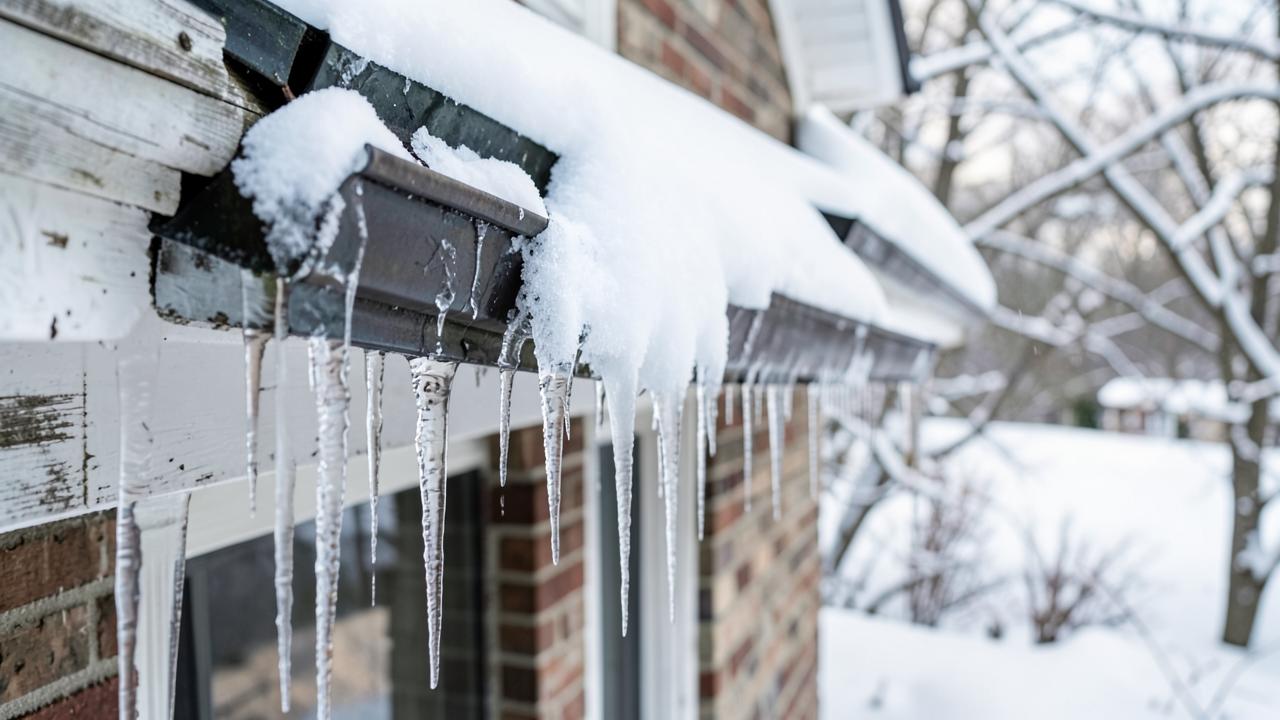
Gutters are sized by matching their cross-sectional capacity and downspout count to the square footage of roof draining into them, not by whatever size happens to be standard at the local supply store. A common 5-inch K-style gutter with one 2x3-inch downspout handles roughly 5,500 square feet of roof area in a moderate 4 inches/hour rainfall; steeper roofs and higher-intensity storms cut that capacity meaningfully because water sheets off faster.
How do you size gutters for your specific roof?
Start with the roof's plan area (the footprint it drains, not the sloped surface area), then add roughly 5% for every 12 inches of roof pitch above a 4:12 slope to account for faster runoff. Divide the total drainage area among downspouts so no single downspout handles more than about 600-800 square feet in a heavy-rain region, or up to 1,200 in a drier climate.
| Gutter size | Downspout size | Approx. max roof area served | Typical use |
|---|---|---|---|
| 4-inch K-style | 2x3 in. | 600-1,200 sq ft per downspout run | Small additions, sheds, low-rainfall regions |
| 5-inch K-style | 2x3 or 3x4 in. | 1,200-2,200 sq ft per downspout run | Most single-family homes |
| 6-inch K-style | 3x4 in. | 2,200-3,600 sq ft per downspout run | Large roofs, steep pitches, heavy-rain climates |
| 6-inch half-round | 4-in. round | up to 4,000 sq ft per downspout run | High-volume commercial or estate roofs |
Why do ice dams form, and does gutter size cause them?
Ice dams form when heat escaping through the attic melts snow on the upper roof; that meltwater runs down to the unheated eave, refreezes, and builds a ridge of ice that backs water up under shingles. Gutter size is a secondary factor at most — an undersized or clogged gutter holds meltwater against the eave longer and makes an existing dam worse, but the root cause is attic heat loss and ventilation, not gutter capacity.
What actually prevents ice dams?
- Air-sealing attic bypasses (can lights, plumbing stacks, attic hatches) so warm house air doesn't leak into the attic.
- Adding attic insulation to at least R-49 in cold climates so the attic floor stays close to outdoor temperature.
- Maintaining balanced soffit-to-ridge ventilation so any residual heat vents out rather than warming the roof deck.
- Installing ice-and-water shield membrane at least 24 inches past the interior wall line during any roof replacement in a cold climate.
- Keeping gutters and downspouts clear of leaves and debris going into winter so meltwater has somewhere to go.
How often should gutters be cleaned to avoid overflow?
Twice a year is the baseline for most homes — once in late spring after seed and flower debris, once in late fall after leaf drop — with a third check mid-winter in snow-heavy regions to clear ice buildup before it worsens. Homes under heavy tree cover often need quarterly cleaning; gutter guards reduce but don't eliminate this, since fine grit and pine needles still pack into most guard styles over a few years.
What does gutter replacement or upsizing cost?
Seamless aluminum K-style gutters run $6-12 per linear foot installed, including downspouts, for a typical single-story home; upsizing from 5-inch to 6-inch adds roughly 15-25% to material cost but rarely changes labor much since the install method is the same. A full gutter replacement on an average 1,800-square-foot single-story home (about 180 linear feet) typically lands between $1,400 and $2,800 depending on region and downspout count.
Does gutter material choice affect how well a system handles heavy rain?
Aluminum is the most common choice because it resists corrosion and is light enough to hang without sagging over long spans, but standard residential-grade aluminum (0.027-0.032 inch) can dent under ladder contact or heavy ice and ponding weight. Steel gutters (usually galvanized or galvalume, 0.028-0.034 inch) resist denting and ice-load stress better and are worth the roughly 20-30% cost premium in regions with heavy snow load or hail. Copper and zinc gutters, at $20-40 per linear foot installed, outlast both by decades but are chosen mainly for appearance and longevity on higher-end homes rather than for any drainage-capacity advantage — a 5-inch copper gutter carries the same volume as a 5-inch aluminum one.
How does downspout placement affect overflow risk beyond just sizing?
Even a correctly sized gutter overflows if downspouts sit too far from the roof's actual high-volume runoff points, such as valleys where two roof planes converge. A valley can deliver two to three times the water volume per foot of gutter compared to a straight eave section, so a downspout placed at or near the base of a major valley intercepts that surge before it has to travel sideways through the gutter trough, where it's more likely to overtop during a downpour. As a rule of thumb, place a downspout within 15-20 feet of any valley outlet rather than relying on a single downspout serving the whole run from one end.
Do gutter guards eliminate the need for cleaning?
No. Most guards reduce cleaning frequency by roughly half but still require periodic clearing of fine debris, and some styles create their own ice-damming issues by holding a layer of snow against the gutter edge.
Is 6-inch gutter always better than 5-inch?
Not necessarily. Oversizing adds cost and, on a small roof, can look visually heavy. Size to the actual roof area and rainfall intensity; a 5-inch gutter is plenty for most standard single-family roofs under about 2,000 square feet.
Can ice dams damage the roof even if the gutters are fine?
Yes. Backed-up meltwater can penetrate under shingles well above the gutter line and cause interior leaks and insulation damage regardless of gutter condition, since the dam itself is the blockage, not the gutter.
Run the numbers for your own project
- Gutter and Downspout CalculatorHow much gutter and how many downspouts does my roof need?
- Roof Pitch and Shingle CalculatorWhat is my roof pitch, and how many shingles do I need?
- Home Maintenance ScheduleWhat should I be doing to my home this month?
Keep reading
- How Much Paint Do You Actually Need for a Room?The tin says 400 square feet. Your wall says otherwise. Here is the arithmetic that actually holds up.
- DIY or Hire a Pro? A Decision Framework That Is Not About MoneyThe labour saving is real. So is the cost of a job done twice — and of tools you use once.
- Storage for Small Rooms That Does Not Make Them SmallerSmall rooms do not need more storage. They need storage that stops interrupting the eye.