Can You Really Grow Herbs Indoors Year-Round, and How?
By Jim Vernon · 5 min read · Last updated
A sunny-looking windowsill in January often delivers a fraction of the light herbs need — that's why most windowsill herb gardens fade by February.
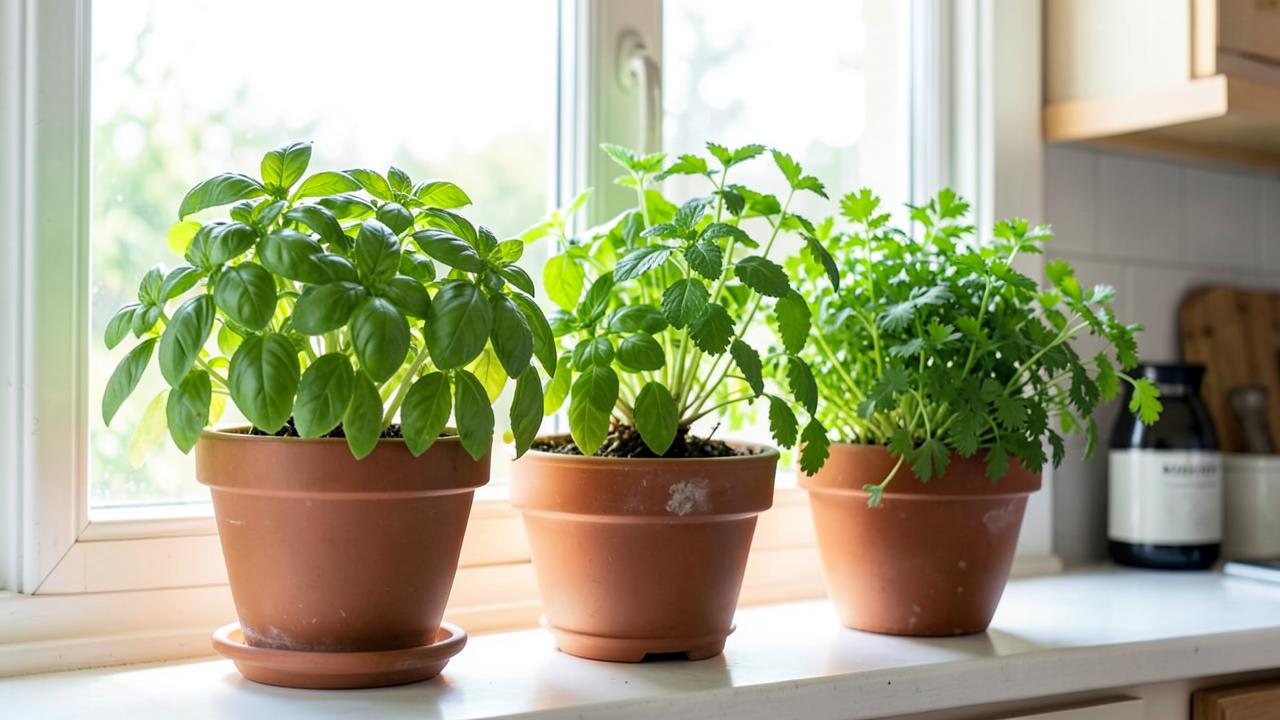
Yes, but only with either a very bright south-facing window or a supplemental grow light, since most culinary herbs need 6 to 8 hours of bright light daily and winter daylight in most of the US falls well short of that even in a sunny window. Basil and cilantro are the hardest to sustain through winter without a grow light; rosemary, thyme, and chives tolerate lower light reasonably well.
Which herbs actually do well indoors?
| Herb | Light need | Indoor difficulty |
|---|---|---|
| Chives | Moderate to bright | Easy |
| Mint | Moderate to bright | Easy (also tolerates lower light) |
| Thyme | Bright, some direct sun | Moderate |
| Rosemary | Bright, direct sun preferred | Moderate to hard (needs airflow, dislikes overwatering) |
| Basil | Bright, 6-8 hrs direct or grow light | Hard without a grow light in winter |
| Cilantro | Bright, cool temps | Hard (bolts quickly indoors, short-lived) |
How much light do herbs need, in real numbers?
Most culinary herbs perform best at 3,000 to 5,000 foot-candles of light for at least six hours a day, a level only a few feet from an unobstructed south-facing window can approach on a clear day. A grow light delivering 300-400 µmol/m²/s PPFD at leaf height, run for 12-14 hours daily, reliably substitutes for that light and is often the difference between a windowsill herb garden that limps along and one that actually produces enough to cook with.
What setup works for a small kitchen counter?
- Choose 4-6 inch pots with drainage holes; herbs in shallow trays without drainage rot quickly.
- Use a well-draining potting mix, not garden soil, cut with perlite for herbs like rosemary and thyme.
- Position a small LED grow light 6-12 inches above the plants, running 12-14 hours on a timer.
- Water when the top inch of soil is dry, and let excess drain fully rather than sitting in a saucer.
- Harvest regularly — cutting the top third of stems encourages bushier growth rather than leggy stretching toward the light.
Why do windowsill herbs get leggy and weak by midwinter?
Leggy, pale stretching toward the glass is the plant's response to insufficient light — it's growing taller to try to reach more of it, at the expense of leaf density and flavor. Rotating the pot doesn't fix this because the total light quantity is still too low, not just poorly directed. A grow light adds light intensity rather than just redirecting the same weak amount, which is why it solves the problem a sunnier windowsill placement often can't.
What does a functional indoor herb setup cost to run?
A small LED grow light bar suitable for a countertop herb garden costs $25-50, and running it 12-14 hours a day adds only a couple of dollars a month to an electric bill at typical residential rates. Pots, mix, and starter plants or seeds add another $20-40 for a five- or six-herb setup. Altogether, a functional year-round indoor herb garden costs $50-100 to start and a few dollars a month afterward, considerably less than buying fresh cut herbs from a grocery store every week.
Do herbs need different care in winter versus summer indoors?
Under a grow light on a consistent timer, indoor herb care changes less between seasons than outdoor gardening does, since the light source doesn't fluctuate with the weather. The main adjustment is watering frequency, which drops somewhat in winter as indoor heating dries air but plant growth also slows slightly with typically shorter available daylight if you're not supplementing with a timer-controlled light.
How do you harvest herbs so they keep producing?
Cut stems just above a leaf node rather than pinching random leaves, and never take more than a third of a plant's total growth at once, since removing more than that can stall regrowth for weeks. Basil and mint respond especially well to regular harvesting — cutting the growing tips encourages branching, producing a bushier, more productive plant than one left to grow a single tall stem. Rosemary and thyme grow more slowly and should be harvested more lightly and less frequently, roughly every two to three weeks rather than weekly.
What pests and problems show up most on indoor herbs?
Aphids and spider mites are the most common indoor herb pests, especially on basil and mint grown in the dry air near a heating vent or radiator. Powdery mildew shows up as a white, dusty coating on leaves, most often on plants with poor airflow, like rosemary crowded against a wall. Running a small fan for an hour or two daily, spacing pots so leaves don't touch, and inspecting leaf undersides weekly catches most problems before they spread across a small counter setup.
| Problem | Likely cause | Fix |
|---|---|---|
| Leggy, pale stems | Insufficient light | Add or move closer to a grow light |
| Yellowing lower leaves | Overwatering or old age | Check soil moisture before watering again |
| White dusty coating on leaves | Powdery mildew from poor airflow | Add a small fan, increase plant spacing |
| Bolting (cilantro, basil flowering early) | Heat stress or long day length | Move to a cooler spot, harvest flower buds promptly |
Do herbs need a grow light if I have a bright south window?
In summer, a strong unobstructed south window can be enough for most herbs. In winter, day length and sun angle drop enough that even a south window usually falls short for basil and cilantro, so a supplemental grow light running 12-14 hours daily makes a meaningful difference.
Why does basil die indoors even with a grow light?
Basil is often lost to overwatering more than insufficient light — it wants soil that dries slightly between waterings and good airflow to avoid fungal issues. Check the top inch of soil before watering and keep a small fan nearby if the room is still and humid.
How close should a grow light be to herb plants?
Most small LED grow lights for herbs work best positioned 6 to 12 inches above the leaves; too close can scorch leaf tips, and too far reduces the effective intensity reaching the plant. Check the manufacturer's spec, since wattage and lens design vary.
Which indoor herb gives the fastest results for a beginner?
Chives and mint are the most forgiving, tolerating a wider range of light and watering mistakes while still producing usable harvests within a few weeks of planting or transplanting a nursery start.
Run the numbers for your own project
- Grow Light CalculatorHow high and how long should my grow light run?
- Houseplant Light MatcherWhich houseplants suit this window?
- Plant Watering CalculatorHow often and how much should I water this plant?
Keep reading
- How Much Paint Do You Actually Need for a Room?The tin says 400 square feet. Your wall says otherwise. Here is the arithmetic that actually holds up.
- DIY or Hire a Pro? A Decision Framework That Is Not About MoneyThe labour saving is real. So is the cost of a job done twice — and of tools you use once.
- Storage for Small Rooms That Does Not Make Them SmallerSmall rooms do not need more storage. They need storage that stops interrupting the eye.