Grout Cleaning and Resealing: When to Scrub and When to Replace
By Jim Vernon · 4 min read · Last updated
Dark grout is not always dirty grout. Sometimes it is just unsealed, and no amount of scrubbing fixes that.
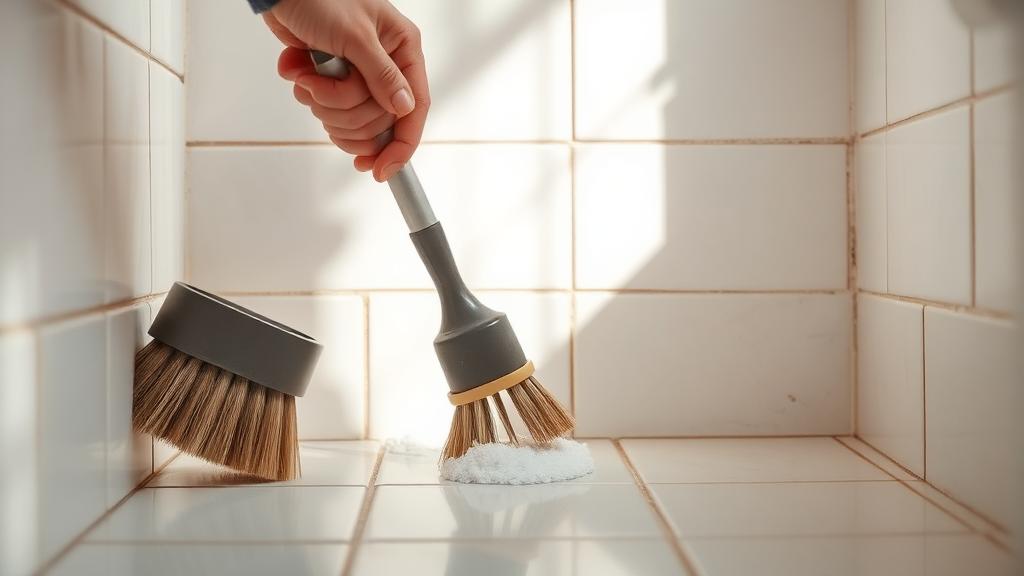
Grout discoloration has two very different causes that need different fixes: surface dirt and mildew sitting on top of the grout, or grout that has lost its sealer and is absorbing stains into the material itself. Scrubbing helps the first and does almost nothing for the second.
Diagnose before you clean
- Run a wet finger over the grout line. If water beads up, the sealer is intact and surface cleaning should work.
- If water soaks in immediately and darkens the grout, the sealer has worn off and cleaning alone will not restore the original colour.
- Crumbling, cracked, or missing sections of grout need to be dug out and repointed, not cleaned or resealed over.
Cleaning methods, from mild to aggressive
| Method | Good for | Notes |
|---|---|---|
| Baking soda + water paste | Light surface grime | Gentle, safe for daily-use grout |
| Oxygen bleach solution | Mildew, moderate staining | Safe for coloured grout, unlike chlorine bleach |
| Chlorine bleach solution | Heavy mildew, white grout only | Can fade coloured grout; ventilate the room |
| Steam cleaner | Deep grime in textured tile floors | No chemical residue, works well before resealing |
| Grout brush + commercial grout cleaner | Stubborn buildup | Use a stiff nylon brush, not metal, to avoid scratching |
When to reseal versus replace
If the grout is structurally sound (no cracking or crumbling) but simply absorbs water and stains, cleaning followed by a fresh coat of sealer restores both the look and the protection. If sections are physically breaking down, sealer will not fix that — it needs to be scraped out to a consistent depth and repacked with new grout before any sealing is worth doing.
- Clean the grout thoroughly and let it dry completely, typically 24-48 hours.
- Apply a penetrating grout sealer with a small applicator brush or roller, following the joint lines closely.
- Wipe excess sealer off the tile surface before it dries to avoid a hazy film.
- Apply a second coat after the first has absorbed, if the product recommends it, for better long-term protection.
How often resealing is actually needed
Most penetrating sealers last 1-2 years in high-traffic or wet areas like bathroom floors and shower surrounds, and up to 3-5 years in lower-moisture areas like a kitchen backsplash. Epoxy grout, increasingly common in new installations, does not need sealing at all since it is non-porous by design.
Repointing badly damaged grout
Worked example: a shower floor gone dark
A shower floor with grout that has gone from light grey to near-black over two years, but has no cracking or crumbling, is a classic sealer-failure case, not a mold infestation needing replacement. An oxygen bleach soak for 10-15 minutes followed by scrubbing with a stiff nylon brush typically lifts most of the discoloration in one session. After a full 24-48 hour dry-out, two coats of penetrating sealer restore the original colour and reset the clock on protection for another 1-2 years in that high-moisture area.
- Test with the water-bead method to confirm sealer failure rather than a structural grout problem.
- Clean with oxygen bleach and a stiff nylon brush, working in small sections.
- Rinse thoroughly and allow a full 24-48 hours of drying, using a fan if the room is not well-ventilated.
- Apply two coats of penetrating sealer, wiping excess off tile faces before it dries.
- Common mistake: reaching for chlorine bleach on coloured grout, which fades unevenly and cannot be undone.
- Common mistake: sealing over grout that is still damp from cleaning, trapping moisture underneath.
- Common mistake: assuming dark grout always means mold, when it is very often just lost sealer absorbing everyday grime.
Repointing badly damaged grout
Use a grout saw or an oscillating tool with a grout removal blade to remove damaged grout to a consistent depth, vacuum out the debris, then apply new grout matching the original colour, working it into the joints with a rubber float and cleaning excess the same way as a new installation.
How do I know if my grout is epoxy or cement-based?
Epoxy grout has a slightly glossy, plastic-like surface and does not absorb water at all, even unsealed. Standard cement grout is more matte and porous.
Can I reseal grout without cleaning it first?
No — sealer applied over dirt or grime locks the discoloration in permanently. Always clean and fully dry the grout before sealing.
Is chlorine bleach safe on all grout?
No — it can fade coloured grout over repeated use. Oxygen bleach is a safer general-purpose choice for anything other than plain white grout.
Is chlorine bleach safe on all grout?
No — it can fade coloured grout over repeated use. Oxygen bleach is a safer general-purpose choice for anything other than plain white grout.
Does sealing grout make it waterproof?
No — penetrating sealers make grout water-resistant and stain-resistant, not waterproof. Water can still pass through over long exposure, which is why grout still needs periodic resealing.
How long does resealed grout need before it can get wet?
Most penetrating sealers need 24-72 hours of cure time before regular water exposure; check the specific product label since formulas vary.
Run the numbers for your own project
- Tile and Grout CalculatorHow many tiles, and how much adhesive and grout?
Keep reading
- How Much Paint Do You Actually Need for a Room?The tin says 400 square feet. Your wall says otherwise. Here is the arithmetic that actually holds up.
- DIY or Hire a Pro? A Decision Framework That Is Not About MoneyThe labour saving is real. So is the cost of a job done twice — and of tools you use once.
- Storage for Small Rooms That Does Not Make Them SmallerSmall rooms do not need more storage. They need storage that stops interrupting the eye.