GFCI vs. AFCI Outlets: Where Is Each One Required?
By Jim Vernon · 5 min read · Last updated
They look almost identical and do completely different jobs — mixing them up leaves you unprotected either way.
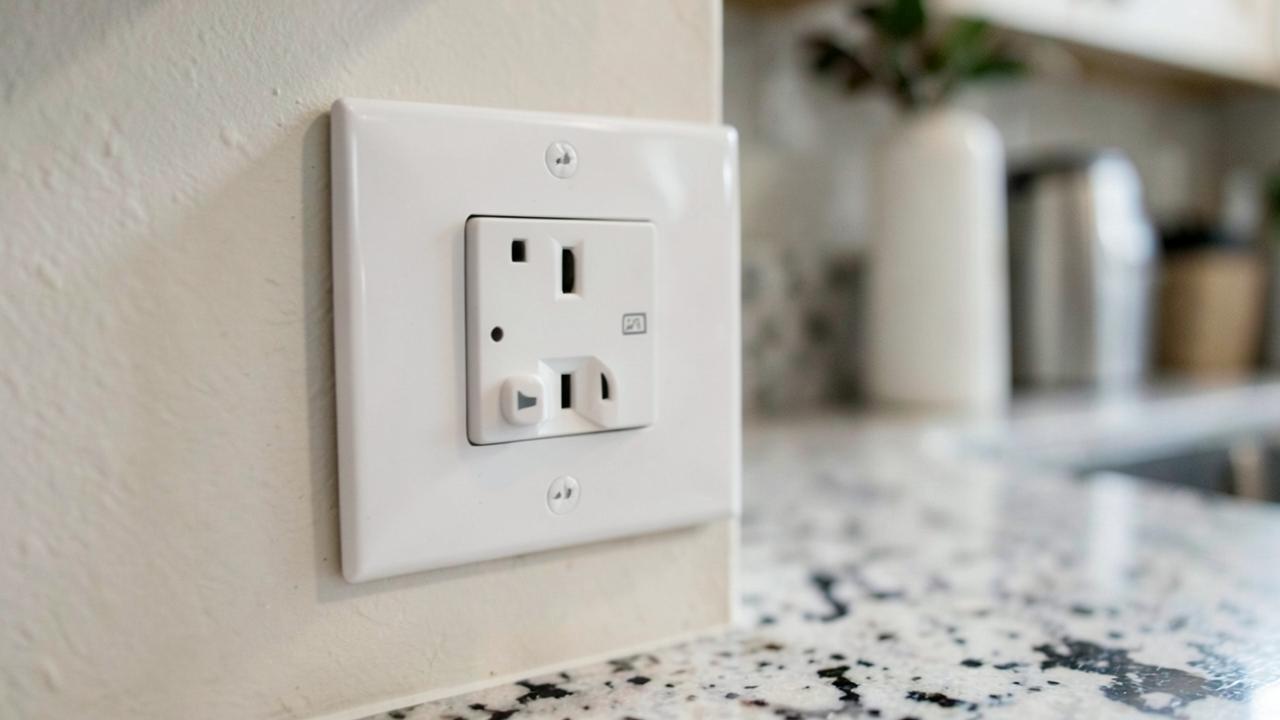
A GFCI (ground-fault circuit interrupter) detects current leaking to ground — like through a person touching a live wire near water — and cuts power in a fraction of a second to prevent electrocution. An AFCI (arc-fault circuit interrupter) detects the erratic electrical signature of arcing, such as from a damaged cord or a nail through a wire inside a wall, and shuts off power to prevent a fire before it starts. They protect against different hazards, and current electrical code requires both in overlapping but not identical sets of rooms.
Which rooms require GFCI protection?
- Bathrooms — all outlets, no exceptions.
- Kitchens — all countertop outlets and any outlet within 6 feet of a sink.
- Garages, unfinished basements, and crawl spaces.
- Outdoor outlets of any kind.
- Laundry areas and utility sinks.
- Areas near wet bars, pools, spas, and dishwasher circuits.
Which rooms require AFCI protection?
Current National Electrical Code editions require AFCI protection for most 120-volt, 15- and 20-amp circuits feeding living spaces: bedrooms, living rooms, dining rooms, family rooms, dens, hallways, closets, and similar areas. Kitchens and laundry rooms now typically require dual-function AFCI/GFCI protection in newer code cycles, reflecting both fire and shock risk in those rooms.
| Location | GFCI required | AFCI required |
|---|---|---|
| Bathroom | Yes | No (GFCI-only historically, check local code) |
| Kitchen countertop | Yes | Yes (dual-function in newer code cycles) |
| Bedroom | No | Yes |
| Living room / family room | No | Yes |
| Garage | Yes | No |
| Outdoor | Yes | No |
| Laundry room | Yes | Yes (newer code cycles) |
How do you tell if an outlet is protected?
GFCI outlets have visible TEST and RESET buttons on the outlet face itself. AFCI protection is usually built into the breaker at the panel rather than the outlet, so you often can't tell by looking at the outlet — check the breaker panel for breakers labeled 'AFCI' or 'CAFCI,' which typically have a small yellow test button on the breaker itself. A single GFCI or AFCI device at the start of a circuit can protect every outlet downstream on that same circuit if wired correctly.
Can you retrofit an older home without rewiring everything?
Yes — GFCI outlets ($15-25 each) can typically replace standard outlets on existing wiring without any new cable, and AFCI breakers ($35-55 each) can typically replace standard breakers at the panel without rewiring, as long as the existing wire and box are in good condition and properly grounded. Full retrofits of an older home's most-used rooms often run $600-$1,500 in parts and labor, phased over time by priority: bathrooms and kitchen first, bedrooms next.
What actually happens electrically when a GFCI or AFCI trips?
A GFCI continuously compares the current flowing out on the hot wire to the current returning on the neutral wire; if even a small amount (as little as 4-6 milliamps) is leaking somewhere else, such as through a person's body to ground, it assumes a fault and cuts power in about 25 milliseconds, fast enough to prevent a lethal shock in most cases. An AFCI instead analyzes the electrical waveform for the irregular, high-frequency signature that sparking and arcing produce, distinguishing it from normal switching noise created by motors or dimmers, and interrupts the circuit before heat from an arc can ignite nearby insulation or wood framing.
What should you do if a GFCI or AFCI keeps tripping?
- Unplug everything on that outlet or circuit, then reset the device — if it holds with nothing plugged in, the fault is in a connected appliance or cord, not the wiring.
- Plug devices back in one at a time to isolate which one is causing the trip; a frayed cord or a failing motor (common in refrigerators, disposals, and older power tools) is a frequent culprit.
- If it trips with nothing plugged in, suspect the wiring itself — moisture intrusion in an outdoor or basement box, a nicked wire from a nail or staple, or a failing device — and call an electrician rather than repeatedly resetting it.
- Replace a GFCI or AFCI device that's more than 10-15 years old even if it seems to work, since the internal test circuitry can degrade with age and stop actually protecting the circuit while still allowing power through.
How much does it cost to add both protections during a remodel?
During a kitchen or bathroom remodel where walls are already open, adding GFCI outlets and AFCI/GFCI dual-function breakers typically adds only $200-500 to the overall electrical budget since the labor to run circuits is already happening. Retrofitting the same protection into a finished, unrenovated room later costs more per point of protection because it's a standalone service call, often $150-300 per circuit, which is one more reason to plan for full code compliance any time walls are already open for other work.
Frequently asked questions
Is it legal to skip AFCI/GFCI upgrades on an older home?
Existing wiring installed to the code in effect at the time is generally not required to be retroactively upgraded (this is called being 'grandfathered'), but any new circuit, remodel, or outlet addition typically must meet current code, which usually triggers GFCI/AFCI requirements for that new work.
Will a GFCI outlet protect against arc faults too?
No — standard GFCI outlets only detect ground faults, not arcing. Dual-function AFCI/GFCI outlets exist and provide both protections in a single device, useful for kitchen and laundry circuits where current code often requires both.
Why does my GFCI trip randomly with no obvious cause?
Nuisance tripping is often caused by a long circuit run picking up electrical noise, a shared neutral wire with another circuit, or a failing appliance with minor internal leakage current, most commonly a refrigerator, freezer, or garbage disposal. Persistent unexplained tripping warrants an electrician's diagnosis rather than repeated resets.
Run the numbers for your own project
- Home Maintenance ScheduleWhat should I be doing to my home this month?
- Project Cost EstimatorWhat will this project cost me?
Keep reading
- How Much Paint Do You Actually Need for a Room?The tin says 400 square feet. Your wall says otherwise. Here is the arithmetic that actually holds up.
- DIY or Hire a Pro? A Decision Framework That Is Not About MoneyThe labour saving is real. So is the cost of a job done twice — and of tools you use once.
- Storage for Small Rooms That Does Not Make Them SmallerSmall rooms do not need more storage. They need storage that stops interrupting the eye.