How Do You Get Rid of Fungus Gnats and Spider Mites Indoors?
By Jim Vernon · 5 min read · Last updated
Treating a scale infestation like a fungus gnat problem, or vice versa, wastes weeks — each pest has a distinct life cycle and a distinct fix.
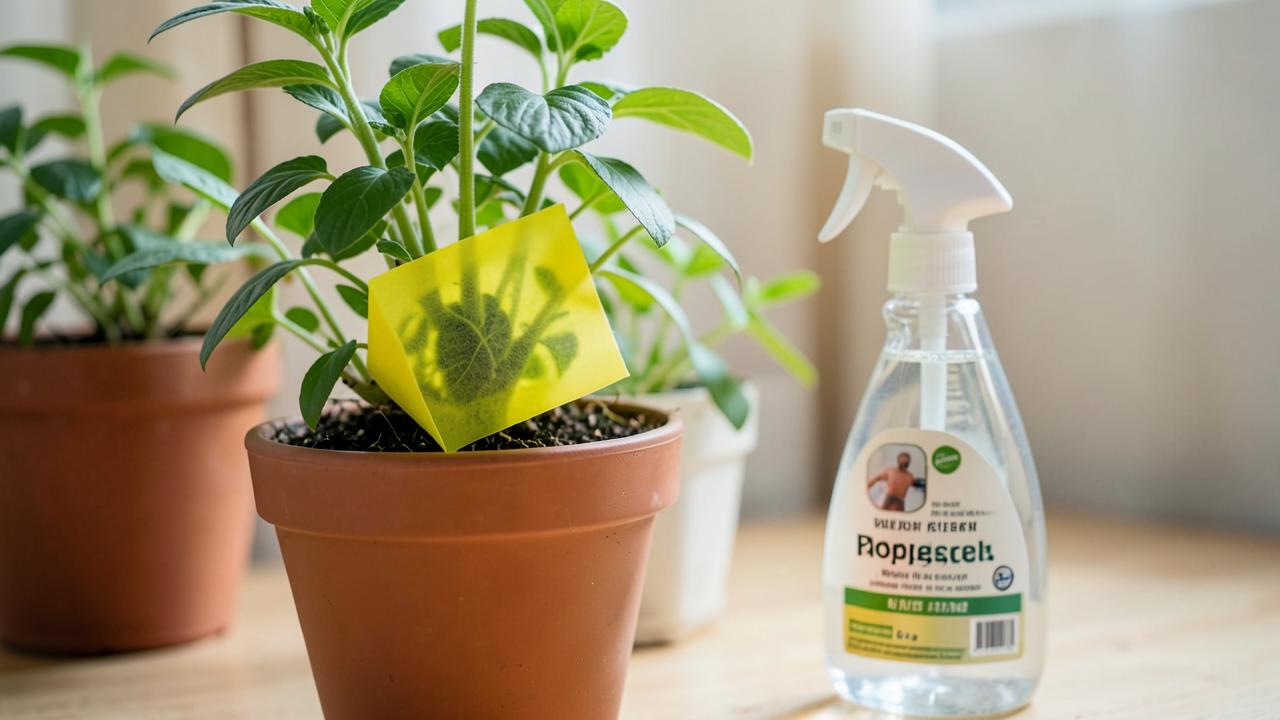
Fungus gnats breed in consistently moist soil and are controlled by letting the top two inches dry out between waterings; spider mites thrive in dry indoor air and are controlled by raising humidity and using a miticide or insecticidal soap; scale insects form waxy shells that repel sprays and usually need manual scraping plus a systemic treatment. Misidentifying which pest you have is the most common reason a treatment fails.
How do you identify which pest you're dealing with?
| Pest | What you'll see | Where to look |
|---|---|---|
| Fungus gnats | Small dark flies hovering near soil, larvae in top layer | Soil surface, especially after watering |
| Spider mites | Fine webbing, stippled/speckled pale leaves | Undersides of leaves, especially in dry rooms |
| Scale | Small brown or tan bumps that don't move, sticky residue | Stems and leaf undersides, along veins |
| Mealybugs | White cottony clusters in leaf joints | Stem joints, new growth |
How do you get rid of fungus gnats?
- Let the top two inches of soil dry out fully between waterings; the larvae can't survive in dry soil.
- Set out yellow sticky traps near the soil surface to catch adults and monitor progress.
- Water with a diluted hydrogen peroxide solution (1 part 3% peroxide to 4 parts water) to kill larvae in the soil without harming roots.
- Add a thin layer of sand or fine gravel on top of the soil to disrupt the gnats' egg-laying.
How do you get rid of spider mites?
Spider mites multiply fastest in warm, dry indoor air, so increasing humidity around affected plants slows them significantly. Rinse the plant thoroughly under a strong stream of water to knock mites off, then treat with insecticidal soap or a horticultural miticide, reapplying every five to seven days for three treatments to catch newly hatched mites. Isolate infested plants immediately since mites spread quickly to neighbors on air currents and touching leaves.
How do you get rid of scale?
Adult scale insects have a waxy shell that blocks most sprays, so start by scraping them off individually with a fingernail or an old toothbrush dipped in rubbing alcohol. Follow with a systemic insecticide or repeated neem oil applications every two weeks for six weeks to catch the mobile crawler stage before it forms new shells. Scale infestations often take a full growing season to fully clear.
Can you prevent these pests from showing up at all?
- Quarantine new plants for two weeks before placing them near your existing collection.
- Avoid consistently soggy soil, which is the single biggest driver of fungus gnat populations.
- Wipe dust off leaves monthly, since dusty, stressed plants attract mites more readily.
- Inspect stems and leaf undersides during your regular watering routine, not just when a plant already looks bad.
What does it cost to treat a typical infestation?
Yellow sticky traps run $5-10 for a pack of a dozen, insecticidal soap or neem oil concentrate costs $10-20 and treats many plants over several applications, and a systemic granular insecticide for scale runs $12-20 per container. Most home infestations are fully treatable for $20-40 in supplies, though a severe scale outbreak spanning multiple plants over a full season can push costs higher if you need repeated rounds of systemic treatment.
Can a heavily infested plant ever be too far gone to save?
A plant with extensive scale coverage on every stem, heavy sooty mold from scale honeydew, or spider mite damage that has already caused most leaves to yellow and drop is a judgment call — sometimes it's more practical to discard it and start fresh than to spend weeks treating a plant that may not fully recover anyway. A reasonable line is whether more than half the plant's leaves are already damaged or dropped; below that threshold, treatment is usually worth it, and above it, the cost in time often outweighs the plant's value.
Is neem oil enough for a serious infestation?
Neem oil works well as a repellent and for mild to moderate infestations, but it doesn't kill eggs, so a single application won't clear an established population. Reapply every seven to ten days for at least a month, and for scale or heavy mite infestations, pair it with manual removal or a targeted systemic product for faster results.
What about mealybugs, and are they treated differently?
Mealybugs form white, cottony clusters in leaf joints and along stems, and like scale they're partly protected by a waxy coating that reduces the effectiveness of contact sprays alone. Dab visible clusters directly with a cotton swab soaked in rubbing alcohol, which dissolves the waxy coating on contact, then follow up with insecticidal soap or neem oil every seven to ten days for three to four weeks to catch newly hatched crawlers. Mealybugs hide in tight leaf joints and under leaf edges, so a thorough inspection with good light matters more than the specific product used.
How do you know if a treatment is actually working?
Track visible pest counts weekly rather than judging by a single inspection, since populations naturally fluctuate as eggs hatch between treatments. A successful treatment shows a clear downward trend over three to four weeks — fewer adult gnats on sticky traps, less new webbing from mites, fewer live scale insects after scraping — even if the number never hits zero immediately. If counts are flat or rising after two full treatment cycles, reconsider the diagnosis, since you may be dealing with a different pest or a reinfestation from an untreated neighboring plant.
Are fungus gnats harmful to plants or just annoying?
Adult fungus gnats mostly just annoy people, but their larvae feed on fine root hairs in the soil, which can stunt growth in seedlings or already-weak plants. On mature, healthy houseplants the damage is usually minor even in a moderate infestation.
Why do spider mites keep coming back after treatment?
Miticides and soaps kill active mites but not eggs, so a single treatment leaves eggs to hatch within a week. Three treatments spaced five to seven days apart break the life cycle; stopping after one treatment is the most common reason mites return.
Can I use dish soap instead of insecticidal soap?
Diluted dish soap (about 1 teaspoon per quart of water) can work in a pinch on soft-bodied pests like mites, but it can also strip leaf cuticles and cause damage on sensitive plants. True insecticidal soap is formulated to minimize that risk and is worth the small cost.
How do you get rid of scale insects specifically?
Scrape visible adults off with a fingernail or alcohol-dipped cotton swab, then apply a systemic insecticide or repeat neem oil applications every two weeks for about six weeks to catch newly hatched crawlers before they form protective shells.
Run the numbers for your own project
- Houseplant Light MatcherWhich houseplants suit this window?
- Plant Watering CalculatorHow often and how much should I water this plant?
Keep reading
- How Much Paint Do You Actually Need for a Room?The tin says 400 square feet. Your wall says otherwise. Here is the arithmetic that actually holds up.
- DIY or Hire a Pro? A Decision Framework That Is Not About MoneyThe labour saving is real. So is the cost of a job done twice — and of tools you use once.
- Storage for Small Rooms That Does Not Make Them SmallerSmall rooms do not need more storage. They need storage that stops interrupting the eye.