Fence Repair and Post Replacement: Fixing the Part That Actually Fails
By Jim Vernon · 4 min read · Last updated
A leaning fence is almost never a panel problem. It's a post problem, and it's fixable one post at a time.
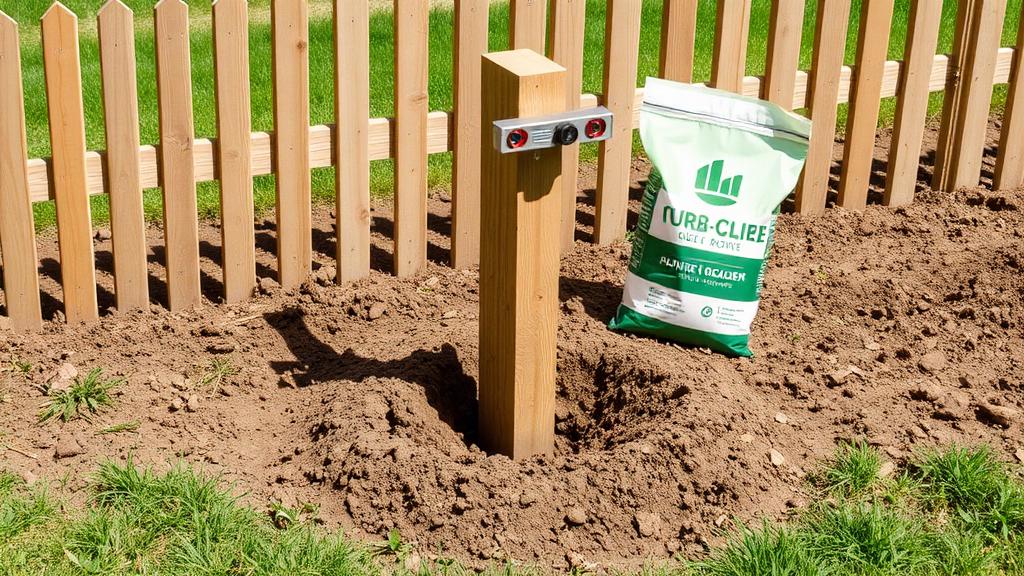
Fence panels can look fine for decades while the posts holding them up rot at the point where wood meets soil — the spot that stays damp longest and gets the least airflow. Repairing a fence usually means addressing individual failed posts, not replacing the whole run.
Diagnosing a leaning fence
- Push gently on the top of the post. If it moves independently of the panels around it, the post itself has failed at grade.
- Dig a small inspection hole 6-8 inches down next to the post. Soft, dark, or crumbly wood confirms rot.
- Check whether multiple adjacent posts lean the same direction — that pattern usually means a wind event, not individual rot, and points to a different fix.
Replacing a single post without rebuilding the fence
- Detach the panels or rails from the failed post, supporting them temporarily if the neighboring posts are sound.
- Remove the old post and concrete footing — a post-hole digger or reciprocating saw with a demolition blade helps break up old concrete.
- Dig the new hole to the same depth as the surrounding posts, roughly one-third of the post's total length.
- Add a few inches of gravel at the bottom for drainage before setting the new post.
- Set the post plumb, brace it temporarily, and pour concrete, sloping the top away from the post so water sheds off.
- Reattach panels and rails once the concrete has cured — typically 24-48 hours before load, longer for full cure.
| Post material | Typical in-ground lifespan | Common failure point |
|---|---|---|
| Untreated wood | 5-10 years | Rot at grade line |
| Pressure-treated wood | 15-20 years | Rot at grade line, later than untreated |
| Vinyl-sleeved wood | 20-25 years | Sleeve cracking, water trapped inside |
| Steel (galvanized) | 25+ years | Rust at the soil line if galvanizing is scratched |
When it's a rebuild, not a repair
If more than roughly a third of the posts in a run have failed, or panels themselves are also splitting and warping, a full rebuild is usually more cost-effective than a series of one-off repairs — labor to access and replace posts individually adds up faster than a coordinated rebuild.
Can I fix a leaning post without digging it out?
Sometimes, with a repair bracket or by adding fresh concrete around a post that's simply loosened rather than rotted. A rotted post below grade needs to come out.
How long does new concrete need to cure before I hang the gate?
Wait at least 48-72 hours before hanging gates or applying lateral load; concrete keeps gaining strength for weeks but is functional by then.
A worked example: repair versus rebuild math
A 100-foot fence run with posts every 8 feet has about 13 posts. If 3 have failed, replacing those individually is usually the cheaper path. If 6-7 have failed -- roughly half -- the per-post labor to access, dig out, and reset each one often adds up to close to the cost of a coordinated rebuild that reuses sound framing where possible, which is the point where a full rebuild starts making more sense.
Common mistakes
- Setting a new post in the same rotted-out hole without adding fresh gravel or drainage, inviting the same failure.
- Skipping the plumb check before pouring concrete, leaving a post permanently out of alignment.
- Assuming a uniform lean across many posts means individual rot, when it usually means storm or soil movement.
- Not bracing panels temporarily during a post swap, risking a section falling before the new post cures.
Should new posts match the material of the old fence?
Not necessarily -- swapping to pressure-treated or steel posts on an otherwise wood fence is common and extends the life of the weakest point without replacing the whole structure.
Concrete versus gravel footings
Concrete footings hold a post rigidly and resist wind load well, but a fully encased post base can trap moisture against the wood if the concrete isn't crowned to shed water. A gravel-based footing, where the post sits on a bed of compacted gravel with concrete only around the sides, drains better and is increasingly common for wood posts specifically to reduce rot at the base.
Gate posts need extra reinforcement
- Gate posts carry cantilevered load every time the gate swings, so they should be set deeper and in a larger-diameter footing than line posts.
- Consider a larger post size (e.g., 6x6 instead of 4x4) specifically at gate locations.
- Check gate hardware and hinges annually, since a sagging gate often stresses the post before the post itself visibly fails.
Is it worth using metal posts just for a fence's weak points, like gate posts?
Yes -- mixing in steel or reinforced posts at gates and corners, where load concentrates, while keeping wood posts along straight runs is a common and cost-effective compromise.
How deep should a fence post hole be?
Roughly one-third of the post's total above-ground height, with a minimum of about 24 inches in most soils, deeper in regions with significant frost depth.
Run the numbers for your own project
- Deck and Fence Material CalculatorHow much timber does my deck or fence need?
- Concrete CalculatorHow much concrete do I need?
Keep reading
- How Much Paint Do You Actually Need for a Room?The tin says 400 square feet. Your wall says otherwise. Here is the arithmetic that actually holds up.
- Choosing a Fence: Material, Height, and the Rules Nobody ReadsA fence is a twenty-year decision made in an afternoon. Here is what actually differs between the options.
- Flooring Underlayment: What It Does and When You Can Skip ItUnderlayment is the layer nobody sees and the one most likely to cause a callback if it is skipped or mismatched.