Fence Post Setting by Soil Type: Depth and Concrete
By Jim Vernon · 5 min read · Last updated
A post set 24 inches deep in sandy soil can be less stable than one set 30 inches deep in clay — soil type changes the math, not just the region's frost line.
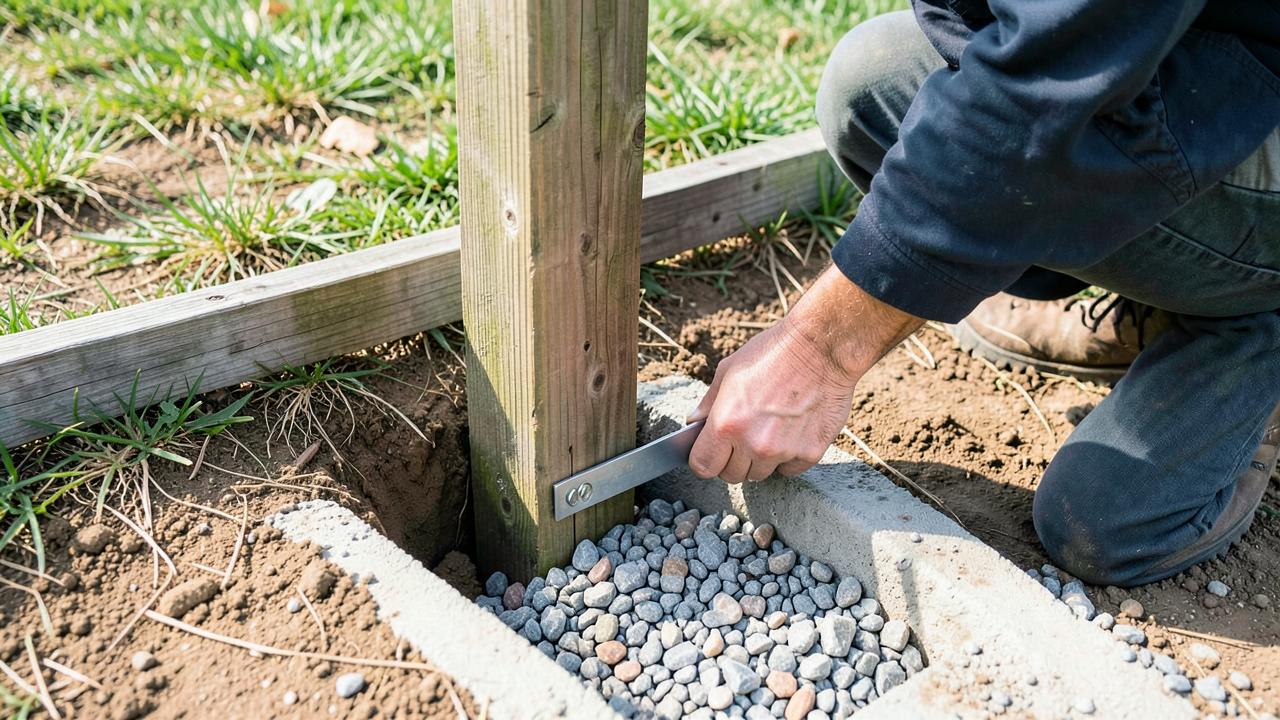
Fence post depth should generally be one-third to one-half of the post's above-ground height, with a practical minimum around 24 inches for a standard 6-foot fence, but the right depth also depends on soil type and frost line: sandy soil needs slightly deeper posts because it offers less lateral resistance, while clay soil holds posts well when dry but heaves them upward during freeze-thaw cycles if the post isn't set below the frost line.
How does post depth change by soil type and fence height?
| Fence height | Sandy/loose soil depth | Clay/loam soil depth | Rocky soil depth |
|---|---|---|---|
| 4 ft | 24 in. | 20-24 in. | 18-24 in. (or set in surface footing) |
| 6 ft | 30-36 in. | 24-30 in. | 24 in. min., often with concrete collar |
| 8 ft (privacy) | 36-42 in. | 30-36 in. | 30-36 in., engineered footing often needed |
Should you use concrete or gravel to set the post?
Concrete provides more rigid holding power and is the standard choice for taller fences (6 feet and up) and windy exposed sites, but it fully encases the post's base, which traps moisture against the wood and can accelerate rot at the concrete-to-post interface after 10-15 years. Gravel (or a gravel base under a shorter concrete collar) allows better drainage around the post base and is often preferred for shorter fences or in regions with well-draining soil, trading some rigidity for a longer post lifespan.
Why does frost heave matter more than raw depth in cold climates?
In climates with a frost line deeper than about 30-36 inches, setting a post above that line lets seasonal freeze-thaw cycles grip the concrete or compacted soil around the post and physically lift it a fraction of an inch each winter — over several years this visibly tilts or heaves fence lines, particularly noticeable at corner and gate posts that carry more load. The fix is setting the post base below the local frost line and using a gravel base under the concrete (not concrete all the way to the bottom) so any minor ground movement has somewhere to drain rather than gripping the full post surface.
- Northern states (frost line 36-48+ in.): posts must extend below frost depth, typically 36-42 inches for a standard fence.
- Mid-latitude states (frost line 12-36 in.): posts commonly set 24-30 inches, below frost line where practical.
- Southern/frost-free regions (frost line under 12 in. or none): depth is driven by lateral wind load and soil type rather than frost, typically 24-30 inches.
What hole diameter and concrete volume does a typical post need?
A general rule is a hole diameter three times the post's width — a 4x4 post gets a roughly 12-inch diameter hole, a 6x6 post gets an 18-inch hole. For a 4x4 post set 30 inches deep in a 12-inch hole, that's about 2 cubic feet of hole volume, of which the post itself displaces a small fraction, meaning roughly 1.5-2 bags of 50 lb quick-set concrete per post is typical, though gate and corner posts often get an extra half-bag for added mass.
What mistakes cause posts to loosen within a few years?
- Digging a straight-sided hole rather than one slightly wider at the bottom (a bell shape), which gives concrete or compacted soil more resistance to being pulled straight up by frost heave.
- Backfilling with the same dirt dug out of the hole instead of gravel or concrete, especially in loose or sandy soil where native soil alone won't hold the post rigidly.
- Failing to crown the concrete slightly above grade sloping away from the post, which lets water pool at the post base and rot the wood from the top of the footing.
- Not bracing posts plumb while concrete cures (typically 24-48 hours before removing braces, though full cure takes about a week) — a post that shifts during cure never seats correctly.
- Setting corner and gate posts to the same depth as line posts, when these load-bearing posts benefit from an extra 4-6 inches of depth or a wider footing.
How does post material change the depth and setting method needed?
Wood posts need the most attention to drainage at the base since standing moisture around buried wood accelerates rot regardless of how well the concrete itself holds; a gravel base under the post tip, rather than concrete directly under the wood, lets water drain away from the end grain. Metal posts (steel T-posts, galvanized pipe, or aluminum) don't rot but can corrode at the soil line over decades in wet or acidic soil, so a concrete collar with a slight crown still matters for their long-term appearance and stability. Vinyl and composite fence posts are typically hollow and rely on an internal metal or reinforced insert plus a concrete footing sized to the manufacturer's spec — using less concrete than specified is a common cause of vinyl posts leaning within the first few years, since the material itself has no inherent rigidity below grade.
What is the real cost difference between setting posts with concrete versus gravel?
A 50 lb bag of concrete mix runs $5-7, and a typical post takes 1.5-2 bags, putting material cost per post at roughly $8-14. Gravel backfill costs less, often $3-6 in material, but takes more careful tamping in lifts to match that holding strength. For a 150-foot fence with posts every 8 feet (about 19 posts), the total cost difference between concrete and gravel is typically only $150-250 — small relative to the stability gain on taller fences, which is why concrete remains the default above 4 feet.
Is gravel-only (no concrete) ever strong enough for a fence post?
For lightweight fences under 4 feet in stable, well-draining soil, compacted gravel backfill alone can hold adequately and offers the benefit of easy post replacement later. For 6-foot or taller fences, gate posts, or windy sites, concrete is the more reliable choice.
How deep is the frost line in my area?
Frost line depth is typically published by local building departments and varies widely — from near 0 inches in the Gulf Coast to 48 inches or more in parts of the northern Midwest and New England. Check with your local permit office, since it's often required information for fence and deck footing permits anyway.
Can a leaning fence post be fixed without resetting it completely?
Sometimes — for a post that has loosened but not rotted, excavating around the base, replumbing it, and repouring concrete can work. If the post is rotted at the base or the original footing has cracked apart, full replacement is more reliable than patching around a compromised footing.
Run the numbers for your own project
- Garden Fence and Trellis CalculatorHow many posts and rails does my fence or trellis need?
- Deck and Fence Material CalculatorHow much timber does my deck or fence need?
- Concrete CalculatorHow much concrete do I need?
Keep reading
- How Much Paint Do You Actually Need for a Room?The tin says 400 square feet. Your wall says otherwise. Here is the arithmetic that actually holds up.
- Starting Your First Vegetable Garden Without Wasting a SeasonMost first gardens fail for reasons that have nothing to do with a green thumb. Here are the five that matter.
- DIY or Hire a Pro? A Decision Framework That Is Not About MoneyThe labour saving is real. So is the cost of a job done twice — and of tools you use once.