Exterior Caulk and Sealant Selection: Which Type Goes Where
By Jim Vernon · 4 min read · Last updated
Painter's caulk in a moving expansion joint fails within a year — matching sealant chemistry to joint movement is what makes a seal last.
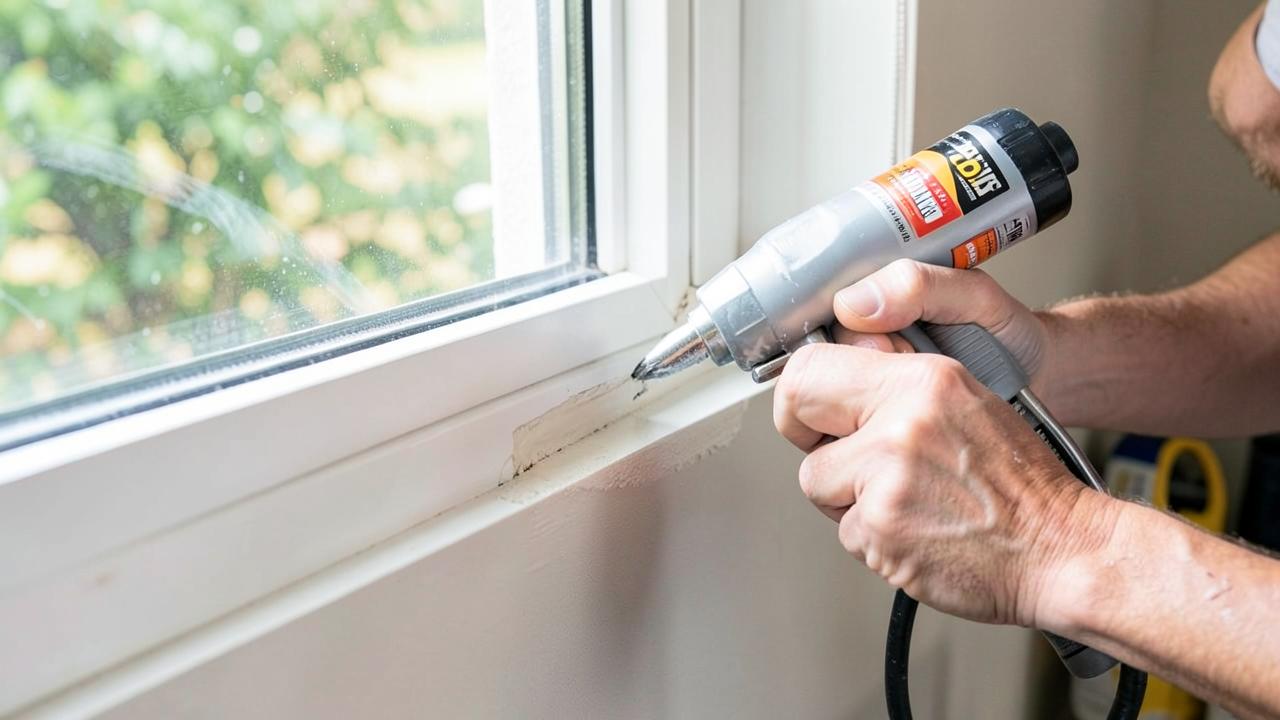
Exterior caulk fails most often not because it was applied badly but because the wrong chemistry was used for the joint's movement and substrate: acrylic latex caulk works well on stationary trim joints but cracks in wide, moving gaps; silicone bonds well to non-porous surfaces like metal and glass but won't take paint; polyurethane and hybrid sealants handle high-movement joints and can be painted, at a higher cost per tube.
Which sealant type fits which exterior application?
| Sealant type | Best use | Movement capability | Paintable | Typical life |
|---|---|---|---|---|
| Acrylic latex / painter's caulk | Trim-to-siding, stationary gaps under 1/4 in. | Low (±5-7%) | Yes | 3-8 years |
| Siliconized acrylic | Trim, window casing, general gaps | Low-moderate (±10%) | Yes, after full cure | 5-10 years |
| Pure silicone | Glass, metal flashing, non-porous joints | High (±25%) | No | 15-20 years |
| Polyurethane | Expansion joints, driveway/patio cracks, siding-to-foundation | High (±25-35%) | Yes | 10-20 years |
| Butyl rubber | Flashing laps, gutter seams, below-grade | Moderate (±10-15%) | Poor | 8-15 years |
| Elastomeric masonry sealant | Stucco cracks, brick-to-trim joints | Moderate-high (±25%) | Yes | 10-15 years |
Why does joint movement matter more than joint location?
A joint where two materials with different expansion rates meet — such as vinyl siding against a wood window frame, or a concrete slab against a foundation wall — moves seasonally as temperature swings shrink and expand each material differently. A gap that moves more than about 10% of its width needs a sealant rated for that movement class or it will tear along one edge within a year or two, even if the application looked perfect on day one.
How should a joint be prepped before caulking?
- Remove all old caulk residue with a scraper or caulk-softening solvent — new sealant will not bond well over old sealant film.
- Clean the joint with a stiff brush or compressed air to remove dust, then let it dry fully if washed.
- Install backer rod in any gap wider than about 1/4 inch so the sealant forms a proper hourglass shape rather than bridging the full depth, which causes premature failure.
- Apply painter's tape to both edges for a clean line, then tool the bead with a wet finger or tool immediately after application.
- Remove tape before the sealant skins over, typically within 5-10 minutes, to avoid pulling the bead.
What's the actual cost difference between sealant grades?
- Economy acrylic latex: $3-5 per 10 oz. tube, fine for interior trim, marginal outdoors.
- Quality siliconized acrylic or paintable polyurethane hybrid: $6-10 per tube, the reasonable default for most exterior trim and siding joints.
- Premium polyurethane (e.g., for expansion joints and driveway cracks): $8-14 per tube, worth it for high-movement joints.
- Pure silicone: $5-9 per tube, but limited to non-paintable applications like window glazing and metal flashing seams.
How do you know when it's time to recaulk?
Inspect trim, window, and siding joints annually, typically in spring. Recaulk when you see cracking, chalking, gaps pulling away from one side, or any spot where you can see daylight or insert a fingernail into a gap. Waiting until a joint fails completely lets water intrude behind siding or trim for a full season before it's caught, which costs far more to repair than the $10 tube of sealant would have.
What application mistakes cause premature sealant failure?
- Filling a joint completely without backer rod, creating three-sided adhesion that tears the bead apart as the joint moves, instead of the two-sided adhesion a backer rod allows.
- Applying sealant to a damp or dusty surface, which prevents proper bonding even when the product itself is correct for the joint.
- Tooling the bead with too much water or soapy solution, which can weaken surface cure on some acrylic and hybrid formulas.
- Using an old, partially cured tube — sealant that has sat opened or past its shelf life skins over unevenly and never reaches full elasticity.
- Caulking a gap wider than the product's rated movement capability instead of switching to backer rod plus a wider-format sealant or foam joint filler.
How does sealant choice differ for masonry versus wood or vinyl?
Masonry and stucco cracks move less than wood-to-siding joints but are more porous, so a sealant needs good adhesion to a chalky, absorbent surface — elastomeric masonry sealants and some polyurethanes are formulated for that bond, while ordinary acrylic latex often fails within a season on raw masonry. Wood joints need a sealant that tolerates the wood's seasonal swelling and shrinking with humidity, which favors siliconized acrylic or paintable hybrids that stay flexible after cure. Vinyl-to-trim joints see the most thermal movement of the three, since vinyl itself expands and contracts significantly with temperature, making a high-movement sealant like polyurethane or a quality hybrid the more durable choice over standard latex caulk.
Can I caulk over old paint without removing it?
Yes, as long as the paint is sound and not peeling. Sealant bonds to intact paint fine; the problem is bonding to loose or flaking paint, which will pull away from the substrate and take the new caulk with it.
Is silicone caulk ever a mistake outdoors?
Yes, whenever the joint needs future painting — silicone repels paint indefinitely, even after full cure, so any future touch-up will look patchy or peel. Use a paintable hybrid or polyurethane instead on any joint near paintable trim.
Why does caulk crack in the same spot every year even after redoing it?
Usually because backer rod is missing or the sealant is the wrong movement class for that joint. Recaulking with the same product in the same way just delays the same failure; diagnosing the joint's actual movement and switching sealant chemistry fixes the recurring problem.
Run the numbers for your own project
- Project Cost EstimatorWhat will this project cost me?
- Home Maintenance ScheduleWhat should I be doing to my home this month?
Keep reading
- How Much Paint Do You Actually Need for a Room?The tin says 400 square feet. Your wall says otherwise. Here is the arithmetic that actually holds up.
- DIY or Hire a Pro? A Decision Framework That Is Not About MoneyThe labour saving is real. So is the cost of a job done twice — and of tools you use once.
- Storage for Small Rooms That Does Not Make Them SmallerSmall rooms do not need more storage. They need storage that stops interrupting the eye.