Why Are My Houseplant's Leaves Turning Yellow, and What Fixes It?
By Jim Vernon · 5 min read · Last updated
Yellow leaves are a symptom, not a diagnosis — the pattern of where and how they yellow tells you which of five causes you're dealing with.
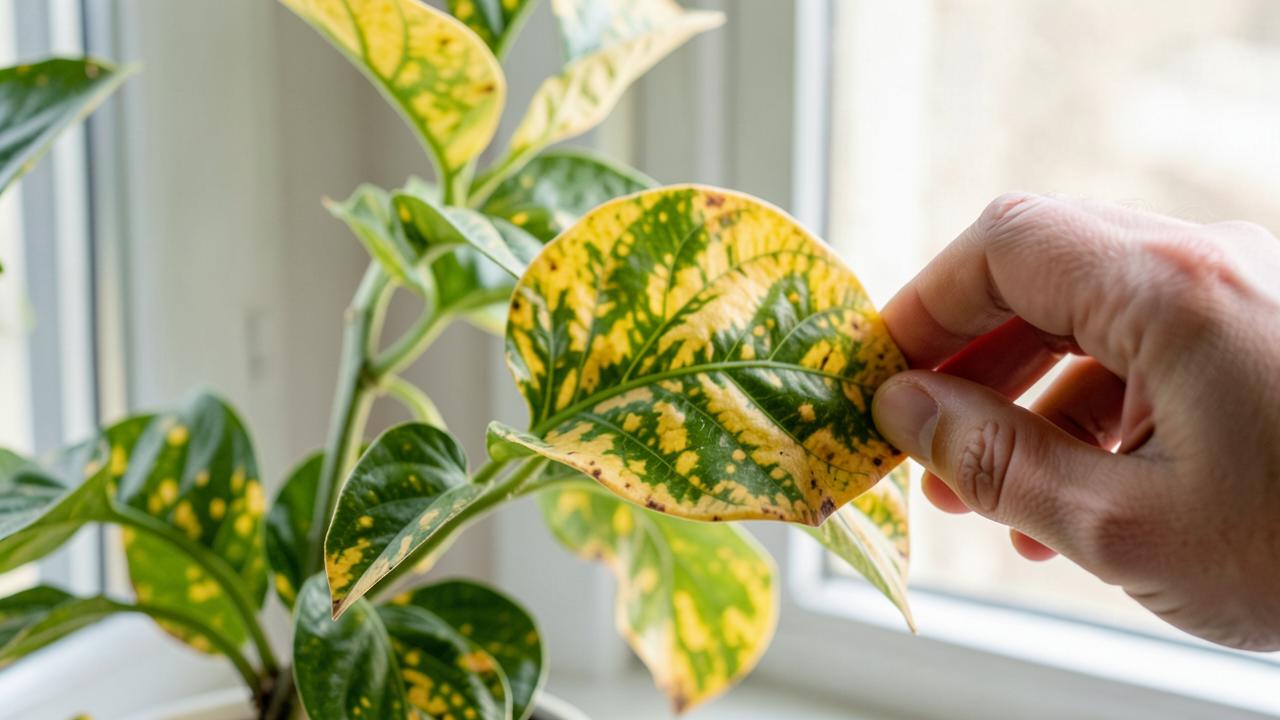
Yellow leaves most often mean overwatering, since soggy soil suffocates roots and they stop delivering water and nutrients, which shows up first as yellowing. But light stress, nutrient deficiency, natural aging, and pests each cause yellowing too, and the location and pattern of the yellow leaves is the fastest way to tell which one you're facing.
How do you tell overwatering from underwatering?
Overwatered leaves usually turn yellow while still feeling soft or mushy, often starting with lower and inner leaves, and the soil feels wet days after the last watering. Underwatered leaves turn yellow or brown while feeling crispy and dry, and the soil pulls away from the pot's edges. Check soil moisture two inches down before assuming either cause — guessing from the leaves alone is unreliable.
| Pattern | Likely cause | What to check |
|---|---|---|
| Lower leaves yellow first, soil wet | Overwatering / root rot | Soil moisture, drainage hole, roots for brown mush |
| Yellow with green veins remaining | Nutrient deficiency (iron or nitrogen) | Fertilizing schedule, water pH |
| Older, innermost leaf yellows and drops occasionally | Normal leaf aging | Overall growth — new leaves should still be healthy |
| Pale, bleached yellow on sun-facing side | Too much direct light | Distance from window, time of day light hits leaves |
| Yellow with fine speckling or webbing | Spider mites | Undersides of leaves with a hand lens |
Could it be a nutrient problem instead?
Nitrogen deficiency shows as uniform pale yellowing that starts on older leaves, since the plant moves nitrogen from old growth to new. Iron deficiency does the opposite — new leaves yellow first while veins stay green, common in plants watered with hard tap water that raises soil pH. A balanced liquid fertilizer at quarter to half strength every four weeks during the growing season prevents most of these deficiencies before they start.
When is yellowing actually normal?
Every houseplant sheds its oldest leaves periodically as part of normal growth, typically one or two leaves every few months on a healthy plant. This is only a problem if it's happening rapidly, to multiple leaves at once, or to leaves other than the oldest ones on the plant. A healthy plant putting out new growth while shedding an occasional old leaf doesn't need any intervention.
What's the fix once you've found the cause?
- Overwatering: let the soil dry further between waterings and check the pot has a working drainage hole.
- Underwatering: water more thoroughly until it runs from the drainage hole, then resume normal checks.
- Nutrient deficiency: start a diluted balanced fertilizer on a regular schedule during spring through fall.
- Too much light: move the plant back from the window or add a sheer curtain to diffuse direct sun.
- Pests: isolate the plant and treat as described for the specific pest before it spreads to neighbors.
Could low light be the real cause instead of water?
A plant surviving on far less light than it needs often yellows its lower, more shaded leaves first, sacrificing them to conserve energy for the leaves still receiving usable light. This pattern looks similar to overwatering, which is why checking soil moisture matters before assuming light is the culprit. Most foliage houseplants need at least 200-500 foot-candles of indirect light, roughly what you'd measure a few feet back from an unobstructed east or north window; anything dimmer for months on end will eventually show up as gradual yellowing and slowed growth even with correct watering.
How long does it take to see improvement after a fix?
Existing yellow leaves never turn green again regardless of how well you correct the cause, but new growth should show the improvement within three to six weeks for most fixes — adjusted watering, corrected light, or a resumed fertilizing schedule. Root rot is the exception, since it can take a full growing season for a plant to rebuild a root system after trimming away damaged roots, and some yellowing may continue briefly even after the underlying cause is addressed while the plant catches up.
Should you remove yellow leaves once you spot them?
Yes — a yellow leaf won't turn green again, and it's using energy the plant could put into new growth. Snip it at the base with clean scissors once you've identified the cause and started correcting it, rather than waiting for it to drop on its own.
Can too much fertilizer cause yellow leaves?
Yes. Fertilizer buildup in the soil, sometimes visible as a white crust on the surface, burns roots and causes yellowing with brown, crispy leaf edges. Flush the pot with plain water until it runs freely from the drainage hole several times, then resume fertilizing at a lighter dose.
Why is only one leaf turning yellow while the rest look fine?
A single yellowing leaf on an otherwise healthy plant is usually just natural aging, especially if it's one of the oldest, lowest leaves. It's only a concern if multiple leaves start yellowing in the following weeks.
Does tap water cause yellow leaves?
In areas with hard, alkaline tap water, minerals can build up and shift soil pH, blocking iron uptake and causing new-leaf yellowing over months. Switching to filtered or rainwater periodically, or flushing the pot occasionally, usually resolves it.
How fast does root rot cause yellowing after it starts?
Once roots begin rotting, visible yellowing can appear within one to two weeks, since damaged roots quickly lose the ability to move water into the plant. By the time several leaves have yellowed from root rot, a meaningful portion of the root system is usually already affected.
Run the numbers for your own project
- Plant Watering CalculatorHow often and how much should I water this plant?
- Houseplant Light MatcherWhich houseplants suit this window?
Keep reading
- How Much Paint Do You Actually Need for a Room?The tin says 400 square feet. Your wall says otherwise. Here is the arithmetic that actually holds up.
- DIY or Hire a Pro? A Decision Framework That Is Not About MoneyThe labour saving is real. So is the cost of a job done twice — and of tools you use once.
- Storage for Small Rooms That Does Not Make Them SmallerSmall rooms do not need more storage. They need storage that stops interrupting the eye.