Deck Stain vs. Sealer: Which Finish Protects Wood
By Jim Vernon · 5 min read · Last updated
A clear sealer needs reapplication almost every year in full sun; a solid stain can last 4-6 years — the trade-off is how much wood grain you're willing to hide.
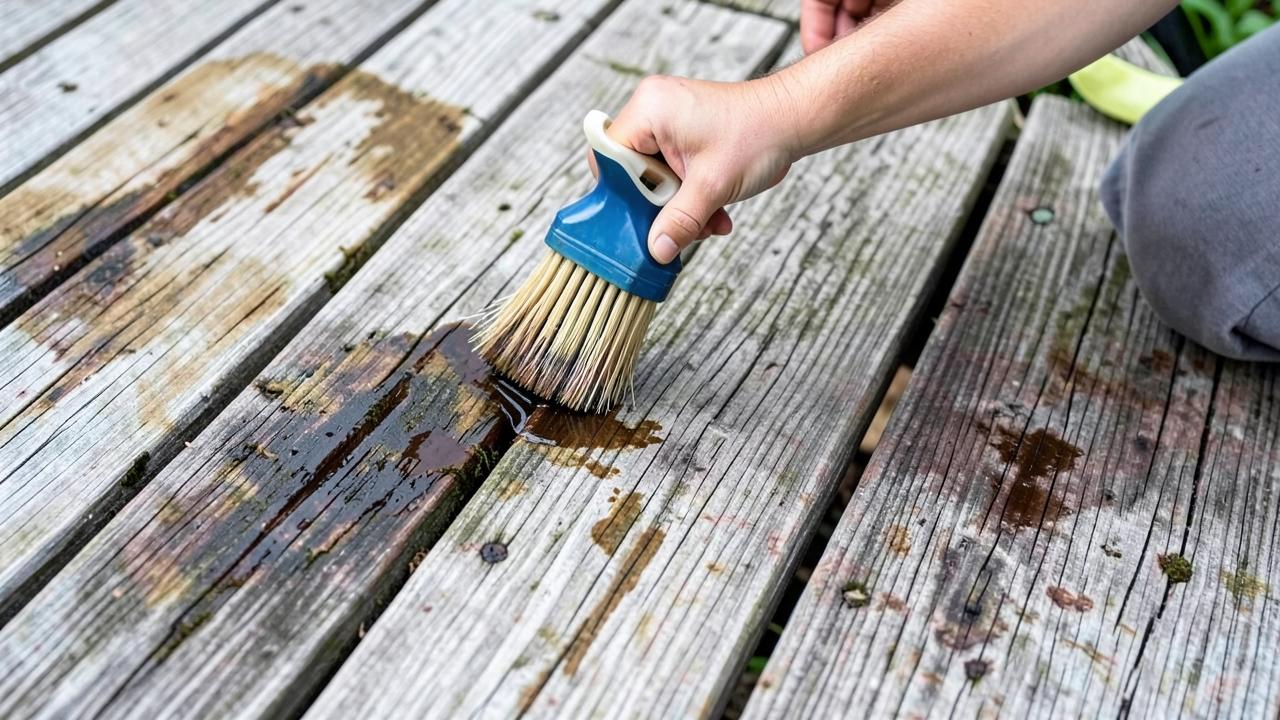
Clear sealer preserves the most natural wood look but has the shortest lifespan, typically 1-2 years before it needs renewal; semi-transparent stain adds color while still showing grain and lasts 2-4 years; solid color stain lasts longest, 4-6 years, because its higher pigment load blocks more UV, but it hides the wood grain almost entirely, closer to a thin paint than a stain.
How do the finish types compare on protection and appearance?
| Finish type | Grain visibility | Typical lifespan | Reapplication cost (300 sq ft) | Best for |
|---|---|---|---|---|
| Clear sealer/water repellent | Full | 1-2 years | $60-120 | New, high-quality wood you want to show off |
| Toner/light stain | Full, slight color | 1-3 years | $70-140 | Enhancing natural color, minimal hiding |
| Semi-transparent stain | Partial | 2-4 years | $90-180 | Weathered wood with decent grain, most common choice |
| Solid color stain | None to minimal | 4-6 years | $120-220 | Older or mismatched-color lumber, longest low-maintenance option |
| Paint (with primer) | None | 6-10 years | $150-300 | Only on smooth, fully dried lumber; not for high-traffic decking |
Why does UV exposure change which finish makes sense?
A deck in full southern or western sun exposure degrades any clear or lightly tinted finish much faster than one in partial shade, because UV breaks down the finish's resins directly, not just the wood beneath. On a full-sun deck, semi-transparent or solid stain is usually the more practical choice even if a homeowner would prefer the look of clear sealer, simply because clear finishes there may need annual reapplication rather than the 1-2 year average.
How do you prep a deck properly before staining?
- Clean the deck with a deck cleaner or oxygen bleach solution to remove dirt, mildew, and old finish residue — pressure washing alone can miss embedded mildew and can also gouge soft wood if held too close.
- Let the deck dry fully, typically 48-72 hours of warm, dry weather, before applying any new finish — trapped moisture causes peeling within months.
- Sand any rough or splintered boards and re-set popped nails or screws.
- Test the wood's readiness with a water-bead test: sprinkle water on the surface — if it beads up, the wood isn't dry enough or old sealer is still present; if it soaks in within a few minutes, it's ready.
- Apply finish in thin, even coats following the grain, working in the shade or during cooler parts of the day to avoid the product drying too fast and lapping unevenly.
What about oil-based versus water-based formulas?
- Oil-based stains penetrate deeper into wood fiber and often look richer initially, but many regions now restrict high-VOC oil formulas, and they can support mildew growth if not fully cured.
- Water-based stains dry faster (recoat in 2-4 hours versus 24 hours for oil), clean up with soap and water, and current formulations perform close to oil-based in most durability testing.
- Mixing chemistries between coats (oil under water-based, or vice versa) can cause adhesion failure — stick with one manufacturer's system for the full application.
How often should a deck actually be inspected for refinishing needs?
Check annually in spring by doing the water-bead test in a few spots — if water soaks in within 5-10 minutes rather than beading, the finish has worn through and it's time to clean and reapply, regardless of how many years have technically passed since the last coat. Waiting until wood visibly grays or splinters means UV and moisture damage has already begun, which shortens the life of the next finish applied over it.
Does the type of decking wood change which finish works best?
Pressure-treated pine, the most common decking lumber, accepts stain readily but needs to dry for several weeks to months after installation before staining, since factory treatment leaves the wood too wet for proper absorption immediately. Cedar and redwood have natural oils and tannins that can bleed through light-colored or clear finishes, sometimes causing uneven blotching in the first year even with good prep; a stain-blocking primer or a tannin-resistant product helps on these species. Exotic hardwoods like ipe and cumaru are extremely dense and often require an oil specifically formulated for hardwoods, since standard stains struggle to penetrate the tight grain and end up sitting on the surface, where they peel rather than wear evenly.
What does professional deck refinishing typically cost?
Professional cleaning, sanding, and staining of an average 300-400 square-foot deck runs $600-1,500 for semi-transparent or solid stain, including prep, versus $60-220 in materials for a confident DIYer's weekend project. Full strip-and-refinish jobs, needed when switching finish types or recovering a badly neglected deck, run $3-6 per square foot professionally, or $900-2,400 for that same 300-400 square-foot deck, reflecting the extra labor of mechanical or chemical stripping before any new product goes down.
Is solid stain basically the same as paint?
Nearly, in appearance and hiding power, but quality solid deck stains remain more flexible and breathable than paint, which matters on horizontal decking that expands and contracts with moisture and foot traffic. True paint is not recommended for deck boards because it tends to crack and peel under foot traffic.
Can I apply a new coat without stripping the old one first?
Only if the existing finish is the same type and still adhering well with no peeling. If the old finish is flaking or a different chemistry, it needs to be stripped or sanded off, or the new coat will fail to bond and peel within a season.
Why does my stain look blotchy right after application?
Blotching usually comes from uneven absorption — often because part of the deck dried faster in sun while another area stayed shaded and wetter, or because a section wasn't cleaned as thoroughly. Working in smaller sections and maintaining a wet edge reduces this significantly.
Run the numbers for your own project
- Deck and Fence Material CalculatorHow much timber does my deck or fence need?
- Project Cost EstimatorWhat will this project cost me?
- Home Maintenance ScheduleWhat should I be doing to my home this month?
Keep reading
- How Much Paint Do You Actually Need for a Room?The tin says 400 square feet. Your wall says otherwise. Here is the arithmetic that actually holds up.
- DIY or Hire a Pro? A Decision Framework That Is Not About MoneyThe labour saving is real. So is the cost of a job done twice — and of tools you use once.
- Storage for Small Rooms That Does Not Make Them SmallerSmall rooms do not need more storage. They need storage that stops interrupting the eye.