Deck Maintenance and Refinishing: The Annual Routine That Doubles Its Life
By Jim Vernon · 5 min read · Last updated
Decks don't fail from age so much as from skipped maintenance years compounding on each other.
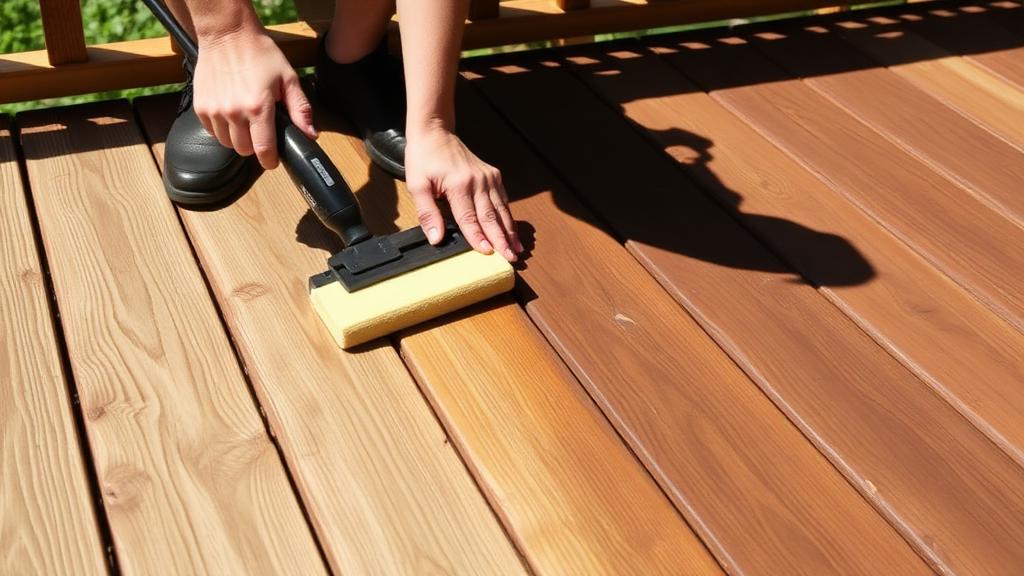
A wood deck that's cleaned and resealed on schedule can outlast one that's ignored by a factor of two or more, for the same wood and the same weather. The maintenance itself is not complicated; the failure mode is almost always skipping a year and letting water get past the finish into the wood.
The annual routine
- Sweep and clear debris from between boards, where trapped leaves hold moisture against the wood.
- Wash with a deck cleaner or diluted oxygen bleach solution, scrubbing with a stiff brush, not just rinsing.
- Check for popped nails, loose screws, and any soft or spongy boards.
- Sand any rough or splintering areas lightly before refinishing.
- Apply water sealant or stain once the deck is fully dry — 24-48 hours after washing, longer in humid weather.
How often to refinish
| Deck material | Refinish interval | Signal it's due |
|---|---|---|
| Pressure-treated pine | 1-2 years | Water no longer beads on the surface |
| Cedar or redwood | 2-3 years | Greying, dry-looking wood |
| Composite | N/A — cleaning only | No refinishing needed; just annual wash |
| Hardwood (ipe, tigerwood) | 1-3 years with oil | Surface greys unevenly |
When to replace instead of refinish
- A screwdriver sinks easily into a board with light pressure — the wood is rotting from within.
- Boards feel spongy or bounce underfoot in specific spots.
- Structural posts or joists show soft wood or insect damage, which is a safety issue, not a cosmetic one.
- Fasteners are rusted through or pulling free from surrounding wood that's otherwise sound.
Spot-replacing individual boards is normal and doesn't mean the whole deck needs to go — treat it the way you'd treat a roof shingle repair. It's only when the substructure (joists, beams, ledger board) is compromised that a full rebuild is the safer call.
Stain versus sealant versus paint
Clear sealant shows the most wood grain but needs the most frequent reapplication. Semi-transparent stain adds some color while still showing grain and lasts a bit longer. Solid stain and paint hide the wood entirely, last longest, but hide early rot symptoms too, which is worth weighing before choosing one for an older deck.
Can I refinish a deck the same day I wash it?
No. Wood needs to dry fully first, typically 24-48 hours, longer in humid or cool weather. Sealing over damp wood traps moisture underneath.
Is pressure washing safe for decks?
At low pressure with a wide fan tip, yes. High pressure or a narrow tip held too close can gouge softwood and force water into the grain, which is worse than not washing at all.
How long does composite decking last without refinishing?
Most composite decking is rated 25-30 years and never needs staining or sealing, though an annual soap-and-water wash keeps it from staining and reduces mildew.
A worked example: the cost of skipping a year
Sealing a mid-size deck typically costs a modest amount in materials and a weekend of labor. Skip that for two years running on a pressure-treated deck and boards that would have lasted 12-15 years with regular sealing can start showing soft spots by year 8 or 9 -- turning a repeat $150-200 material cost into a partial rebuild costing many times more.
Common mistakes
- Sealing over a deck that wasn't fully dry, trapping moisture under the new coat.
- Using an interior stain or the wrong sheen product not rated for UV and weather exposure.
- Skipping the sand step on rough, splintering boards, so the new finish doesn't bond evenly.
- Ignoring the substructure -- joists and ledger board -- because it's out of sight, until a board visibly sags.
How much does a full deck refinish typically cost professionally?
For an average 300-400 sq ft deck, professional cleaning and refinishing usually runs $500-$1,200 depending on the product used and whether board repair is needed first.
Is oil-based or water-based sealant better?
Water-based sealants dry faster, clean up easier, and have largely closed the durability gap with oil-based products, which still penetrate slightly deeper into dense hardwoods like ipe.
Seasonal timing for washing and sealing
Late spring, once overnight temperatures stay reliably above the low 50s°F, is the best window in most climates: the deck has dried out from winter, pollen season is largely past, and there's a long stretch of warm weather ahead to cure the finish before heavy summer use. Fall works too in mild climates, but a fall seal has less time to cure before winter moisture arrives.
Fasteners and hardware
- Check that structural connectors -- joist hangers, post bases -- are still rust-free and fully fastened, not just the visible deck boards.
- Replace any corroded fasteners with ones rated for the wood treatment used, since mismatched metals can accelerate corrosion.
- Re-tighten structural bolts at the ledger connection annually; wood shrinkage over seasons can loosen them slightly.
Do I need to strip old stain before reapplying?
Only if the old finish is peeling or you're switching from a solid stain to a lighter one. A worn but intact semi-transparent stain usually just needs cleaning and a fresh coat.
How do I know if my deck needs a full inspection by a professional?
If the ledger board attachment to the house looks corroded, the deck bounces noticeably, or you're unsure about the substructure's condition, a professional structural check is worth the modest cost before another season of use.
Fasteners and board spacing when replacing boards
Use deck screws long enough to bite at least 1-1.5 inches into the joist below, typically 2.5-3 inches for standard 5/4 or 2x decking. Leave a 1/8-3/16 inch gap between pressure-treated boards installed wet, since they shrink as they dry; kiln-dried or composite boards need less gap since they've already reached a stable moisture content. Composite decking generally requires hidden fastener clips rather than face screws, both for appearance and because composite expands and contracts more than wood with temperature swings.
Run the numbers for your own project
- Deck and Fence Material CalculatorHow much timber does my deck or fence need?
- Project Cost EstimatorWhat will this project cost me?
Keep reading
- How Much Paint Do You Actually Need for a Room?The tin says 400 square feet. Your wall says otherwise. Here is the arithmetic that actually holds up.
- DIY or Hire a Pro? A Decision Framework That Is Not About MoneyThe labour saving is real. So is the cost of a job done twice — and of tools you use once.
- Storage for Small Rooms That Does Not Make Them SmallerSmall rooms do not need more storage. They need storage that stops interrupting the eye.