Crawlspace and Basement Moisture Control: A Diagnosis Guide
By Jim Vernon · 5 min read · Last updated
Most basement dampness is a water-management problem outside the foundation, not a waterproofing problem inside it.
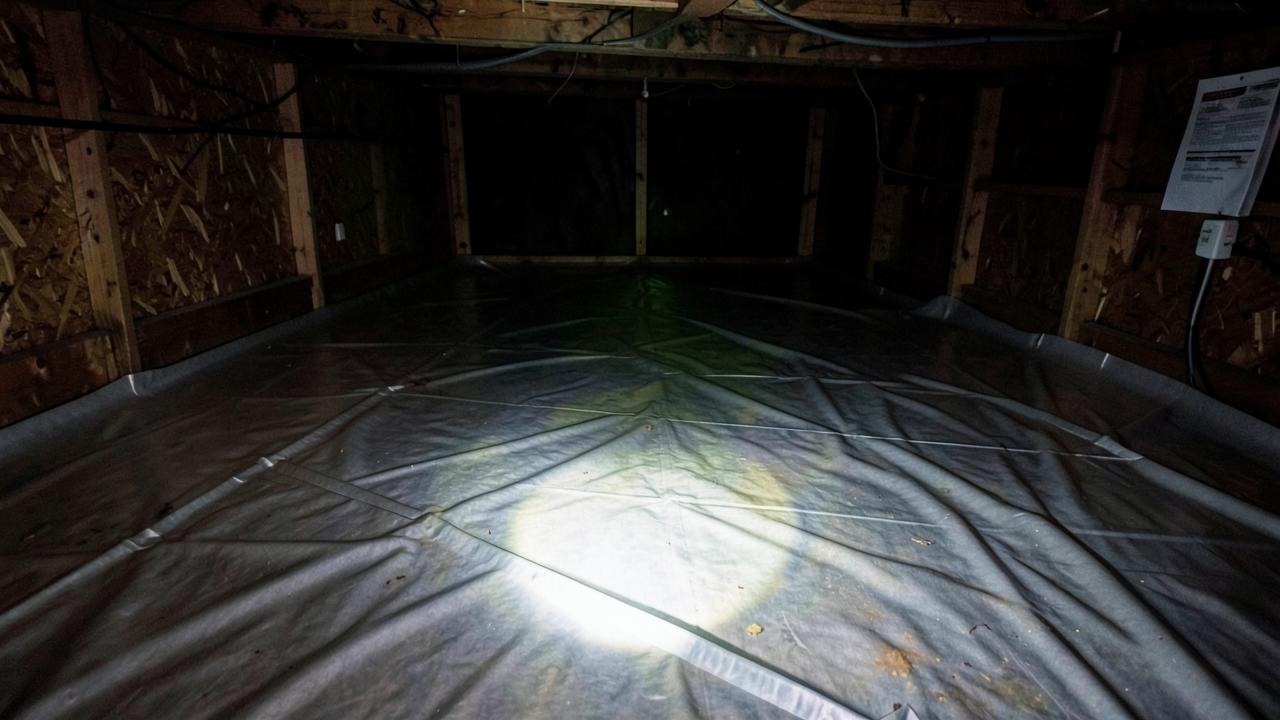
Crawlspace and basement moisture almost always comes from one of three sources: surface water directed toward the foundation by poor grading or clogged gutters, groundwater or hydrostatic pressure pushing through the foundation wall or floor, or humid air condensing on cool surfaces (common in vented crawlspaces in summer). Each cause needs a different fix, and treating a condensation problem with exterior waterproofing — or a grading problem with a dehumidifier — wastes money without solving anything.
How do you tell which type of moisture problem you have?
| Symptom | Likely cause | Typical fix cost |
|---|---|---|
| Damp patch appears after heavy rain, dries out otherwise | Grading or gutter runoff | $200-800 (grading, gutter extensions) |
| Water seeps through floor-wall joint or visible cracks, worse in wet season | Hydrostatic pressure / high water table | $3,000-12,000+ (interior drain tile, sump pump, or exterior waterproofing) |
| Musty smell, condensation on pipes, no standing water | Humid air condensing (common in vented crawlspaces) | $1,500-4,000 (encapsulation + dehumidifier) |
| Efflorescence (white chalky mineral deposit) on foundation wall | Moisture wicking through concrete, evaporating at surface | Address underlying moisture source; efflorescence itself is cosmetic |
What's the correct order of fixes for a wet basement?
- Check and extend downspouts so they discharge at least 5-6 feet from the foundation, not just at the wall.
- Confirm grading slopes away from the house at roughly a 5% slope (6 inches of drop over the first 10 feet) — regrading with fill dirt costs $10-25 per cubic yard plus labor.
- Clean gutters twice a year; a clogged gutter overflowing at one spot concentrates a huge volume of water right at the foundation.
- Only after exterior water management is confirmed working should you consider interior measures like a sump pump or drain tile system, since interior fixes manage water that's already gotten in rather than stopping it at the source.
What about crawlspace encapsulation — is it worth it?
A vented crawlspace in a humid climate often draws in warm, moist outside air that condenses on cooler surfaces (framing, ductwork, the ground itself), a mechanism completely different from bulk water intrusion. Encapsulation — sealing vents, laying a heavy vapor barrier (6-20 mil) across the floor and up the walls, and running a dedicated dehumidifier sized for the space — addresses this directly and typically runs $1,500-4,000 for a small to mid-size crawlspace done DIY with materials, or $4,000-8,000 professionally installed with a sump pump and dehumidifier included.
- A 6-mil vapor barrier is a minimum; 12-20 mil reinforced barriers resist punctures from stored items and foot traffic much better over time.
- Seal the barrier at seams and up the foundation walls with tape and mechanical fasteners rather than leaving it loose on the floor.
- Size the dehumidifier for the actual square footage and target 50-55% relative humidity, checked with a $10-15 hygrometer left in the space.
- If the crawlspace has an active water intrusion source, install a sump pump before encapsulating — sealing over an active leak just traps the water.
When do you need professional exterior waterproofing?
If water is entering through the foundation wall itself — visible cracks, seepage through porous block, or a consistently high water table pushing moisture through the slab — exterior grading fixes alone won't solve it. This calls for either exterior excavation and waterproofing membrane application (the most effective but most expensive option, often $8,000-20,000+ depending on excavation depth and length) or an interior drain tile and sump pump system that intercepts water at the footing and pumps it out (typically $3,000-9,000, less invasive but treats the symptom rather than sealing the wall).
How do you tell if a moisture problem is actively getting worse?
Track it with simple, repeatable measurements rather than memory: photograph any staining or efflorescence monthly, mark the high-water line after a heavy rain if you see standing water, and leave a hygrometer in the space to log humidity trends over a season. A crawlspace that reads 70%+ relative humidity consistently through summer, or a basement wall stain that visibly grows month over month, indicates an active and worsening problem worth prioritizing over a stable, long-standing issue that hasn't changed in years. This distinction also matters for budgeting, since a worsening problem is more likely to justify a larger investment sooner rather than a wait-and-monitor approach.
What does a professional moisture inspection typically include?
- A visual inspection of the foundation, grading, and gutter discharge points from outside the house before ever going inside.
- Moisture meter readings on framing and subfloor materials to detect elevated wood moisture content (above 18-20% signals active risk of rot or mold).
- A relative humidity and temperature reading of the space itself, often logged over several days with a data logger for more damp-prone crawlspaces.
- A written report with photos and a prioritized list of recommended fixes, which is worth requesting even from a free estimate, since it gives you something to compare between contractors.
Will a dehumidifier alone fix a wet basement?
Only if the moisture source is humid air, not liquid water intrusion. A dehumidifier can't keep up with actual water seeping through walls or floors — it'll run constantly and still leave dampness, so identify the source before buying equipment.
How do I know if my crawlspace should be vented or sealed?
In hot, humid climates (most of the southern and eastern US), sealed and encapsulated crawlspaces generally perform better and are increasingly required by code. In dry climates, venting can still work adequately, though encapsulation with a dehumidifier is rarely a downgrade.
Is a musty basement smell dangerous?
A persistent musty smell usually indicates mold growth somewhere in the space, often on cardboard boxes, wood framing, or insulation. It's worth investigating and drying out even if you can't see visible mold, since prolonged damp conditions support mold growth that can affect indoor air quality throughout the house.
Run the numbers for your own project
- Home Air Quality and Ventilation CalculatorDoes my home get enough fresh air ventilation?
- Home Maintenance ScheduleWhat should I be doing to my home this month?
Keep reading
- How Much Paint Do You Actually Need for a Room?The tin says 400 square feet. Your wall says otherwise. Here is the arithmetic that actually holds up.
- DIY or Hire a Pro? A Decision Framework That Is Not About MoneyThe labour saving is real. So is the cost of a job done twice — and of tools you use once.
- Storage for Small Rooms That Does Not Make Them SmallerSmall rooms do not need more storage. They need storage that stops interrupting the eye.