How Do You Choose the Right Pot and Drainage for a Houseplant?
By Jim Vernon · 4 min read · Last updated
A gorgeous ceramic pot with no drainage hole is the single most common cause of houseplant deaths that owners blame on 'bad luck' with a species.
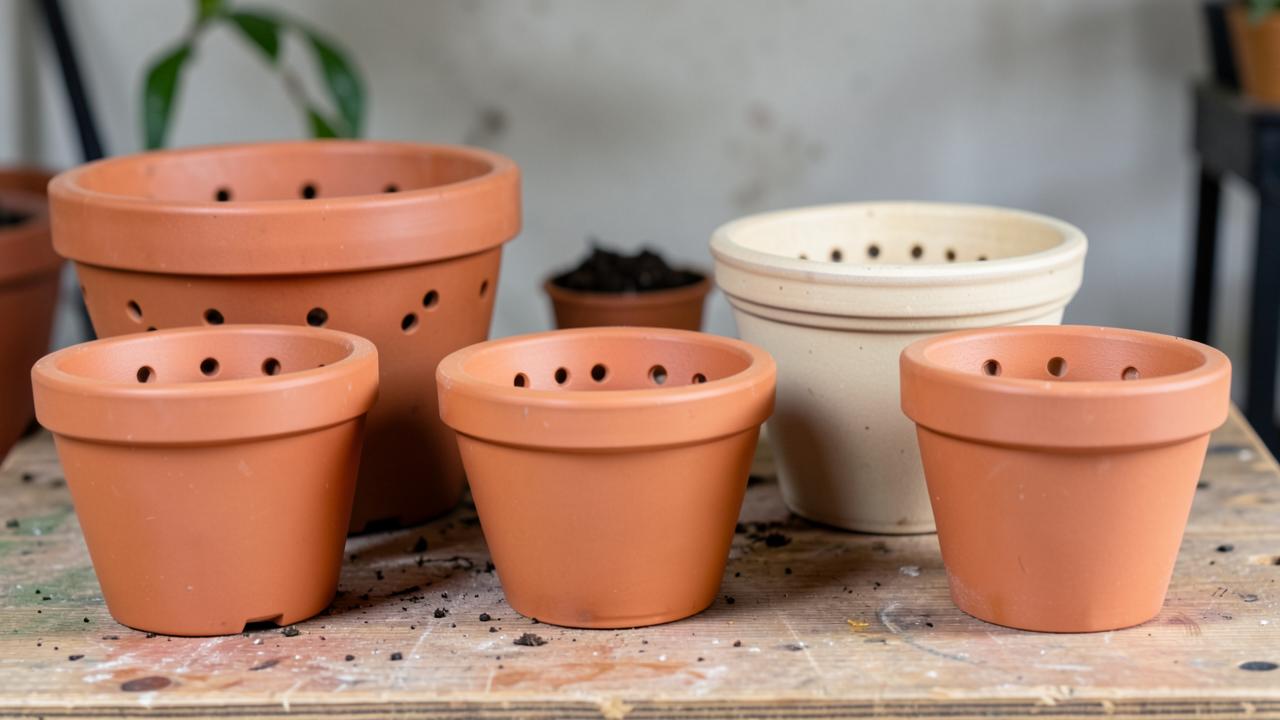
Choose a pot with a drainage hole sized about one to two inches larger in diameter than the plant's current root ball, and pick the material based on how much moisture the specific plant wants — terracotta for plants that like to dry out, glazed ceramic or plastic for plants that prefer even moisture. Skipping the drainage hole for aesthetics is the single biggest pot-related mistake, since it removes your only reliable way to prevent waterlogging.
Why does the drainage hole matter so much?
Without a drainage hole, excess water has nowhere to go and pools at the bottom of the pot, keeping the lowest layer of soil constantly saturated regardless of how the surface looks or feels. Roots sitting in that standing water suffocate and rot within days to weeks, and by the time yellowing leaves reveal the problem, significant root damage has often already occurred. A pot with a hole lets gravity do the job a finger test and careful judgment can't fully replace.
| Pot material | Drying speed | Best for |
|---|---|---|
| Unglazed terracotta | Fast (porous walls wick moisture out) | Succulents, cacti, herbs like rosemary |
| Glazed ceramic | Slow to moderate | Ferns, calatheas, plants wanting even moisture |
| Plastic nursery pots | Slow (retains moisture well) | Budget growing, plants prone to drying out |
| Concrete/fiber-cement | Moderate | Outdoor balcony containers needing weight and stability |
| Metal (no liner) | Slow, but can overheat in sun | Decorative use only; add a plastic liner pot inside |
What if you love a pot without a drainage hole?
Use it as a decorative cachepot rather than planting directly into it: keep the plant in its plastic nursery pot with drainage, and simply set that nursery pot inside the decorative one, removing it to water over a sink and letting it drain fully before returning it. This gets you the look you want without removing your ability to control moisture.
What size pot should you actually choose?
- Size up by one to two inches in diameter from the current pot, not more — oversized pots hold excess moist soil the roots can't use.
- A plant that's just been propagated or is a young seedling usually starts in a 2-4 inch pot.
- Most mature houseplants top out in the 8-12 inch range unless they're large floor specimens like a fiddle leaf fig or bird of paradise.
- When in doubt between two sizes, choose the smaller one; you can always repot again next year.
Does pot shape affect plant health?
Wider, shallower pots suit plants with spreading, shallow root systems like many succulents and some ferns, while taller, deeper pots suit plants with a strong taproot or those that appreciate more soil volume, like larger palms. A pot that's much wider than a plant's root system needs holds excess soil that stays wet longer than the roots can use, increasing rot risk even with a drainage hole present.
How does drainage material inside the pot affect things?
A layer of coarse material like orchid bark or perlite mixed into the potting soil (not layered as a separate zone at the bottom) improves drainage by creating air pockets that let excess water pass through more readily. As covered elsewhere, gravel or shards at the very bottom of the pot don't help and can actually raise the water table inside — the fix is in the mix itself, not a barrier layer.
What does a reasonable pot budget look like?
| Pot type and size | Typical cost | Notes |
|---|---|---|
| 4-6 inch plastic nursery pot | $2-6 | Functional, not decorative; good for propagation and young plants |
| 6-8 inch terracotta | $8-18 | Fast-drying, best for succulents and rosemary |
| 8-10 inch glazed ceramic | $20-45 | Slower drying, good for ferns and calatheas |
| 12+ inch floor planter (any material) | $35-90 | For mature specimen plants like fiddle leaf figs |
Does the color of a pot make a real difference?
Dark-colored pots, especially in direct sun on a balcony or windowsill, absorb more heat and can raise soil temperature enough to stress roots on the sun-facing side, particularly in plastic pots that transmit that heat readily. Light-colored or unglazed terracotta pots stay closer to ambient air temperature. Indoors, away from direct sun, pot color has little practical effect on the plant and comes down to preference.
How often should you replace an old pot, even if it isn't cracked?
A plastic pot that's become brittle, discolored, or is cracking at the rim after several years of sun exposure is worth replacing even if it hasn't failed outright, since a crack can suddenly widen during a routine repot and dump soil and roots onto the floor. Terracotta pots with visible mineral crusting from hard water can be scrubbed with a vinegar-water solution and reused indefinitely; the crusting is cosmetic and doesn't affect plant health, though heavy buildup can slightly reduce the pot's natural porosity over many years.
Is plastic or terracotta better for a beginner?
Plastic is often more forgiving for beginners because it retains moisture longer, giving more buffer against forgetting to water. Terracotta suits people who tend to overwater, since its porous walls dry the soil faster and reduce root rot risk.
Can you drill a drainage hole into a pot that doesn't have one?
Yes, for ceramic or terracotta pots, a diamond-tip masonry bit and a slow drill speed with the pot submerged or kept wet during drilling can add a hole successfully, though there's some risk of cracking. Glass pots are much harder to drill safely.
How many drainage holes does a large pot need?
One central hole is usually sufficient for pots up to about 14-16 inches in diameter; larger pots benefit from two or three holes spaced around the base to prevent any single low spot from staying saturated.
Run the numbers for your own project
- Plant Watering CalculatorHow often and how much should I water this plant?
- Houseplant Light MatcherWhich houseplants suit this window?
- Raised Bed Soil CalculatorHow much soil do I need to fill my raised bed?
Keep reading
- How Much Paint Do You Actually Need for a Room?The tin says 400 square feet. Your wall says otherwise. Here is the arithmetic that actually holds up.
- DIY or Hire a Pro? A Decision Framework That Is Not About MoneyThe labour saving is real. So is the cost of a job done twice — and of tools you use once.
- Storage for Small Rooms That Does Not Make Them SmallerSmall rooms do not need more storage. They need storage that stops interrupting the eye.