How Do You Choose Bulb Color Temperature and Lumens?
By Jim Vernon · 5 min read · Last updated
A 5000K bulb in a bedroom lamp is why the room feels like a dentist's waiting room.
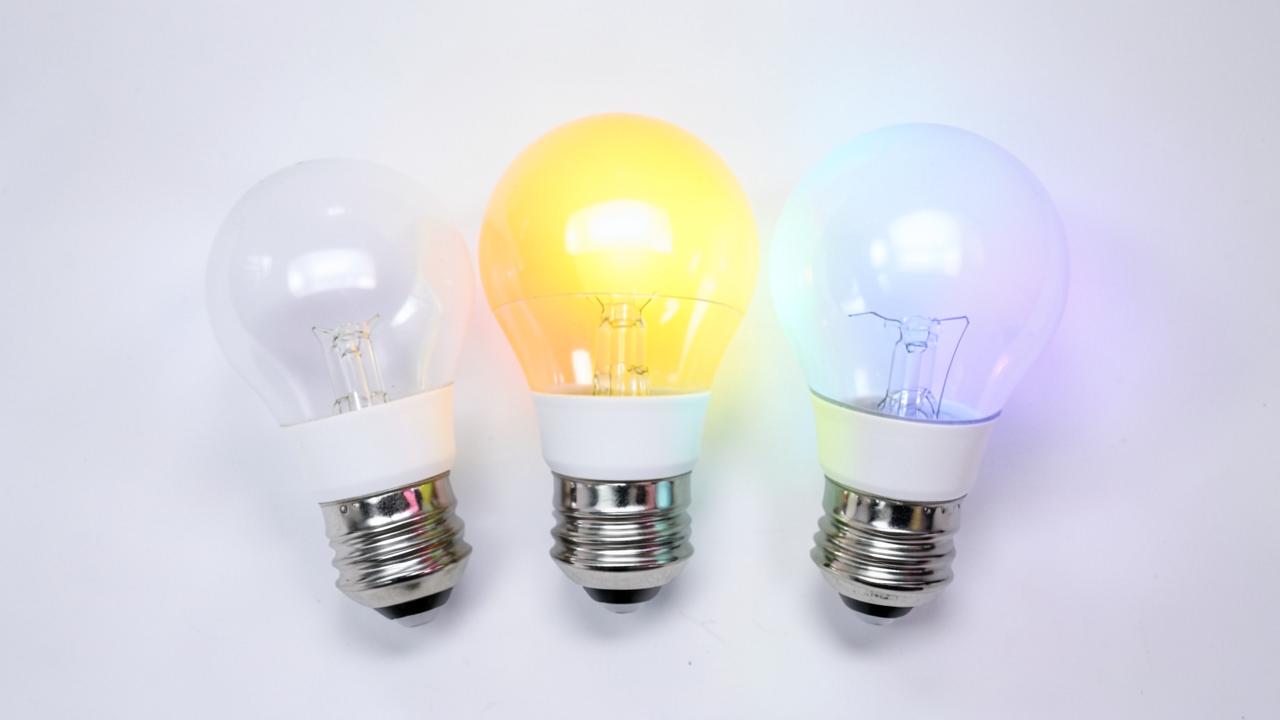
Choose color temperature based on the room's mood — 2700-3000K (warm white) for living rooms and bedrooms, 3500-4100K (neutral white) for kitchens and bathrooms, and 5000K+ (daylight) for garages, workshops, and closets — and choose lumens based on the task, since lumens measure actual brightness while watts on an LED package are nearly meaningless. Mixing color temperatures in the same room is the single most common mistake, producing a mismatched, slightly clinical look.
What do the Kelvin numbers actually mean?
| Kelvin rating | Appearance | Best rooms | Feels wrong in |
|---|---|---|---|
| 2200-2700K | Warm amber, like incandescent or candlelight | Bedrooms, dining rooms, living rooms | Kitchens (looks dim/yellow on food prep) |
| 3000-3500K | Soft white, slightly crisper | Hallways, kitchens, bathrooms | Reading nooks wanting cozy feel |
| 4000-4100K | Neutral white, no yellow or blue cast | Garages, laundry rooms, home offices | Bedrooms (feels sterile) |
| 5000-6500K | Daylight, bluish-white | Workshops, security lighting, closets | Any relaxing living space |
How many lumens does each fixture actually need?
- Bedroom lamp: 450-800 lumens (roughly a 40-60W incandescent equivalent).
- Kitchen ceiling fixture, whole room: 3,000-4,000 lumens total across all fixtures.
- Kitchen task lighting under cabinets: 300-450 lumens per linear 2 feet of counter.
- Bathroom vanity: 700-900 lumens per side of the mirror, positioned at face height to avoid shadows.
- Garage or workshop overhead: 6,000-8,000+ lumens total for a two-car garage used for projects.
- Reading lamp for close work: 800-1,100 lumens if the shade diffuses it, less if it's an open bulb aimed directly at the page.
Why does the same wattage look brighter in one bulb than another?
LED efficiency varies by brand and bulb type, so a cheap 9W LED might output 750 lumens while a better-made 9W LED outputs 900 lumens for the same energy draw. Always compare the lumens number printed on the package, not the watts, and check the Lighting Facts label for color temperature and estimated yearly energy cost, which the FTC requires on US bulb packaging.
What about CRI, the number nobody explains?
Color Rendering Index (CRI) measures how accurately a bulb reveals true colors compared to natural daylight, on a scale to 100. Bulbs rated below 80 CRI make skin tones look sallow and clothing colors look muddy — noticeable in bathrooms and closets used for makeup or matching outfits. Spend the extra $1-3 per bulb for 90+ CRI in those specific rooms; it's not worth it in a garage or attic.
How do smart bulbs change this decision?
Tunable smart bulbs (roughly $8-15 each) let you set color temperature from 2200K to 6500K by app or voice command, which is useful in a home office that needs daylight-bright focus lighting in the morning and warmer wind-down light in the evening. For rooms where the mood never changes, a fixed-temperature bulb at $2-4 each is more reliable and doesn't depend on Wi-Fi or a hub being online.
How does natural daylight change what temperature looks right?
A room with large south- or west-facing windows already floods with 5000-6500K daylight for much of the day, so a 2700K bulb inside can look muddy yellow by comparison until the sun goes down. In daylight-heavy rooms, consider a slightly higher color temperature (3000-3500K) so the artificial light doesn't clash so obviously with window light during the day, or install tunable bulbs that shift automatically with a schedule. North-facing rooms with less direct sun stay closer to their bulb's true color all day and can lean warmer without looking off.
What's the real cost difference between bulb types?
| Bulb type | Cost per bulb | Typical lifespan | Notes |
|---|---|---|---|
| Basic LED (non-dimmable, standard CRI) | $2-4 | 10,000-15,000 hours | Fine for closets, garages, utility rooms |
| Dimmable LED, 90+ CRI | $5-9 | 15,000-25,000 hours | Best for bathrooms, kitchens, living spaces |
| Tunable smart LED (adjustable Kelvin) | $8-15 | 15,000-25,000 hours | Useful in home offices and multi-use rooms |
| Smart color LED (RGB + tunable white) | $12-25 | 15,000-25,000 hours | Accent and mood lighting, not primary task light |
How many bulbs does a typical home need, and what does upgrading all of them cost?
A typical 3-bedroom home has 30-50 light-producing points once lamps, fixtures, and under-cabinet strips are counted. Replacing every bulb with basic dimmable LEDs at $4-6 each runs roughly $150-300 in materials, while upgrading everything to 90+ CRI tunable smart bulbs can run $400-900. Most homeowners get better value prioritizing by room: kitchens and bathrooms first for CRI accuracy, bedrooms and living rooms next for dimmability and warmth, and utility spaces last since basic LEDs serve those rooms just as well as premium ones.
Does bulb shape affect how the light spreads in a room?
An A19 bulb (the standard household shape) spreads light in most directions and suits open fixtures and lamps, while a BR30 or BR40 reflector bulb, common in recessed cans, directs most of its output downward in a wider cone, which matters for even floor coverage. Filament-style LED bulbs in exposed fixtures look attractive but often measure lower lumens per watt than a standard LED, so they're better reserved for decorative fixtures where ambiance matters more than raw output.
Frequently asked questions
Can I mix color temperatures in adjoining open-concept rooms?
Try to keep within 500K of each other between visually connected spaces like an open kitchen and living room. A 2700K living room next to a 4000K kitchen is jarring when both are visible at once; 2700K and 3000K side by side reads as intentional and cohesive.
Are higher lumens always better for task lighting?
No — too many lumens on a task surface causes glare and eye strain, especially with reflective surfaces like countertops or laptop screens. Match lumens to the specific task distance and add a dimmer so you can scale down for evening use without buying a second, dimmer bulb.
Does color temperature affect energy use?
No, color temperature and energy use are independent; a 2700K and a 5000K LED bulb of the same lumen output draw essentially the same wattage. Choose Kelvin for appearance and mood, and choose lumens per watt (efficacy) if energy efficiency is the priority.
Run the numbers for your own project
- Energy Savings CalculatorWill this upgrade pay for itself?
- Appliance Running Cost CalculatorHow much does this appliance cost to run?
Keep reading
- How Much Paint Do You Actually Need for a Room?The tin says 400 square feet. Your wall says otherwise. Here is the arithmetic that actually holds up.
- DIY or Hire a Pro? A Decision Framework That Is Not About MoneyThe labour saving is real. So is the cost of a job done twice — and of tools you use once.
- Storage for Small Rooms That Does Not Make Them SmallerSmall rooms do not need more storage. They need storage that stops interrupting the eye.