Should You Choose Carpet or Hard Flooring for Each Room?
By Jim Vernon · 5 min read · Last updated
The right answer changes room by room — bedrooms often favor carpet, kitchens and baths almost never do.
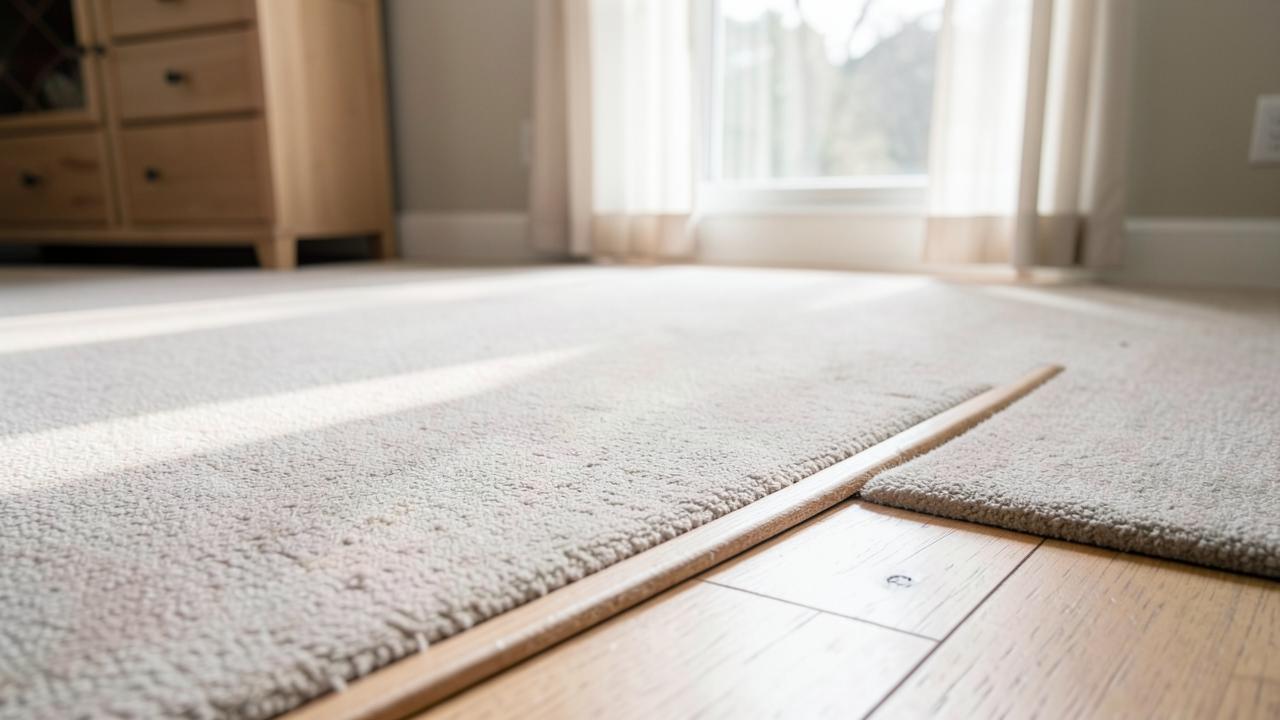
Carpet suits bedrooms, home theaters, and stairs where sound dampening, warmth underfoot, and impact cushioning matter, while hard flooring — tile, LVP, or hardwood — suits kitchens, bathrooms, entryways, and high-traffic living areas where moisture, allergens, and spills need to be manageable. Neither material is universally better; the room's function decides it.
Where does carpet genuinely outperform hard flooring?
Bedrooms benefit from carpet's warmth (measurable — carpet's R-value of roughly 1.0-2.0 versus tile's near-zero insulating value means noticeably warmer bare feet in winter) and its sound absorption, which matters for upper-floor bedrooms over living spaces below. Stairs are safer in carpet because of the traction and cushioning it provides in a fall, which is a real consideration in homes with young children or older adults. Basements used as media rooms also benefit from carpet's acoustic dampening, provided moisture in the slab has been tested and ruled out first.
| Room | Better default choice | Why |
|---|---|---|
| Kitchen | Hard flooring (tile, LVP) | Grease, spills, and dropped items are common |
| Bathroom | Tile (with proper waterproofing) | Standing water and humidity |
| Bedroom | Carpet | Warmth, sound dampening, comfort underfoot |
| Living/family room | Hard flooring or low-pile carpet | High traffic favors durability; families with kids may prefer carpet cushioning |
| Stairs | Carpet or carpet runner | Traction and fall cushioning |
| Home office | Hard flooring with area rug | Rolling chair casters damage carpet pile quickly |
| Entryway/mudroom | Hard flooring | Dirt, moisture, and salt tracked in from outside |
| Basement (finished) | Hard flooring or carpet tile | Moisture risk from slab; carpet tile allows section replacement if a leak occurs |
How does allergen exposure actually differ?
Carpet fibers trap dust, pet dander, and pollen, which sounds bad for allergy sufferers but the research is mixed — trapped allergens stay out of the air until disturbed, while hard flooring allows more allergens to become airborne with foot traffic if not vacuumed or mopped regularly. In practice, hard flooring is easier to keep genuinely low-allergen because it's easier to clean thoroughly, but carpet with a HEPA-filter vacuum run weekly performs reasonably well too. Severe allergy or asthma sufferers are generally advised toward hard flooring in bedrooms specifically.
What does each cost to install and maintain?
- Carpet installed: $3-$7 per sq ft for mid-range carpet plus pad, replaced roughly every 8-12 years in normal use.
- Carpet cleaning: professional steam cleaning runs $25-$50 per room every 12-18 months to maintain warranty and appearance.
- Hard flooring (LVP/laminate): $3-$8 per sq ft installed, lasting 15-25 years with basic mopping maintenance.
- Tile: $5-$15 per sq ft installed, lasting 30-50+ years but with periodic grout sealing needed every 1-2 years.
- Hardwood: $8-$16 per sq ft installed, refinished every 7-10 years at $3-$5 per sq ft.
How does noise between floors factor into the choice?
In multi-story homes, condos, and apartments, carpet over an upper-floor bedroom noticeably reduces impact noise (footsteps, dropped items) heard in the room below compared to hard flooring, which is why many condo HOAs specifically require carpet or a rated acoustic underlayment under hard flooring on upper units. If hard flooring is preferred upstairs for looks or allergies, pairing it with a high Impact Insulation Class (IIC) underlayment, often required at IIC 50 or higher by building codes or HOA rules, closes most of that gap.
Can you mix both in the same open floor plan?
Yes, and it's common — hard flooring through kitchen, dining, and main living areas with carpet reserved for bedrooms and a finished basement media space. The main technical challenge is a clean transition strip at the doorway threshold, since carpet pad thickness (typically 3/8-1/2 inch plus carpet) sits noticeably higher than most hard flooring, requiring a reducer or transition molding to avoid a trip hazard.
How does climate affect the carpet-versus-hard-flooring decision?
In humid climates, carpet can trap moisture and encourage mold or dust mites in padding, especially in ground-floor rooms without good ventilation, making hard flooring the more practical default outside bedrooms. In colder climates, carpet's insulating value becomes more valuable in bedrooms and living rooms over unheated crawlspaces or slab foundations, where bare hard flooring can feel noticeably cold underfoot for several months of the year even with area rugs added afterward.
Does the subfloor or floor level change which option makes sense?
Basements and slab-on-grade rooms carry inherent moisture risk that makes carpet a riskier long-term choice unless the slab has been tested and a proper vapor barrier is in place — a slab leak under carpet can go unnoticed for weeks and lead to mold in the padding, while the same leak under hard flooring is usually visible sooner and easier to dry out. Upper floors over conditioned living space carry less moisture risk either way, which is why carpet in upstairs bedrooms is standard even in humid regions.
Is carpet ever a good choice for a kitchen?
Rarely recommended. Grease, food spills, and moisture stain and mat carpet fibers quickly, and it's difficult to fully sanitize compared to tile or vinyl. Even carpet tile, which allows spot replacement, is an uncommon and generally discouraged choice for a primary kitchen floor.
Does carpet padding matter as much as the carpet itself?
Yes — padding density (measured in pounds, typically 6-8 lb for residential use) affects how long the carpet holds its texture and cushioning far more than most buyers expect. A quality carpet on cheap thin padding will show wear paths and matting years before a modest carpet on good 8 lb padding.
Which is better for homes with pets, carpet or hard flooring?
Hard flooring, generally, because it resists odor absorption and is far easier to clean up accidents from completely. If carpet is preferred in a bedroom, a stain-resistant nylon or solution-dyed polyester fiber holds up to pet traffic and cleaning chemicals better than wool or basic polyester.
Run the numbers for your own project
- Flooring CalculatorHow many boxes of flooring should I buy?
- Project Cost EstimatorWhat will this project cost me?
- Room Size and Furniture FitWill this furniture actually fit my room?
Keep reading
- How Much Paint Do You Actually Need for a Room?The tin says 400 square feet. Your wall says otherwise. Here is the arithmetic that actually holds up.
- DIY or Hire a Pro? A Decision Framework That Is Not About MoneyThe labour saving is real. So is the cost of a job done twice — and of tools you use once.
- Storage for Small Rooms That Does Not Make Them SmallerSmall rooms do not need more storage. They need storage that stops interrupting the eye.