The Starter Home Tool Kit: What to Buy First and What to Skip
By Jim Vernon · 5 min read · Last updated
You don't need a full workshop to fix 90% of what breaks in a house.
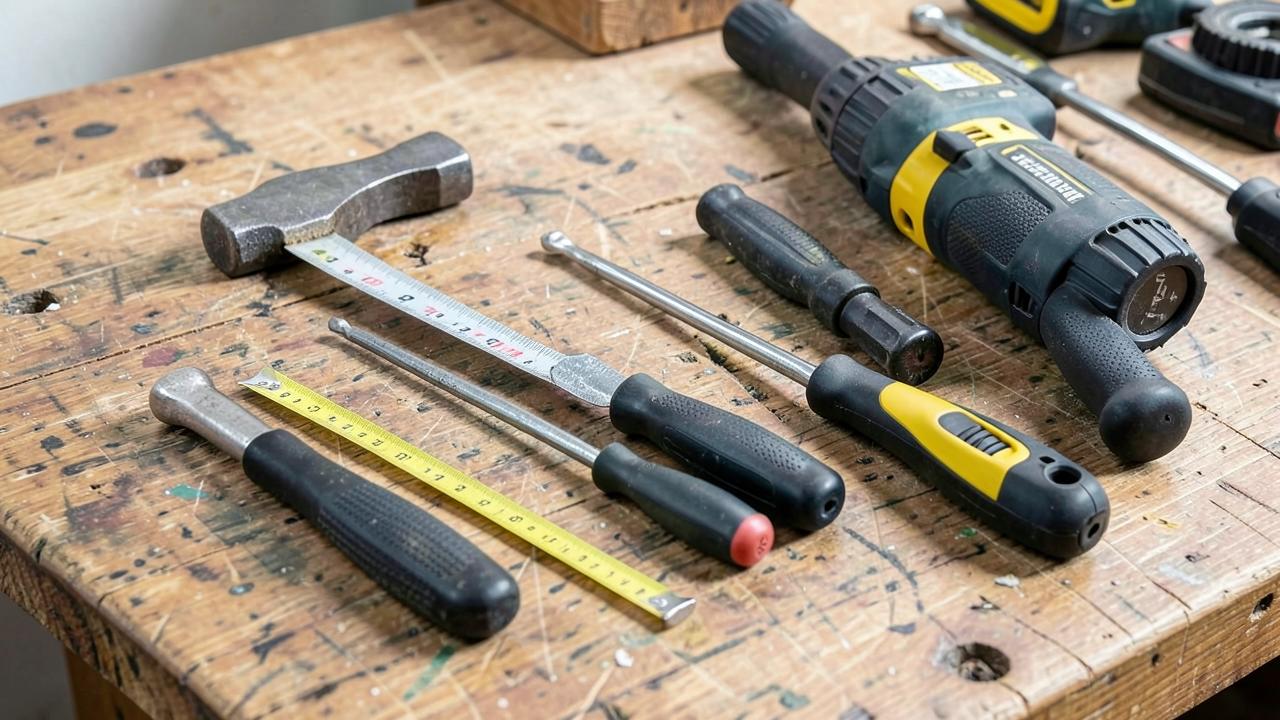
A solid starter tool kit for a first home or apartment costs $150-$400 and, if chosen well, handles the vast majority of everyday repairs: hanging shelves, tightening loose hardware, assembling furniture, patching drywall, and minor plumbing fixes. The trick is buying a short list of versatile tools at mid-grade quality rather than a 200-piece kit full of pieces you'll never touch.
What actually belongs in a first tool kit?
Focus on tools that solve the most common problems: a hammer, a set of screwdrivers or one good multi-bit driver, an adjustable wrench, a tape measure, a level, a utility knife, pliers (slip-joint and needle-nose), and a stud finder. Add a cordless drill/driver once budget allows — it's the single biggest upgrade in speed and capability for a homeowner.
| Tool | Typical cost (USD) | Why it's first-tier |
|---|---|---|
| Cordless drill/driver kit | $60-$150 | Drives screws, drills holes, drives most fasteners you'll ever meet |
| 16-oz claw hammer | $12-$25 | Nails, light demolition, pulling nails |
| 25-ft tape measure | $8-$15 | Every project starts with a measurement |
| 4-in-1 or 6-in-1 screwdriver | $10-$20 | Covers flathead and Phillips without a full set |
| Adjustable wrench (8-10 in) | $10-$20 | Plumbing nuts, furniture bolts |
| Torpedo level (9 in) | $10-$15 | Shelves, pictures, curtain rods |
| Utility knife | $6-$12 | Boxes, drywall, flooring trims |
| Stud finder | $15-$30 | Prevents blind drilling into wiring or nothing |
| Needle-nose and slip-joint pliers | $15-$25 | Wire, small nuts, cotter pins |
What should you skip until you have a specific project?
- Table saws, miter saws, and other stationary power tools — buy or rent only when a project needs one.
- Specialty wrench sets (torque wrenches, pipe wrenches) unless you're doing plumbing or auto work regularly.
- Oversized socket and ratchet sets — a basic 1/4-3/8 in set covers most household bolts.
- A full ladder if you live in an apartment; a sturdy step stool often suffices, and taller ladders can be rented for $15-$25/day.
Is it worth buying a pre-packaged tool kit?
Pre-packaged kits sold as '129-piece home tool set' are usually a poor value: the drill or driver bit quality is often mediocre, and a large share of the pieces (odd wrench sizes, decorative cases) never get used. You typically get better tools for the same money buying each item separately from a mid-tier brand, and you can spread the purchase over a few paychecks as needs arise.
How should a starter kit grow over time?
Add tools reactively, tied to actual projects: a stud-finder upgrade and drywall tools when you start hanging art seriously, a basic plumber's kit (plunger, hand auger, Teflon tape, basin wrench) once you own rather than rent, and a circular saw or jigsaw only when a project genuinely calls for cutting lumber or sheet goods. This keeps spending proportional to need instead of front-loading $600 on tools that sit unused for years.
What brand tier gives the best value for a first kit?
Mid-tier brands (the second tier up from the cheapest store-brand line, often $10-$20 more per tool) are usually the sweet spot for a first kit. Bottom-tier tools tend to strip screw heads, flex under load, or wear out within a year of light use, which ends up costing more in replacements than buying once at a mid-tier level. Premium professional-grade tools, on the other hand, rarely pay off for someone doing occasional home repairs rather than daily jobsite work, since the extra durability and torque go largely unused.
How long should a starter kit actually last before anything needs replacing?
A mid-tier hand tool — hammer, wrench, pliers, level — should last decades with basic care, since there's little to wear out mechanically. Cordless drill batteries are the real wear item: expect a battery to hold a meaningful charge for 3-5 years of regular use before capacity noticeably drops, at which point a replacement battery ($25-$50) is usually cheaper than a whole new drill. Keep the charger and battery out of extreme heat or cold, which shortens battery life faster than actual use does.
What mistakes do new tool buyers commonly make?
- Buying a giant multi-tool set before owning basic single-purpose tools — the specialty attachments rarely get used and add cost without solving common problems.
- Skipping a stud finder and drilling blind into drywall, risking hitting wiring or plumbing behind the wall.
- Buying the cheapest possible drill bits, which dull fast and can snap in hardwood or masonry, costing more over time than a mid-tier bit set.
- Not buying a basic first aid kit alongside tools — minor cuts and scrapes are common enough during DIY work that having bandages on hand matters.
- Ignoring battery platform compatibility — buying a drill from one brand and a saw from another means carrying two separate battery/charger systems instead of sharing one.
Should you buy tools individually or wait for sales?
Hardware stores and home centers regularly discount hand tools and drill kits around major holiday weekends, often 15-30% off list price, so if a purchase isn't urgent it's worth waiting a few weeks for a sale rather than paying full price the day a need comes up. That said, don't delay a stud finder or basic screwdriver purchase over a sale — the time lost improvising a workaround usually costs more than the discount saves.
How much should a first tool kit cost?
Budget $150-$300 for a functional core kit covering a drill, hammer, screwdrivers, wrench, level, tape measure, and pliers. Add a toolbox or bag for another $20-$40. Prices vary by region and brand tier.
Is a cordless drill really necessary for a starter kit?
It's the highest-value single purchase because it replaces manual screwdriving, drills holes, and with the right bits handles most fastening tasks. A basic 12V or 20V kit at $60-$150 covers nearly all household use.
Should I buy corded or cordless tools first?
Cordless for anything portable like drills and drivers — the convenience outweighs the extra cost. Corded still makes sense for stationary or high-power tools like table saws, where battery life and torque matter less than continuous power.
Run the numbers for your own project
- Project Cost EstimatorWhat will this project cost me?
- Home Maintenance ScheduleWhat should I be doing to my home this month?
Keep reading
- How Much Paint Do You Actually Need for a Room?The tin says 400 square feet. Your wall says otherwise. Here is the arithmetic that actually holds up.
- DIY or Hire a Pro? A Decision Framework That Is Not About MoneyThe labour saving is real. So is the cost of a job done twice — and of tools you use once.
- Storage for Small Rooms That Does Not Make Them SmallerSmall rooms do not need more storage. They need storage that stops interrupting the eye.