Kitchen Upgrades Under $500 That Actually Change How It Looks
By Jim Vernon · 4 min read · Last updated
A full kitchen remodel costs tens of thousands. These changes cost under $500 total and still change the room.
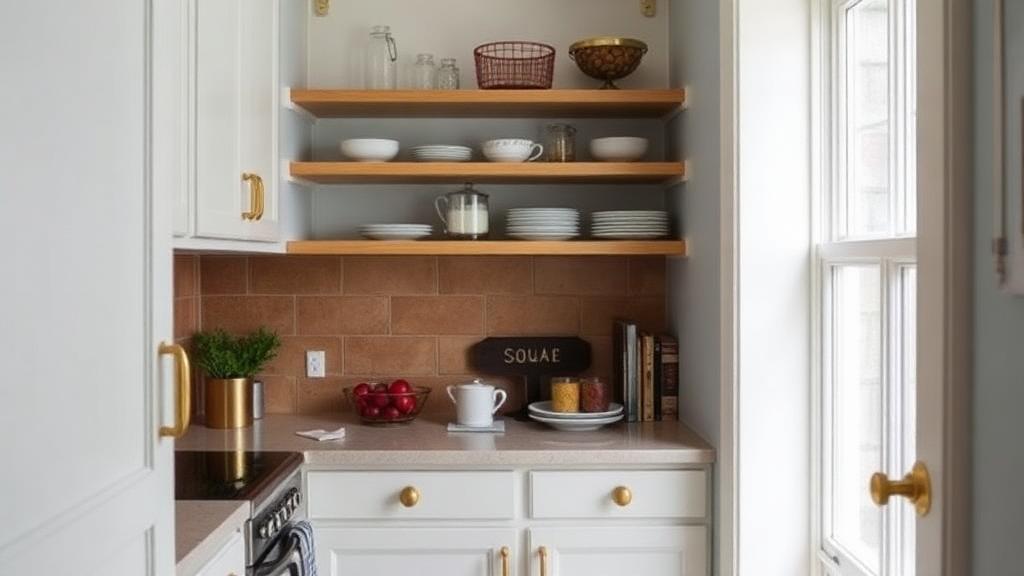
Cabinet hardware, lighting, and paint punch well above their price in a kitchen because they're the details eyes land on first — a shiny faucet or dated pulls register instantly, long before anyone notices the counter material. Ranked by visual impact per dollar, the cheapest changes are often the most noticeable.
Ranked by impact per dollar
| Upgrade | Typical cost | Effort |
|---|---|---|
| Swap cabinet hardware | $50-150 | Low — a screwdriver and an afternoon |
| Paint cabinet doors (not full refinish) | $60-120 in materials | Medium — requires proper prep and cure time |
| Replace faucet | $80-250 installed cost of parts | Medium — plumbing basics or a short pro visit |
| Under-cabinet LED lighting | $40-120 | Low to medium depending on wiring vs. battery |
| New light fixture over island/sink | $60-200 | Medium — may need an electrician if rewiring |
| Open shelving instead of upper cabinets | $30-80 for brackets and boards | Low, but a bigger style commitment |
| Peel-and-stick backsplash | $40-150 | Low — a weekend project |
Why hardware is the highest-return change
Dated brass or worn chrome pulls are one of the fastest visual cues that a kitchen hasn't been updated, and replacing them is almost entirely labor-free — most cabinet doors use a standard hole spacing, so new hardware often drops straight into existing holes. Where spacing doesn't match, a template and a drill handle it in minutes per door.
Cabinet painting without a full refinish
A full cabinet refinish — stripping, sanding to bare wood, priming, and multiple coats — is a multi-day job best left to professionals for a flawless factory-style finish. A budget version using a bonding primer and cabinet-rated paint, done carefully over existing finishes, gets 80% of the visual result for a fraction of the time and cost, provided the surface is cleaned and lightly sanded first for adhesion.
Lighting changes that don't need an electrician
- Battery or USB-powered LED under-cabinet strips stick on with adhesive and need no wiring at all.
- Plug-in pendant light kits route the cord along the ceiling to an existing outlet, avoiding new wiring.
- Smart bulbs in existing fixtures change color temperature and brightness without any hardware change.
Where to stop at $500
Countertops, cabinet boxes, and flooring are the expensive core of a kitchen and none of them fit a $500 budget for a genuine upgrade — attempting a cheap version of these usually looks cheap rather than budget-friendly. The list above deliberately avoids them and focuses on surface-level changes that read as intentional rather than makeshift.
Keep receipts and product names for anything installed, even temporarily. If a faucet or light fixture needs to come back out at move-out, having the original box or model number on hand makes reinstalling the landlord's original fixture far faster than searching for a replacement from memory.
Sequencing the work
- Clean and degrease all surfaces first, since paint, hardware, and even lighting decisions look different once grime is gone.
- Handle any plumbing swap (faucet) before painting nearby cabinets, so a wrench slip doesn't mar fresh paint.
- Paint cabinet doors last among the messy tasks, after hardware holes are confirmed and drilled if needed.
- Install lighting last, once the visual plan for the rest of the room is set and finishes have cured.
A worked $500 budget example
A realistic $500 allocation might look like: $120 on new cabinet hardware for 20 doors and drawers, $150 on a new faucet and basic install parts, $100 on under-cabinet LED strip lighting, and the remaining $130 on paint and supplies for an accent element like an island or a single wall of open shelving. That combination touches four different sightlines in the room — hands, sink, counters, and one focal wall — rather than spending the whole budget on a single feature.
Price tiers within each category
Hardware spans a wide range depending on finish: basic satin nickel or matte black pulls run about $2-4 each, while solid brass or unlacquered brass options can run $8-15 each — on 20 pulls that's the difference between roughly $60 and $250, so decide on finish before assuming the whole line item stays under $150. Faucets follow a similar split: a functional single-handle model starts around $80-120, while a pull-down sprayer with a matching finish to new cabinet hardware runs $150-250. Buying the faucet and hardware in the same finish family avoids a mismatched look that undercuts the rest of the work.
Common mistakes
- Buying hardware before measuring existing hole spacing, then discovering it doesn't match.
- Skipping degreasing and light sanding before painting cabinet doors, leading to early peeling.
- Choosing a trendy fixture finish that clashes with existing hardware left in place elsewhere in the kitchen.
- Spending the entire budget on one high-impact item and leaving obviously dated hardware untouched right next to it.
- Attempting a full cabinet refinish in a weekend without the dry time between coats that a durable finish requires.
Is painting cabinets worth it if I'm planning to replace them eventually?
If replacement is more than two or three years away, painting is worth it for the daily improvement in the meantime. If replacement is imminent, the labor is better spent elsewhere.
Can I install a new faucet myself?
Most standard sink faucets are a DIY-feasible swap with basic tools if the existing supply lines are in good condition. Corroded shutoff valves or non-standard configurations are a sign to call a plumber.
Do all cabinet pulls fit existing holes?
Only if the new hardware uses the same hole spacing (center-to-center distance) as the old. Measure before buying, or choose hardware with adjustable or single-hole mounting to avoid drilling new holes.
Run the numbers for your own project
- Project Cost EstimatorWhat will this project cost me?
- Paint CalculatorHow much paint do I need for this room?
Keep reading
- How Much Paint Do You Actually Need for a Room?The tin says 400 square feet. Your wall says otherwise. Here is the arithmetic that actually holds up.
- DIY or Hire a Pro? A Decision Framework That Is Not About MoneyThe labour saving is real. So is the cost of a job done twice — and of tools you use once.
- Storage for Small Rooms That Does Not Make Them SmallerSmall rooms do not need more storage. They need storage that stops interrupting the eye.