How Hard Is It to Add a New Electrical Outlet, Really?
By Jim Vernon · 4 min read · Last updated
The outlet itself costs $3. Getting wire to it is the whole job.
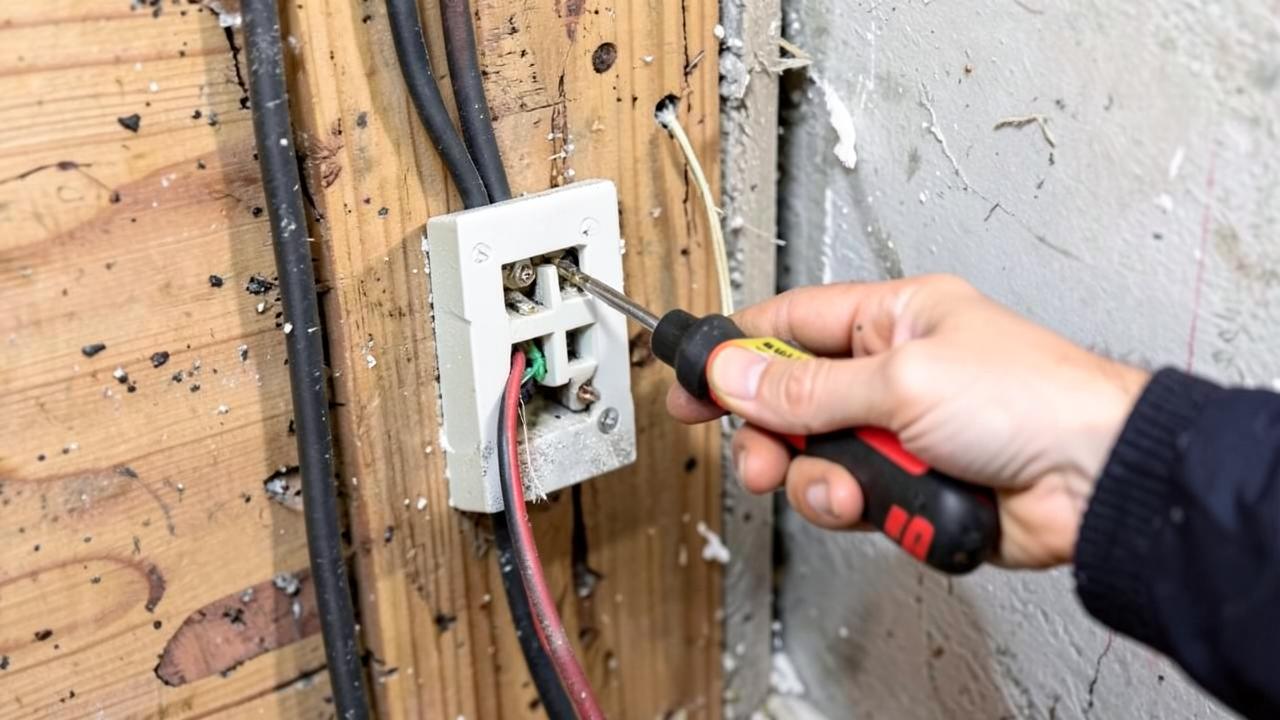
Adding a standard 120-volt outlet typically costs $150-$350 when tapping into an existing nearby circuit with accessible wall or attic space, and $400-$700+ when it requires a new dedicated circuit run back to the panel or fishing wire through finished walls with no attic or basement access. The deciding factors are how much existing capacity the circuit has and how hard it is to physically route new wire.
When can you tap an existing circuit versus needing a new one?
- Tapping an existing circuit works for general-purpose outlets (lamps, phone chargers, TVs) as long as the circuit isn't already near its safe load — a 15-amp circuit is rated for 1,800 watts continuous, 20-amp for 2,400 watts, and code recommends staying at 80% of that for sustained loads.
- A dedicated new circuit is required for large single appliances — window AC units over 1,000W, microwaves, space heaters used regularly, and most kitchen countertop circuits, which code requires as at least two 20-amp small-appliance circuits.
- Kitchens, bathrooms, garages, and outdoor outlets need GFCI protection regardless of which circuit they're on.
- A detached garage or workshop with any real tool use (table saw, welder) usually justifies its own subpanel rather than one long extension circuit.
What determines the labor cost?
| Access scenario | Typical labor time | Typical cost range |
|---|---|---|
| Unfinished basement/attic directly below or above the outlet | 1-2 hours | $150-$300 |
| Same wall, adjacent room with accessible stud bay | 2-3 hours | $250-$450 |
| Finished wall, no attic/basement access, fishing required | 3-5 hours plus patching | $450-$700 |
| New dedicated circuit back to the panel, long run | 4-8 hours | $500-$900+ |
| Outdoor GFCI outlet with new exterior-rated box and conduit | 3-5 hours | $350-$600 |
Can a homeowner add an outlet themselves?
In most jurisdictions, yes for a straightforward tap off an existing circuit if you're comfortable working with the breaker off, confirming dead wires with a non-contact tester, and pulling a permit where required — many areas require permits for any new outlet regardless of who does the work. DIY becomes riskier fast with fishing wire through insulated finished walls, working near a panel, or anything involving a new circuit breaker, GFCI/AFCI requirements, or outdoor/wet-location boxes.
What's the single biggest hidden cost surprise?
Drywall patching and paint matching after fishing wire through a finished wall routinely adds $100-250 that homeowners don't budget for, especially with textured walls or an accent color that's hard to color-match. Ask your electrician up front whether they patch drywall or only cut and leave the access holes — many electricians cut a neat hole and leave patching to you or a separate drywall contractor.
What's involved in adding an outdoor outlet specifically?
Outdoor outlets need a weatherproof, in-use box with a hinged cover that stays closed around the plugged-in cord, GFCI protection, and wiring rated for wet or damp locations depending on how exposed the location is. Running the circuit typically means drilling through an exterior wall or foundation, sealing the penetration against water intrusion, and in many jurisdictions burying any underground conduit at a minimum depth (commonly 18-24 inches for direct burial cable, less for cable in rigid conduit). Skipping the weatherproof cover or using an indoor-rated box outside is a common code violation that shows up on home inspections.
Should you add extra outlets now even if you don't need them yet?
If an electrician is already opening a wall or running new circuit capacity for one outlet, adding a second nearby outlet on the same trip typically costs only $50-100 more in incremental labor and materials, versus $150-350 to do it as a completely separate job later. Common places people regret not adding extra outlets: behind where a future TV or desk might go, at counter height in a garage workbench area, and low on a wall behind furniture that might get rearranged. It's worth a five-minute conversation with the electrician about likely future needs before they close up the wall.
How does outlet placement affect code compliance in living areas?
Residential code generally requires outlets spaced so that no point along a wall is more than 6 feet from an outlet, meaning a wall longer than 12 feet needs at least one outlet partway along it, not just one at each end. Kitchen counters have stricter rules — outlets are required so no point along the counter is more than 24 inches from an outlet, and any island or peninsula counter 24 inches or wider typically needs its own dedicated outlet. These spacing rules exist to reduce reliance on extension cords, which are a common cause of overheating and house fires when used as permanent wiring.
Frequently asked questions
How many outlets can safely go on one circuit?
There's no strict national code number for general-purpose receptacle circuits, but a common practical guideline is 8-10 outlets per 15-amp circuit assuming typical light loads. Kitchens and rooms with heavier appliance use should have fewer outlets per circuit or dedicated circuits for specific appliances.
Do I need a GFCI outlet or can I use a regular one and a GFCI breaker?
Either works electrically — a GFCI breaker protects the whole circuit, while a GFCI outlet protects just that outlet and anything downstream wired through it. GFCI outlets cost less per point of protection ($15-25 vs. $40-60 for a breaker) if you only need to protect one or two locations.
How long does adding one outlet usually take from start to finish?
A simple tap-in job takes 1-3 hours of actual work, but scheduling an electrician, pulling a permit, and passing inspection can stretch the calendar timeline to 1-3 weeks depending on local permit office turnaround and the electrician's availability.
Run the numbers for your own project
- Project Cost EstimatorWhat will this project cost me?
- Home Maintenance ScheduleWhat should I be doing to my home this month?
Keep reading
- How Much Paint Do You Actually Need for a Room?The tin says 400 square feet. Your wall says otherwise. Here is the arithmetic that actually holds up.
- DIY or Hire a Pro? A Decision Framework That Is Not About MoneyThe labour saving is real. So is the cost of a job done twice — and of tools you use once.
- Storage for Small Rooms That Does Not Make Them SmallerSmall rooms do not need more storage. They need storage that stops interrupting the eye.