Structural & Outdoor
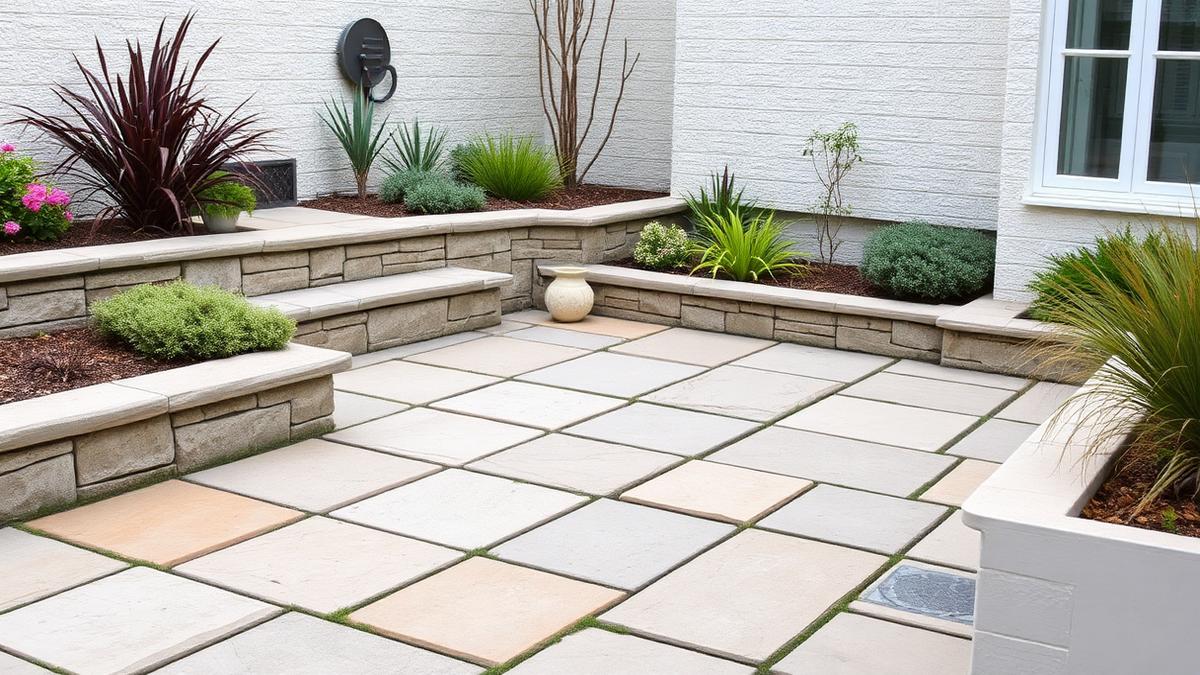
Natural Stone Paving
Quarried flagstone, sandstone, or slate cut or left irregular for patios and paths, prized for a look no manufactured product fully replicates.
Best for
- High-end patios and entry paths
- Gardens aiming for a natural, non-uniform look
- Long-term durability outdoors
Avoid when
- Tight budgets — it's among the most expensive paving materials
- Freeze-thaw climates with a porous stone type not rated for frost
Porosity determines frost survival
Some sandstones absorb enough water to crack when it freezes inside the stone. Check the specific stone's water absorption rating for your climate — not all 'natural stone' is safe in a freeze-thaw region.
Irregular flagstone needs more skilled labour
Irregular-shaped stone requires fitting pieces like a puzzle with consistent joints, which takes considerably longer and more skill than laying uniform pavers — factor that into a professional quote.
Put this into practice
- Concrete CalculatorHow much concrete do I need?
More material guides
- Concrete MixA pre-blended mix of cement, sand, and gravel that only needs water added — the standard choice for footings, slabs, and post holes.
- Gravel / AggregateCrushed stone or rounded pebbles sold by size grade, used for pathways, drainage, driveways, and as a decorative garden mulch alternative.
- Concrete PaversPrecast interlocking concrete units laid over a compacted base, used for patios, walkways, and driveways without pouring a slab.