Growing
A Fruit Tree Trained Flat Against a Wall Isn't Just Decorative
Espaliered fruit trees fit small gardens not because they're a dwarf variety, but because training flattens the same canopy into a fraction of the footprint.
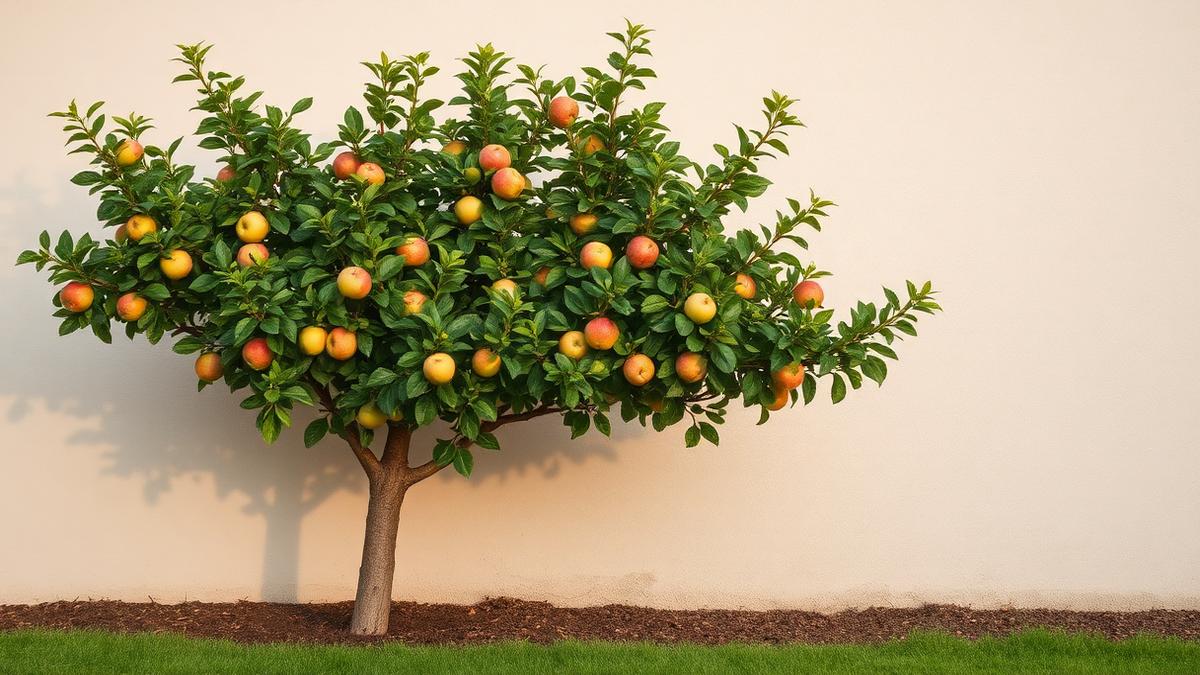
A conventionally grown fruit tree develops a rounded, three-dimensional canopy that needs clearance on every side for light and airflow. Espalier training prunes and ties branches to a flat plane — usually against a wall, fence, or wire framework — so the same total leaf area and fruiting wood exists, just arranged in two dimensions instead of three. The result is a tree that can produce a comparable harvest to a free-standing one in a fraction of the footprint.
The trade is maintenance: espalier requires several prunings a year to keep new growth on the trained plane rather than reverting outward, and establishing the initial framework takes two to four years before it fills in and fruits well.
Written and reviewed by Jim Vernon, editor of Home & Garden Answers · Last updated
Put this into practice
More facts like this
- Most Companion Planting Folklore Has No Evidence — A Few Pairings DoMechanisms like shade, trap cropping, and physical barriers hold up in trials; vague 'improves flavour' claims do not.
- Removing Tomato Suckers Is a Trade, Not a Free UpgradeAggressively suckering an indeterminate tomato produces bigger fruit sooner, at the direct cost of the leaf cover that prevents sunscald.
- Marigolds Don't Repel Most Garden Pests the Way Gardeners AssumeThe marigold pest-repellent reputation is a real, narrow finding stretched into a much bigger claim than the evidence supports.