Growing
Most Companion Planting Folklore Has No Evidence — A Few Pairings Do
Mechanisms like shade, trap cropping, and physical barriers hold up in trials; vague 'improves flavour' claims do not.
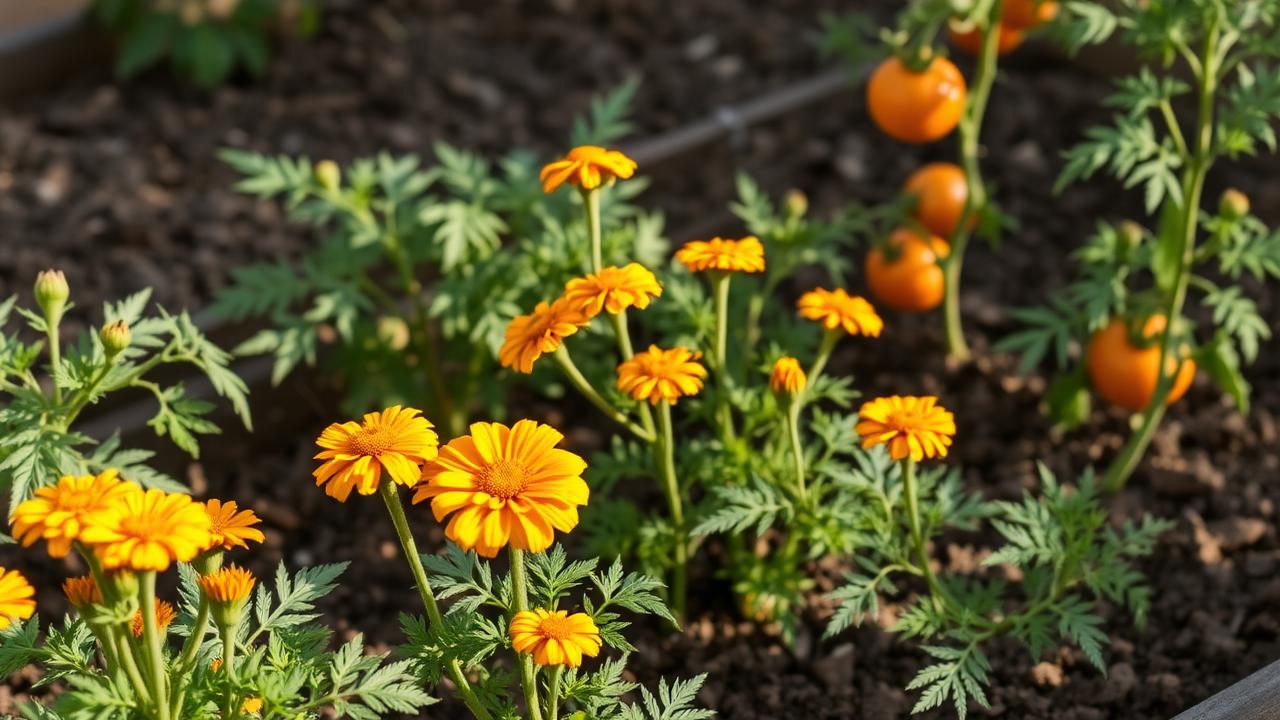
Companion planting is not one idea but several. Some are well-supported physical mechanisms: tall crops shading heat-sensitive ones, nasturtium acting as a trap crop pulling aphids off beans, alliums physically masking carrot rows from carrot fly. Others — 'basil improves tomato flavour' — have never produced a reproducible result.
There is also solid evidence for the general principle behind the folklore: mixed plantings support more predatory insects and reduce the chance that one pest wipes out a whole bed. Treat charts as a starting point with a stated reason, not a rule.
Written and reviewed by Jim Vernon, editor of Home & Garden Answers · Last updated
Put this into practice
- Companion Planting ChartWhat should I plant next to this crop?
More facts like this
- Removing Tomato Suckers Is a Trade, Not a Free UpgradeAggressively suckering an indeterminate tomato produces bigger fruit sooner, at the direct cost of the leaf cover that prevents sunscald.
- Marigolds Don't Repel Most Garden Pests the Way Gardeners AssumeThe marigold pest-repellent reputation is a real, narrow finding stretched into a much bigger claim than the evidence supports.
- A Pruning Cut Never Actually Heals — the Tree Seals It Off InsteadWound paint and pruning sealants don't help a tree 'heal' a cut faster because trees never heal wounds in the animal sense to begin with.